click here to read chapter 4
3. Diets
3.6. free off allergens
Food allergies are more and more common among large populations accross the globe. Mainstream allergens like gluten, lactose, nuts, sellerie, mustard, shellfish, etc. have to be mentioned on food lables to avoid health hazards. Many restaurants nowadays also declare common allergens on their menues.
Food products that cater to this customer segment also become more and more popular.
Lactose-free milk products are largely replaced now by those based on plant milks, like soy milk, oat milk, almond milk, coconut milk, etc. as these cater vor the vegetarian market as well.
Glutenfree was mentioned in a separate chapter above (2.1) and remains to mention that many brands started to sell exclusively glutenfree products, while others offer glutenfree options of their regular products.
Egg-free is another common dietary requirement of those with allergies as well as vegans. Eggless cakes are commonly found in Indian communities.
A new trend that is emerging, that hasn't been catered for on a larger scale though, is low-histamine food. Growing numbers of people seem to be suffering from inflammation symptoms (rheumatism, arthrosis, auto-imune-diseases, unspecific pains, etc.), which are worsened on high histamine diets. Foods high in histamine include nightshades (tomatoes, potatoes, etc.), fermented foods such as aged cheeses, kombucha, sauerkraut, and pickles, cured meats such as salami and bacon, alcoholic beverages and vinegar-based foods, chocolate, citrus fruits, nuts and seeds, as well as smoked fish.
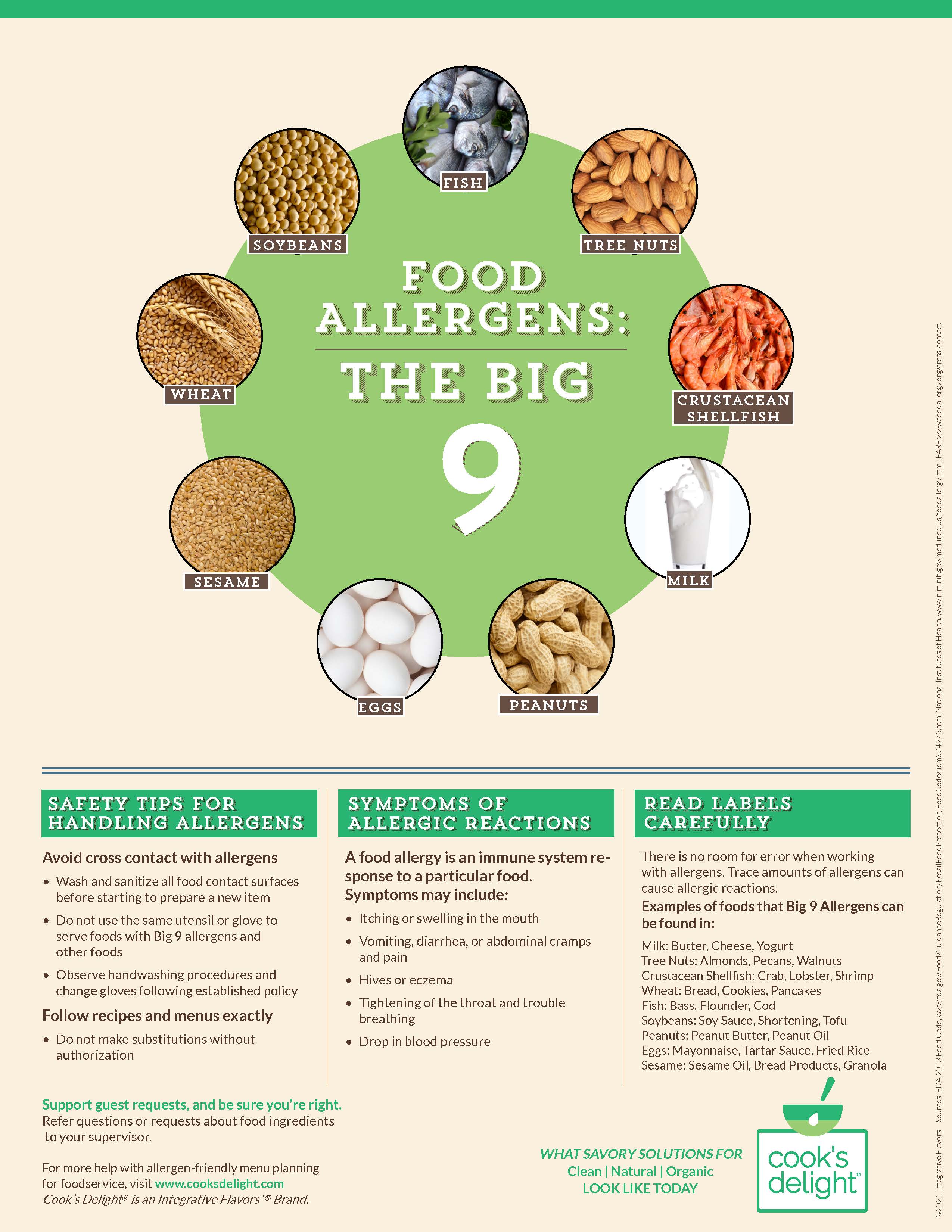
Image source: https://www.cooksdelight.com/blog/big-9-allergens-updating-your-allergen-plan-to-comply-with-faster-act/