Sensory Analysis
7. Types of tests for recipe optimization
7.1. Example: Triangle test
Triangle testing tests for the perceived difference between two slightly different products.
The panel should consist of a minimum of 5 examiners or more if untrained examiners are used.
Preparation:
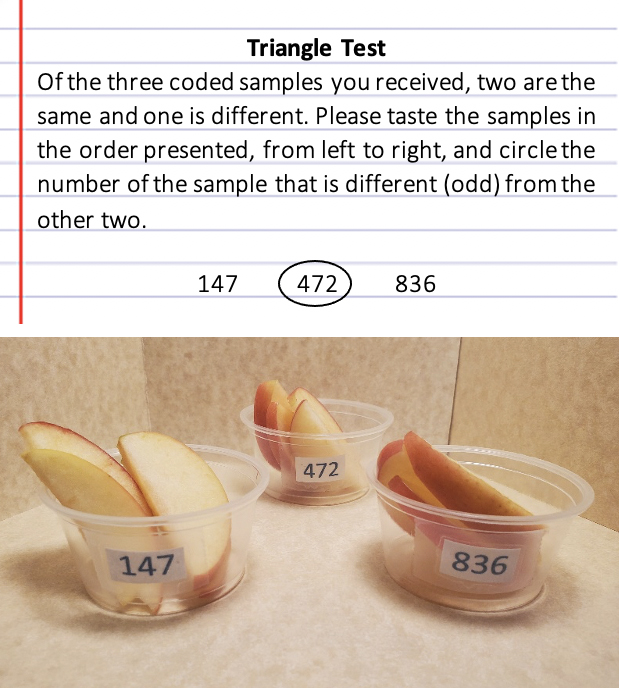
The examiner is presented with 3 samples of
which 2 are identical and one is different. They must be presented in identical
containers and there must be no visual difference between the samples (color,
filling, etc.). Samples must have the same temperature. Sample must be
identified with randomized three digit numbers.
The examiner is given written instructions and is requested to find the deviating sample. The examiner is also instructed to make a guess in case no difference can be definitely determined. In that case the examiner has to leave a remark that the decision was the result of a guess.
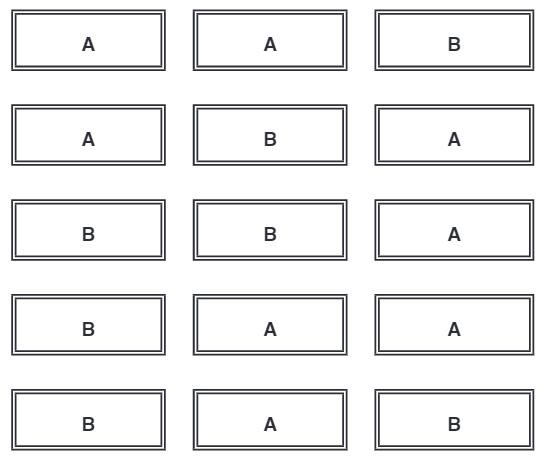
The test can be repeated several times with different, randomized set ups (order in which the samples are presented) for higher statistical accuracy of the result. Optionally, the order in which the examiner has to taste the samples can be prescribed. However, re-tasting of the samples against each other is usually permitted.
Possible rehearsal setups