What is waste management?
2. Recognize
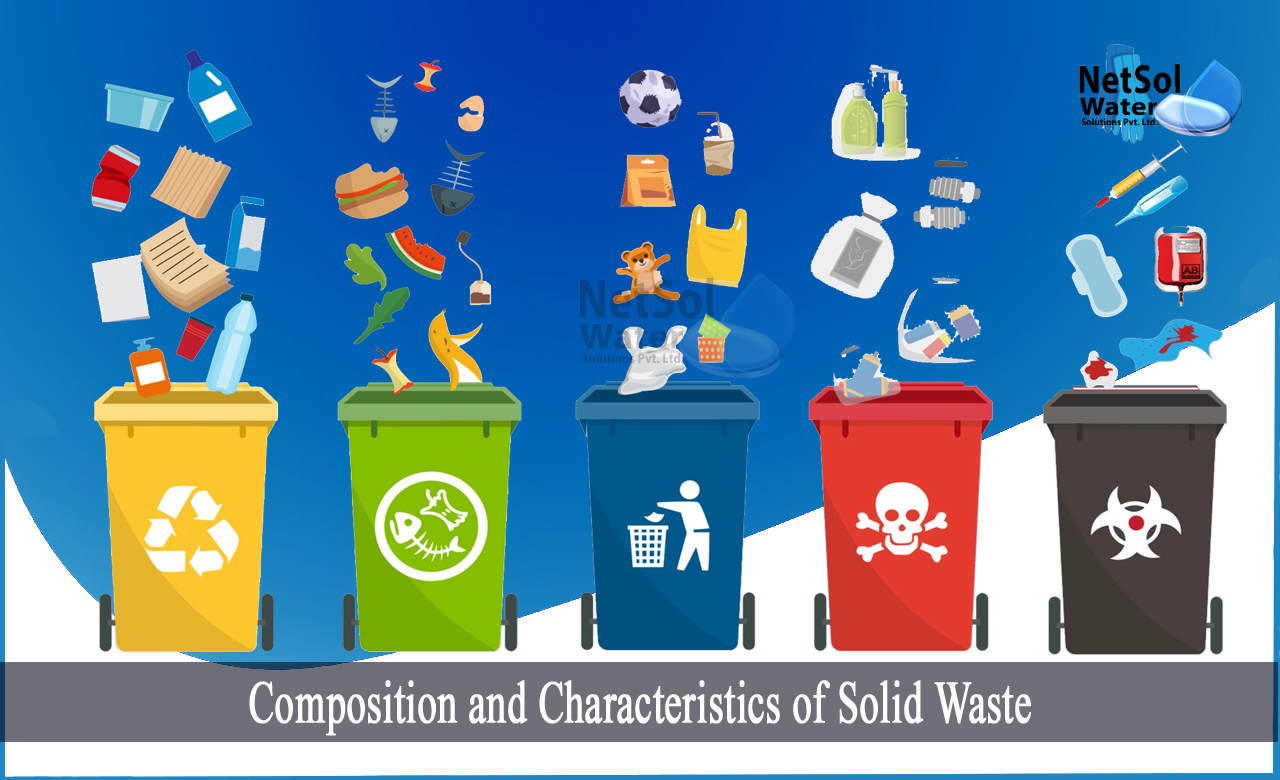
Source: https://www.netsolwater.com/composition-and-characteristics-of-solid-waste.php?blog=3573
When developing a waste management strategy, the first step is always to to assess the types
and quantities of waste produced, as well as the extent of the problem it
currently creates. This includes:
- an inspection of the waste handling on site, possibly also the dump site where waste is disposed
- interviews and discussions with staff to gain an understanding of problems perceived
- investigation of possible structural problems that lead to unnecessary waste
To be able to manage waste it needs to be categorized and collected seperately. The different categories of waste are:
recyclables - any material that can serve as the source to make similar materials instead of the original raw material. Examples: glass (sorted by color),
aluminum (cans, foil, re-heatable food packaging, etc.), PET water bottles and other recycable plastics, scrap metal including wire and cables, paper,
textiles, wood, rubber, etc.
organic waste -
any material that is biodegradable and comes from either a plant or an
animal. Examples are: food scraps, fruit & vegetable peels and
off-cuts, yard sweepings, landscape prunings, leaves, animal bedding,
food-soiled paper, untreated wood shavings, ash from organic sources,
potting soil, bones and shells, etc.
other solid wastes - any material that can not be recycled because of its state of processing or because it consists of a mix of unseperable different materials. These wastes are considered as garbage and have to be dumped in landfills or incinerated. Examples: toys, sports equipment, ceramics, polystyrene or styrofoam, photographs, soiled packaging,
construction and demolition waste - materials that need to be disposed after construction or demolition. Many of these have to be handled as hazardous waste, as they contain toxic chemicals or heavy metals. Others however, might be treated as recycables. Examples: scrap lumber and treated or painted wood, plastics, glass sheets, concrete and cement, paints and solvents, adhesives, coatings, metals, cables, wires, lightning, bricks or tiles and other ceramics, contaminated soil, etc.
e-waste - are electronics like: computers, cellphones, keyboards, lamps, cameras, batteries, solar panels, and other
electronic and electric equipment and appliances, of which some need to be treated as hazardous waste, but others can be used for recycling, especially of rare earths. It should be handled by qualified e-waste recycling companies.
hazardous waste - any material that poses a threat to human health or environmental safety because they contain active pathogens or chemicals, are toxic, sharp, corrosive or flammable. Examples: Organic compounds as found in solvents, pesticides and dioxines, heavy metals like cadmium, mercury and lead, cleaning solutions and desinfectants, paints and inks, batteries, glues, pesticides, weed, insect and rodent killers, petroleum products, engine oil and break fluids, bio-hazardous waste like infected or infested plant material, materials stained with blood or body fluids, materials carrying pathogens, glass shards, needles, blades, etc.
sewage - waste water is another category of waste many companies need to deal with, though not categorized as solid waste or garbage. Wastewater can be classified into two categories: blackwater and greywater. Blackwater is the wastewater from toilets that contains faecal matter and urine as well as water from kitchens and dishwashers which contain grease. Blackwater can contain pathogens and possibly be harmful. Greywater on the other hand is the wastewater that comes from sinks, washing machines, bathtubs and showers. It contains lower levels of contamination, making it easier to treat and process. Recycled greywater is commonly used in irrigation and constructed wetlands.