What is waste management?
10. Rot
Composting is one of the most important and frequent solutions in food processing companies, as organic wastes from pre-processing of fruits and vegetables represents the biggest quantity of wastes in such companies. Especially if the company also grows its own crops, returning nutrients from processed vegetables or fruits back to the farm/field plays an important factor in sustainable soil fertility management.
Procedure of compost making:
1. Identify compost site.
2. Erect shelter to protect area from direct sun (if necessary).
3. Collect all compostable materials
and transport to composting site.
4. Remove all plastic or other non-compostable materials.
5. If compostable materials from processing site are mostly Nitrogen-rich, collect as much rough materials and Carbon-rich materials as possible and also transport to the compost site.
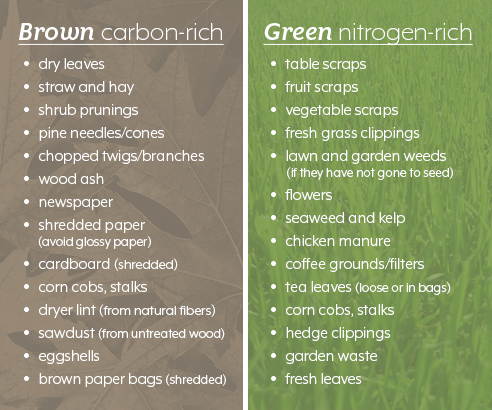
6. Organize any other inputs, like wood ash, rockphosphate and manure. These are not necessary, but addition improves the compost quality. Mix in 1 handfull of wood ash and or rockphosphate per m3 of compostables. Manure can be added at any rate, however, chicken manure needs to be matched with sufficient amounts of dry matter (Carbon-rich materials).
7. Lay out the width and length of the row in such a way that the compost row will be sheltered but also that the tractor and trailer can drive over it to offload the wastes from the factory. The bottom layer should consist of rough materials (branches etc.) to allow airflow.
8. Shred all materials roughly. They should not be cut too finely to provide enough structure to the compost heap for better aeration. If not composting immediately/continously heap them up nearby the compost row to allow easy access and handling during compost making.
9. Compostable materials can be offloaded directly onto the row by slowly driving over it along its length. Enough laborer (3-5) need to be onsite to then cover each layer with carbon-rich materials and some soil/old compost. Alternatively, materials can be shredded directly onto the compost row by a power shredder or wood chipper, that ejects the shredded materials over a longer distance.
10. Once all materials are incorporated the row should have a height of at least 1 meter to avoid drying out. Effluent or grey water could be added if the compostable materials are too dry.
11. The finished compost row should be covered with a protective layer of either long grass, palm fronts or banana leaves. It should not be covered with plastic foil to allow sufficient airflow. Only finished (fully mineralized) compost can be covered with plastic foil during storage to protect it from rain.
12. The compost should ideally not be turned to avoid Nitrogen losses. On sloped terrain trenches need to be dug downstream from the compost heaps to collect leachate, to prevent it from being washed into nearby water bodies.
13. The compost should be ready for use within 3 months and can be taken
to the fields and applied widespread, ideally with a manure spreader. Application rate should be around 10 tonnes per acre/year.
Vermicomposting & black soldier fly production:
For companies that produce only small amounts of biodigradable wastes vermicomposting and/or black soldier fly production can be interesting methods to valorize these. In vermicomposting earthworms are kept in large boxes and fed with small amounts of organic wastes, slowly turning them into high quality compost and a liquid that can be used to stimulate plant growth. Black soldier flies feed on decomposing organic matter and are provided with corogated cardboard to pupate. The pupae are collected and used as chicken feed. More detailed information can be found in the glossary.
Biogas:
Nitrogen-rich organic materials can also be used to feed a biogas digester. However, the investment cost for a biogas digester (unless very small-scale) is rather high and the technical expertise needed to successfully operate a biogas digester is also significant.