Packaging methods and equipment
2. Sealers
Sealers are used to close plastic packaging. They come in different types and sizes depending on the packaging material and shape.
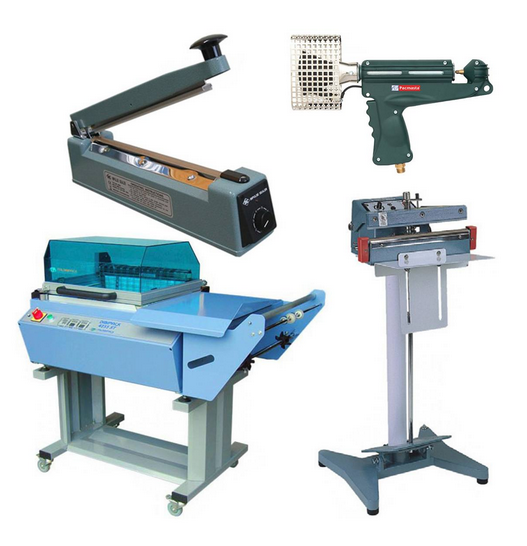
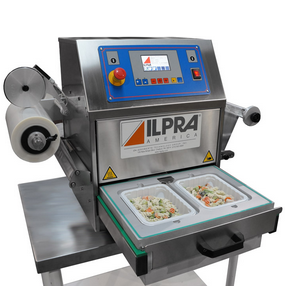
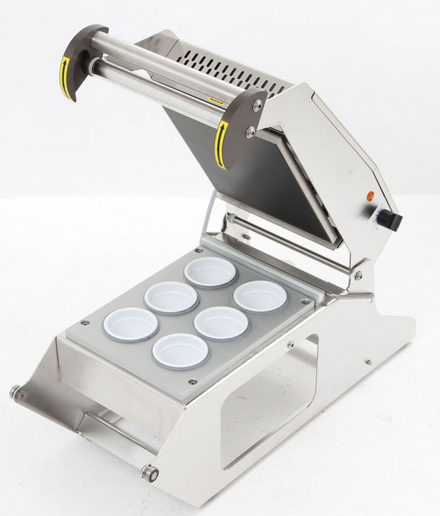
Image Sources: https://packline.com.au/heat-sealers-for-the-food-industry/; https://rtgpkg.com/ilpra-america/ilpra-tray-sealers/; https://www.avedemil.com/en/thermo-sealing-machine
Special sealing equipment is neeeded for sealing bags, pouches, sachets, or tubs, which need a lid. Lids can be plastic film (e.g. for thermo-formed plastic trays) or aluminium lids (e.g. for yoghurt tubs, etc.). Sealers work by welding thermoplastic layers together to form an airtight leak-proof seal. Each material has specific requirements for temperature, pressure and cooling to form such a seal. Therefore, make sure your packaging material and sealing equipment match before making a purchase decision.
There are two types of heat sealers for the food industry. The impulse heat sealer applies heat in short intervals of one to 10 seconds when the jaws that conduct heat are closed on the plastic bag. To complete the sealing an operator pushes down the jaws to heat and melt the thermoplastic layers together. The element then shuts off and the welded area cools quickly to harden the seal.
The second type of sealer is a continuous heat sealer where the heating bar stays continuously hot. Continuous sealers work best for fast-paced sealing jobs with a large volume of sealing to complete. Rotary band sealers have a motorised conveyor belt that feeds the packaging through the constant heat-sealing jaws at a regular speed to create a consistent quality seal. These machines are good for even quality and sterile sealing.
Styles of heat sealers
There are different styles of heat sealer such as a hand-operated sealer requiring an operator to push down a heated lever on the bag to create a weld. There are foot pedal operated sealers that engage the heating bar. Operating a foot pedal frees up the operator’s hands to accurately position the packaging in the sealing jaws. Some models come with a conveyor belt to keep up a fast-paced production line.
Heat sealing machines come in many sizes and methods of application with single heat sealers capable of sealing a few products per day to larger semi-automatic machines for production lines where output is high.
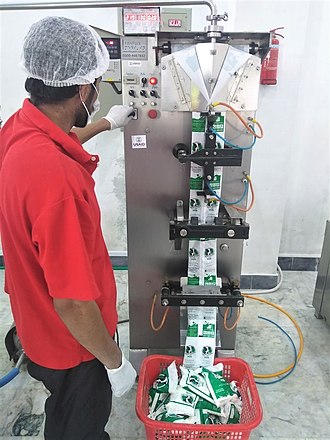 Vertical milk pouch filler-sealer.
Image source: https://upload.wikimedia.org/wikipedia/commons/thumb/8/8f/Milk_bag_packaging_machine.jpg/330px-Milk_bag_packaging_machine.jpg
What size sealer do you need?
Heat sealers come in a variety of widths. As a rule, choose one that is a minimum of 20mm deep and a maximum of 50mm wider than your sealing area. You should make sure your packaging isn’t wider than your heat clamps, so you get a nice neat and straight seal without air pockets and gaps. Also, think about the volume of sealing you need to do per day and choose a machine that will not overheat.
Textured seals
Some heat sealers imprint a textured seal on the packaging. This is called crimping and is good for strengthening the seal and tamper evidence. Textures can come in a crosshatch, corrugated or honeycomb crimping and is often chosen for a professional and aesthetic look to the packet.
Source: https://packline.com.au/heat-sealers-for-the-food-industry/