Microorganisms in food
7. Beneficial microorganisms
Besides the harmful microorganisms, mentioned in the earlier chapters, which can spoil food and therefore play an important role in the food industry, there are also a large number of very useful, so-called beneficial microorganisms that are also extremely important in food processing. Since ancient times, these microorganisms have been used to produce a variety of foods, such as bread, dairy products, fermented vegetables, condiments made from fermented seafood or legumes, vinegar, as well as alcoholic beverages. Fermenting in particular is a method to conserve food while increasing its nutrient value. In the glossary you can find references and descriptions to a large number of traditional fermented products.
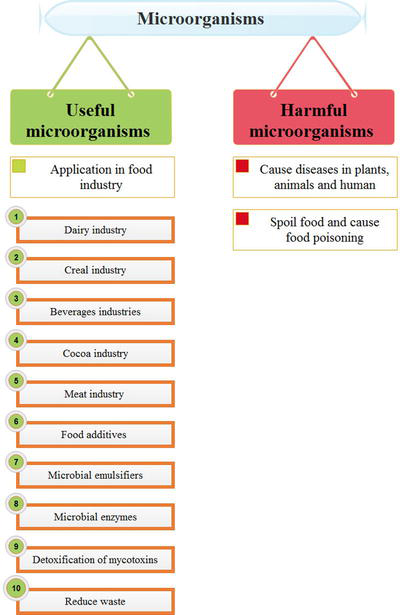
Image source: Mohammadhassan Gholami-Shabani et al, Food Microbiology: Application of Microorganisms in Food Industry, 2023
During these biochemical processes certain types of microorganisms change simple sugars like glucose or lactose into alcohol, different acids, or carbon dioxide via a variety
of metabolic pathways. For example,