Click here to read chapter 3
| Site: | Plattform für Weiterbildung und Internationalisierung der Hochschule Weihenstephan-Triesdorf |
| Course: | Entrepreneurship in Food |
| Book: | Click here to read chapter 3 |
| Printed by: | Gast |
| Date: | Sunday, 26 July 2026, 4:57 AM |
Description

1. Introduction
Usually an entrepreneur has experienced a certain need or want either her-/himself or witnessed a certain need or want in others, for which she/he feels capable to provide a solution. This is called a business idea. Identifying real opportunities for a food business is a step further from the first idea. It involves researching the food industry to determine the validity of the preceived needs and wants of potential customers as well the feasibility of the business idea.
2. Types of opportunities
In the following paragraphs you can find a description of the different ways, in which an entrepreneur might identify a business opportunity or look into the feasibility of her/his business idea. This includes researching the current market trends and consumer behavior, as well as understanding the legal and regulatory requirements for running a food business. Additionally, researching the competition can provide insight into potential opportunities. Once potential opportunities are identified, the business should consider the feasibility of each option and the resources needed to capitalize on the opportunity. This includes performing a financial analysis to determine if the potential opportunity is profitable. Additionally, the business should assess the potential risks of the opportunity, and determine how to mitigate these risks. Finally, the business should develop a plan to capitalize on the opportunity. This should include a timeline for implementation, as well as procedures for ensuring success. Additionally, the business should develop a marketing strategy to promote the new product or service. This should include targeting the right customers, as well as developing a pricing strategy to maximize the potential of the opportunity.
Watch this short animation to learn more about the different types of opportunities:
3. Opportunity Analysis
To ensure that a first business idea or perceived business opportunity is valid it is important to critically check the facts. To do this an entrepreneur can conduct different types of analysis, which will be described in the following paragraphs.
In the following animation we will look at the different ways to analyse opportunities:
3.1. Entrepreneurship opportunities along the food value chain
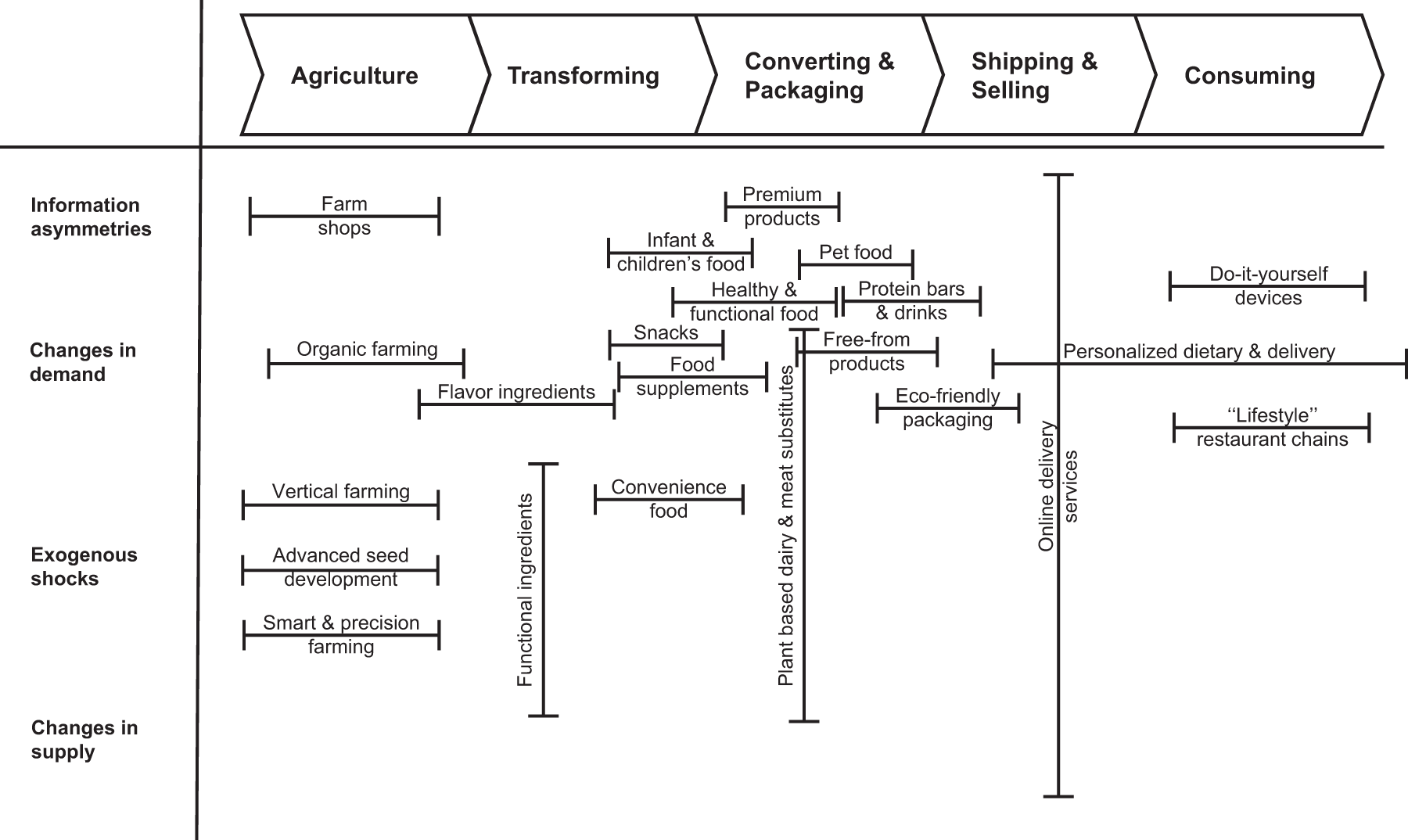
Entrepreneurial opportunities often derive from changes in demand, changes in supply, information asymmetries, and exogenous shocks (like the covid 19 pandemic e.g.). Mapping the four sources of entrepreneurial opportunities on the vertical axis against the steps in the food value chain (from agriculture to consumption) on the horizontal axis results in a matrix of the opportunity space. Each bar within the
matrix represents an entrepreneurial opportunity within the food sector.
3.2. SWOT Analysis template
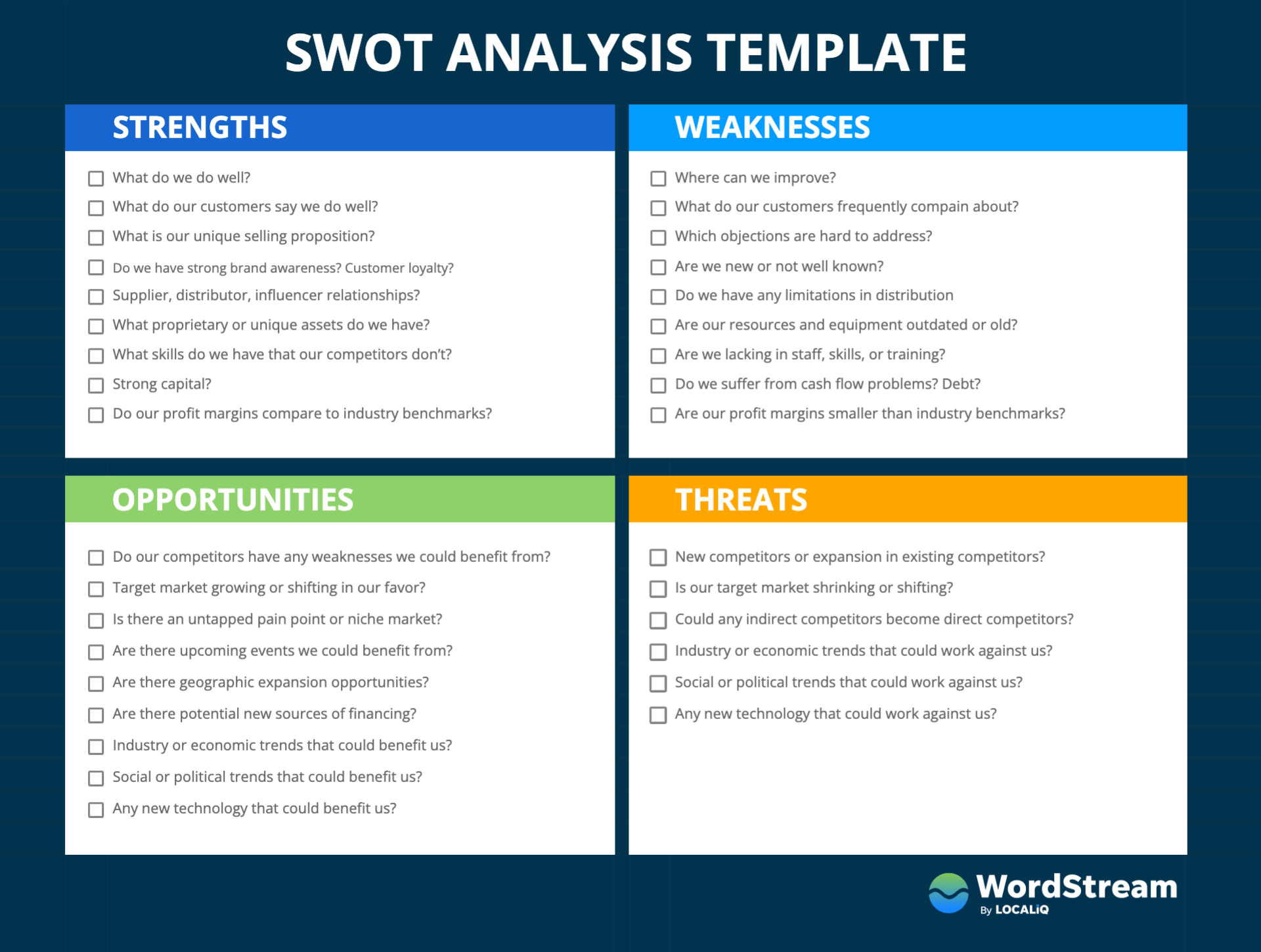
SWOT analysis is a tool used
to evaluate the Strengths, Weaknesses, Opportunities, and Threats of a
business. This could include assessing the internal and external environment of
the business and identifying key areas of focus and potential risks. As "Strengths" and "Weaknesses" are considered internal factors, as the can be changed by yourself. "Opportunities" and "Threats" on the other hand are considered external factors as these are events that are somewhat out of your control, but that you could use to your advantage or have to reckon with/monitor to avoid damage to your business.