Food preservation principles
| Site: | Plattform für Weiterbildung und Internationalisierung der Hochschule Weihenstephan-Triesdorf |
| Course: | Entrepreneurship in Food |
| Book: | Food preservation principles |
| Printed by: | Gast |
| Date: | Sunday, 26 July 2026, 4:03 AM |
Description

In this chapter we will explore the different pysical, biological and chemical principles that play important roles in food processing, food spoilage, and food preservation.
1. Temperature Control
Microorganisms that are involved in food spoilage are sensitive to certain temperature ranges. Controling the ambient temperature of food storage conditions or heating or cooling food beyond these ranges can therefore be used to control microorganisms. Cooking food is a classic example for heat treatment, deep freezing food is another.
2. Time Control
Time control plays an important role in maintaining food's freshness, nutritional value, sensory quality, and safety as microorganisms mutiply exponentially over time and cause spoilage once they reach certain threshhold levels. Extended exposure to certain environmental conditions can have the same effect and needs to be controlled.
On the other hand, certain foods require extended time for curing, proper gluten or ferment development, and may spoil or fail to properly develop if the process is cut off too quickly.
Controlling the time of the processing process ensures the balance between freshness, nutritional value, sensory quality, and safety. A
3. pH Control
pH is the measure of the acidity or alkalinity of a food and can affect its quality, desired flavor, texture, nutritive value, shelf life, and safety.
Most bacteria are sensitive to certain pH ranges and controlling the pH can therefore be used to control bacterial growth.
pH control is often used in combination with other food processing principles, such as temperature control, to achieve desired results. For instance, the combination of pH and temperature control may be used to control the speed of enzymatic reactions in food. If a food is not maintained at a certain pH level, the enzymatic reactions may occur too quickly or too slowly, thus compromising the quality of the food.
3.1. Approximate pH growth ranges for some foodborne organisms
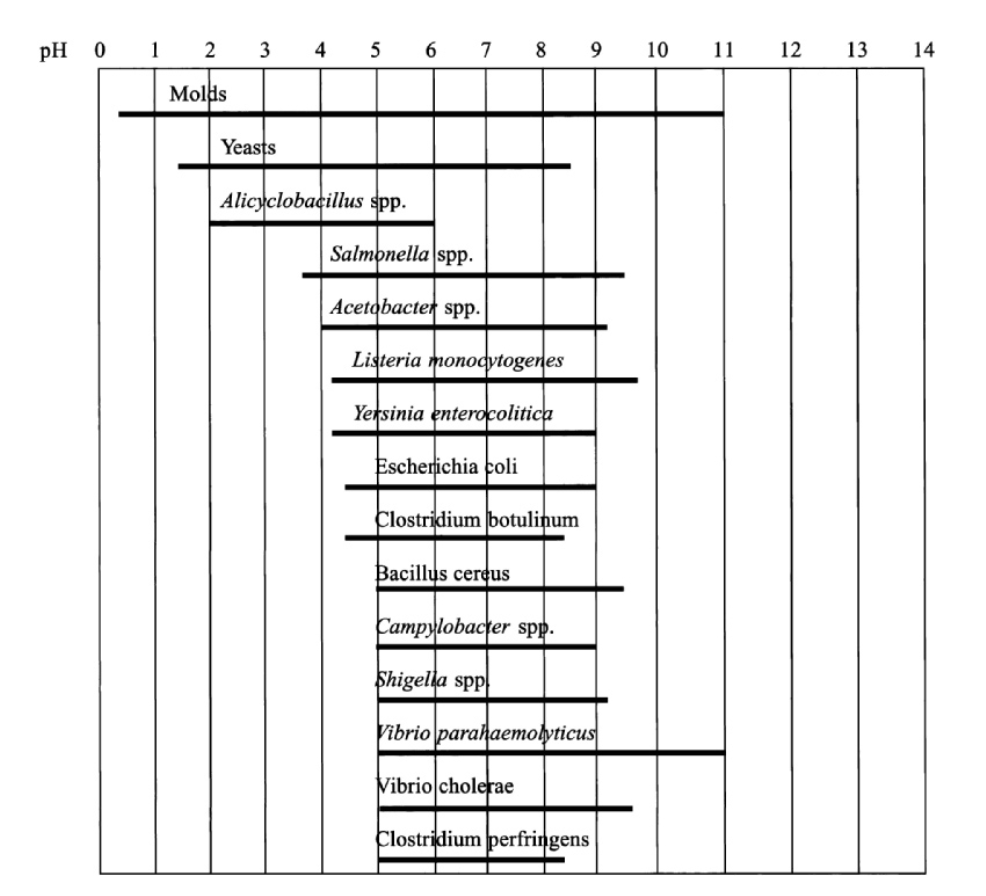
Source: (2005). Intrinsic and Extrinsic Parameters of Foods That Affect
Microbial Growth.
In: Modern Food Microbiology. Food Science Text
Series. Springer, Boston, MA. https://doi.org/10.1007/0-387-23413-6_3
4. Water Activity Control
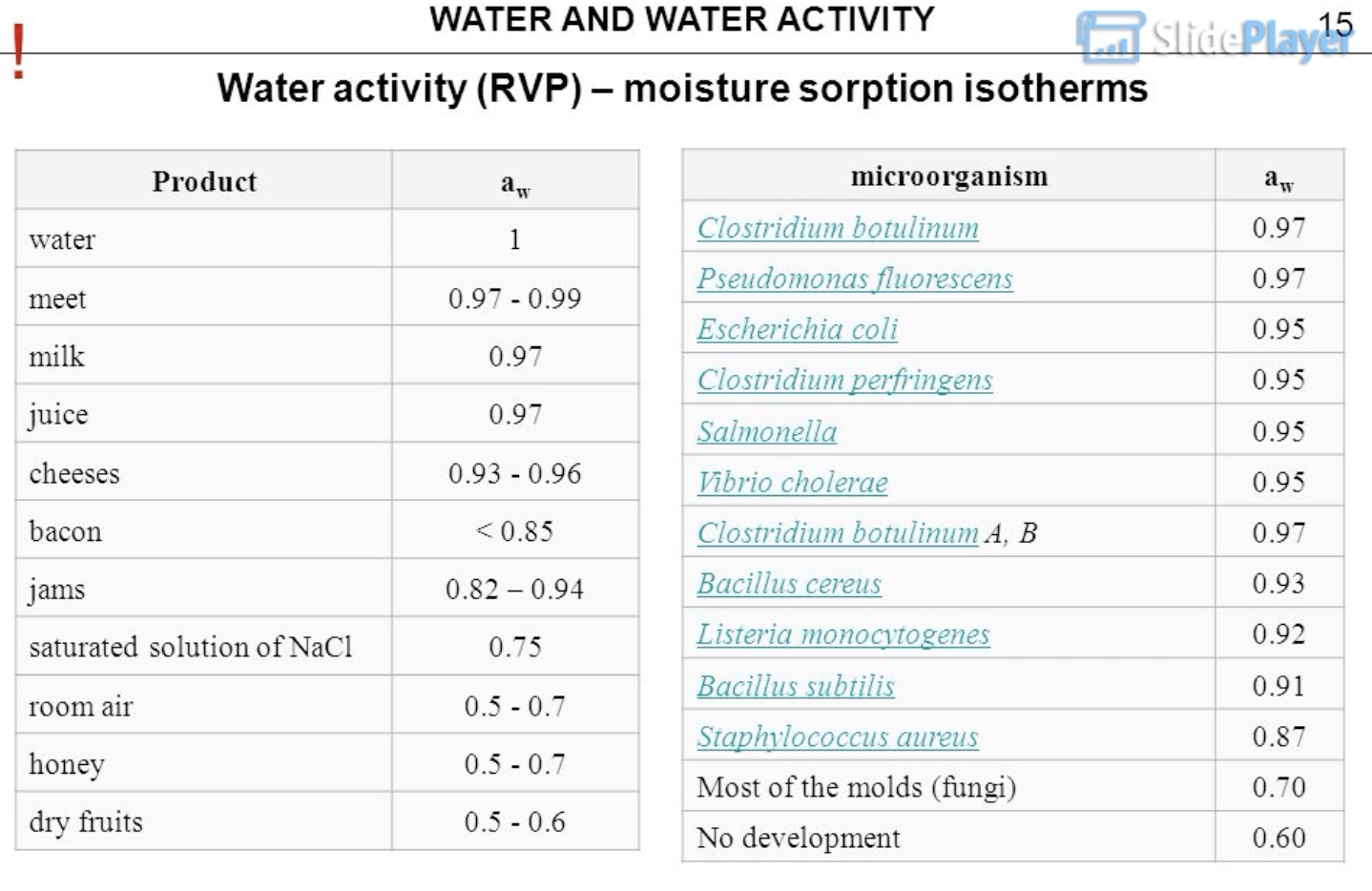
Water activity (aW) is a measure of the free available water in a food product. Available water affects the microbial growth as microbial cells require a water activity greater than or equal to 0.98 to be able to take up nutrients, excrete waste, reproduce, and disperse.
Drying food is one of the oldest principles of food preservation.
4.1. Water activity values of different foods and microorganisms' moisture requirements
The table below shows the water activity values of some foods as well as the required water activities levels for the development of certain microorganisms.
5. Microbial Control
Controlling the factors that affect the ability of microorganisms to survive and multiply helps to ensure that food remains safe and free from spoilage-causing and/or pathogenic bacteria.
On the other hand, beneficial microorganisms play an essential role in food processing as they help to preserve food, improve flavor and texture, and provide food safety benefits. Microorganisms such as lactic acid forming bacteria, yeast, and molds are used to produce fermented products like cheese, yogurt, and pickles. Fermented products have extended shelf lives and many beneficial health properties due to the presence of these beneficial bacteria. Microorganisms can also be used to increase the flavor and texture of food, such as in the production of beer and wine.
5.1. Examples of Microbial Control
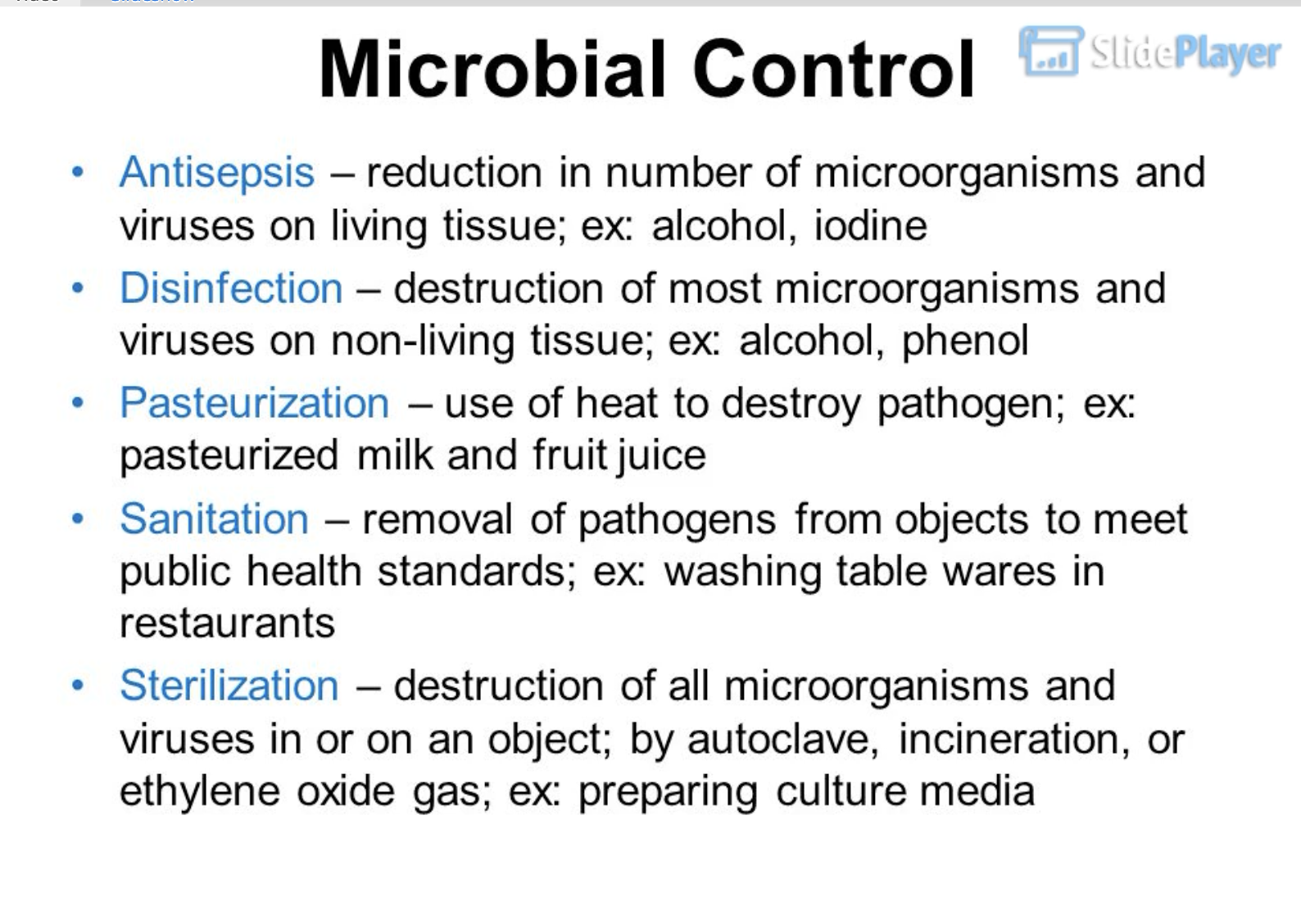
Source: Slideshow "Microbial Control - Physical Means", by
Nestor T. Hilvano, M.D., M.P.H.
find the full slideshow here: https://slideplayer.com/slide/4685446/
6. Oxidation-Reduction Potential Control
Reduction-oxidation (or short: Redox) potential is an indication of the oxidation state of a product. Oxidation state refers to the balance between oxidation and reduction in a food product. Oxidation is the loss of electrons, and reduction is the gain of electrons. Foods that are most sensitive to oxidation-reduction potential (ORP) are those with high moisture content, as water molecules can easily give away and accept electrons, as well as foods like nuts and oils, which posess free radicals. Free radicals are molecules with unpaired electrons that react quickly and seek out other electrons to pair with. During this process, free radicals can oxidize the fatty acids in fats, which can lead to off-flavors and off-odors, as well as a decrease in nutritive value.
The redox potential in food can be controlled by adding antioxidants such as ascorbic acid or vitamin E to the product, limiting the amount of oxygen available to the product, or controlling the temperature and humidity.
Redox potential meters can be used to constantly monitor the product and adjust processing parameters as needed.
6.1. Water content of different foods
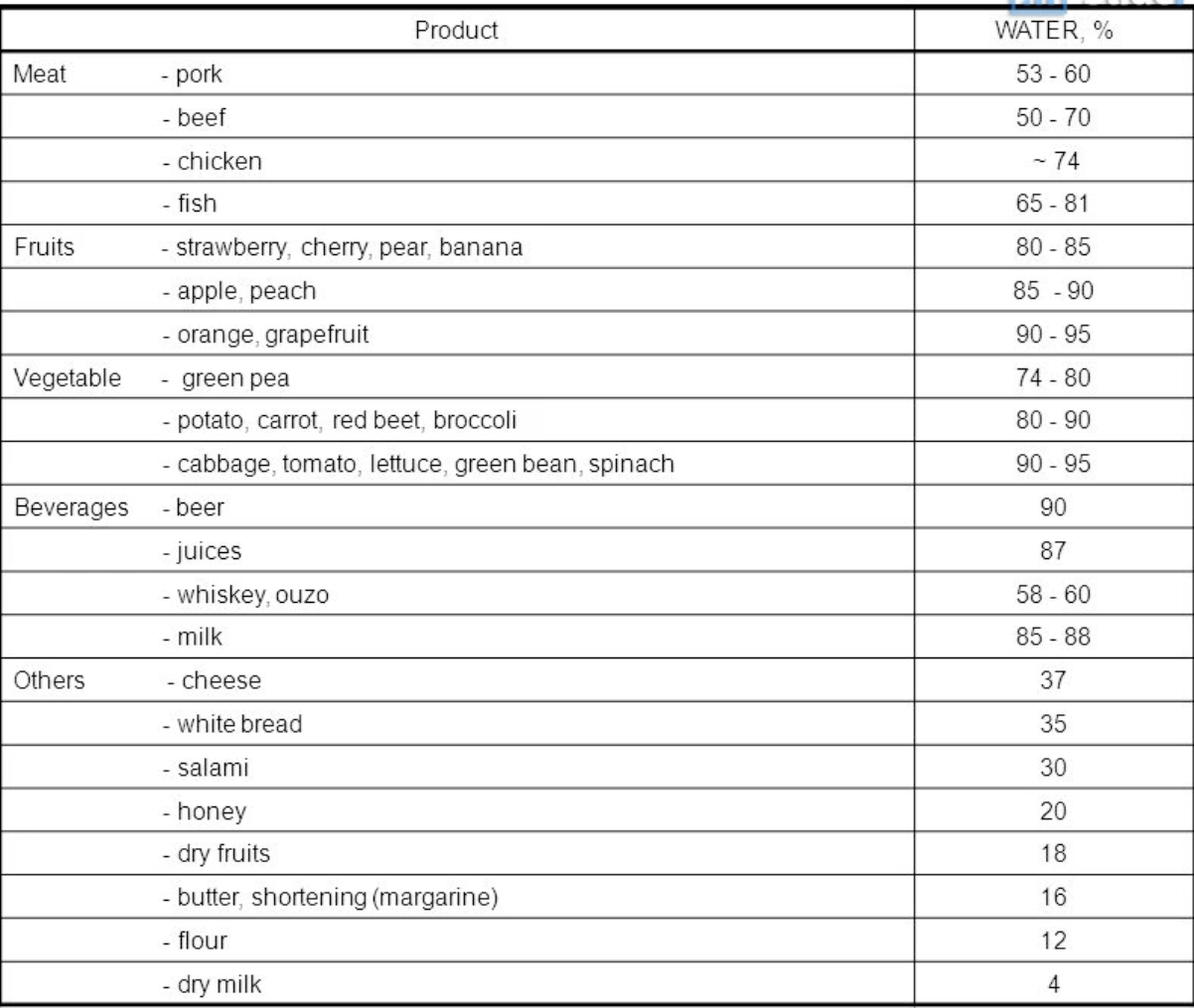
Source: https://slideplayer.com/slide/10442425/
6.2. Examples of reduction and oxidation processes
Key oxidation-reduction reactions involved in food processing include microbial metabolism, enzymatic activity, lipid oxidation, and flavor development.
1. Microbial metabolism is the oxidation of organic compounds (e.g. carbohydrates, proteins, and lipids) by a variety of aerobe microorganisms, such as bacteria and fungi. This means, these reactions require the presence of oxygen.
An example of microbial metabolism is the fermentation of grains to produce beer and wine. During fermentation, various yeasts, such as Saccharomyces cerevisiae, break down sugar molecules to produce ethanol and carbon dioxide. In this reaction the glucose molecule is reduced, losing 12 electrons, while the oxygen molecule is oxidized, gaining 6 electrons: C6H12O6 + 6O2 + 12e- --> 2C2H5OH + 2CO2 + 6e- (glucose + oxygen --> ethanol + carbon dioxide).
Microbial metabolism is also used to produce a variety of other food products such as cheese, yogurt, and bread.
Microorganisms like molds and yeasts that metabolize glucose in fruits on the other hand lead to spoilage and bad odors.
2. Oxidation and reduction can also be catalyzed by enzymatic activity. These reactions occur naturally in food processing, such as in the ripening of fruits and the production of beer and wine where enzymes are present.
The enzyme that is typically responsible for the reduction of glucose in the presence of water is glucose dehydrogenase. Glucose dehydrogenase is an enzyme found in some bacteria, fungi, and plant cells. It catalyzes the oxidation of glucose by accepting electrons from nicotinamide adenine dinucleotide (NAD). The resulting product is 6-phosphogluconolactone, which is then further metabolized to carbon dioxide, ethanol, and other molecules.
In this reaction the glucose molecule is reduced, losing 12 electrons, and the oxygen molecule is oxidized, gaining 6 electrons: C6H12O6 + 6H2O + 12e- --> 6CO2 + 12C2H5OH + 4ATP + 6e- (glucose + water --> carbon dioxide + ethanol + ATP)
The enzyme glucose oxidase on the other hand, catalyzes the oxidation of glucose, thereby preventing it from fermenting into alcohol. For example in fruit juice production glucose oxidase can be used as an enzymatic additive to prevent alcohol formation. Gluconic acid and hydrogen peroxide, which are the products of the reaction can act as acidulants, preservatives, and sterilizing agents in the juice. The reaction can be expressed as C6H12O6 + O2 + 2e- --> C6H12O7 + H2O2 (glucose + oxygen --> gluconic acid and hydrogen peroxide), whereby the glucose molecule loses two electrons and the oxygen molecule gains two electrons.
3. Lipid oxidation is the oxidative change and breakdown of lipids due to the presence of oxygen, which can produce off-flavors, off-odors, and discoloration in food products. It usually involves the addition of oxygen atoms to polyunsaturated fatty acids, converting them to their oxidized form. For example Linoleic acid (C18:2), a polyunsaturated fatty acid that is found commonly in vegetable oils has an unstable electron distribution. If exposed to air 2 hydrogen atoms are lost, while 2 oxygen atoms are gained, resulting in the formation of the oxidative stable C18:2-hydroperoxide.
During the process the following aldehydes are also formed:
C18H32O3 → Acetaldehyde (C2H4O) + Formaldehyde (CH2O) + Propionaldehyde (C3H6O). These aldehydes are volatile compounds which contribute to the bad odor and off-flavour of lipid-oxidized foods.
7. Enzyme Control
Enzymes are proteins that are responsible for many of the processes that occur in food, such as ripening, discoloration, flavor changes, and texture changes. Enzymes can occur naturally or be added to food. By controlling the activity of enzymes, food processors are able to preserve and manipulate the characteristics of food.
Enzymes in food can be controlled by manipulating the ambient temperature and pH, adding inhibitors or antioxidants to the product, or adding enzymes from an outside source to deactivate the enzymes naturally present in the food.
7.1. Overview of enzymes used in food and feed processing
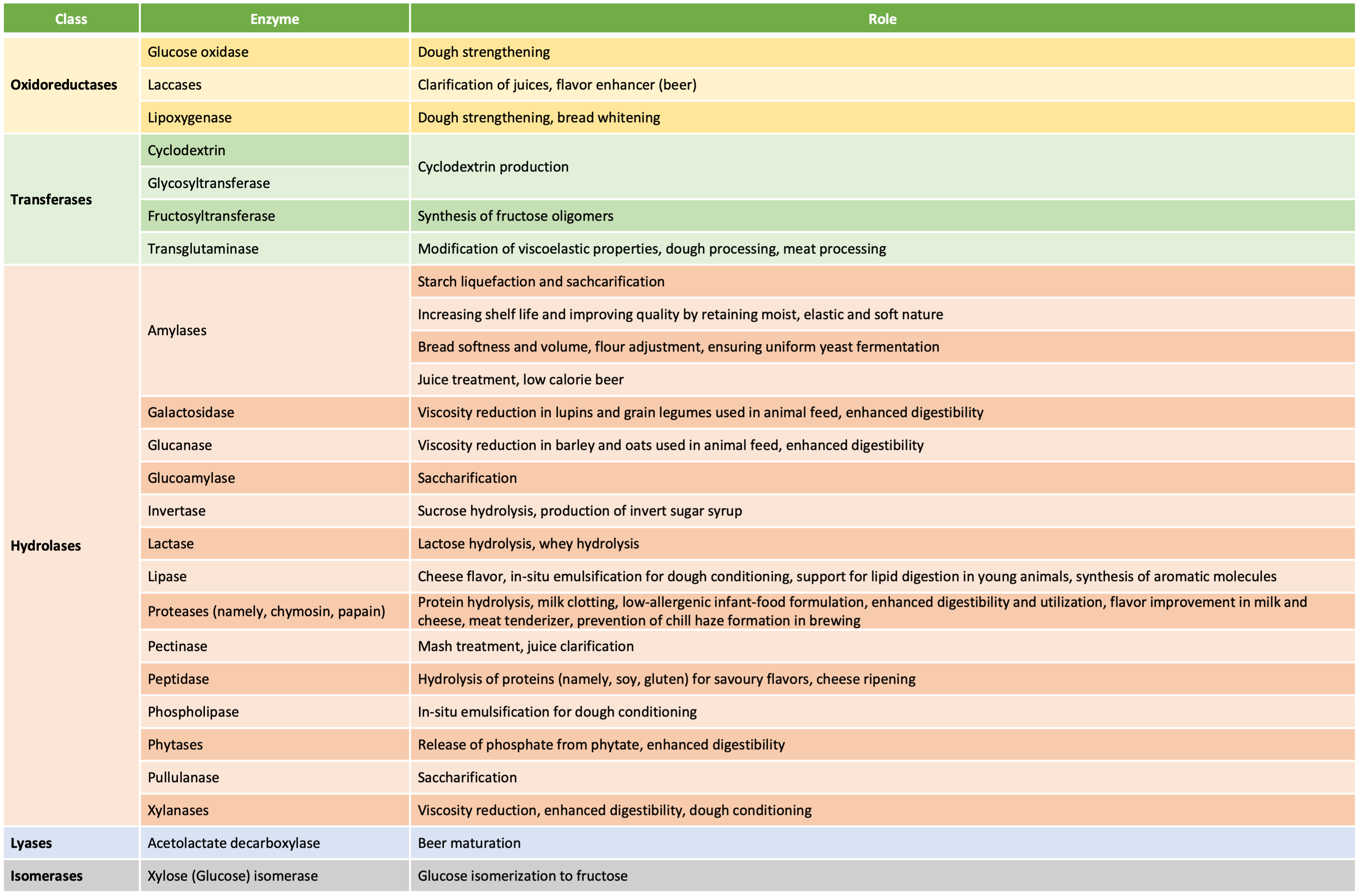
Source: ncbi.nlm.nih.gov, "Enzymes in Food Processing: A Condensed Overview on Strategies for Better Biocatalysts", by: Pedro Fernandes, 2010

Source: DOI:10.46370/sajfte.2015.v01i03and04.01
The use of enzymes in food processing: A review, by: S. ChaudharyS. Saga, Published 31 December 2015
8. Allergen Control
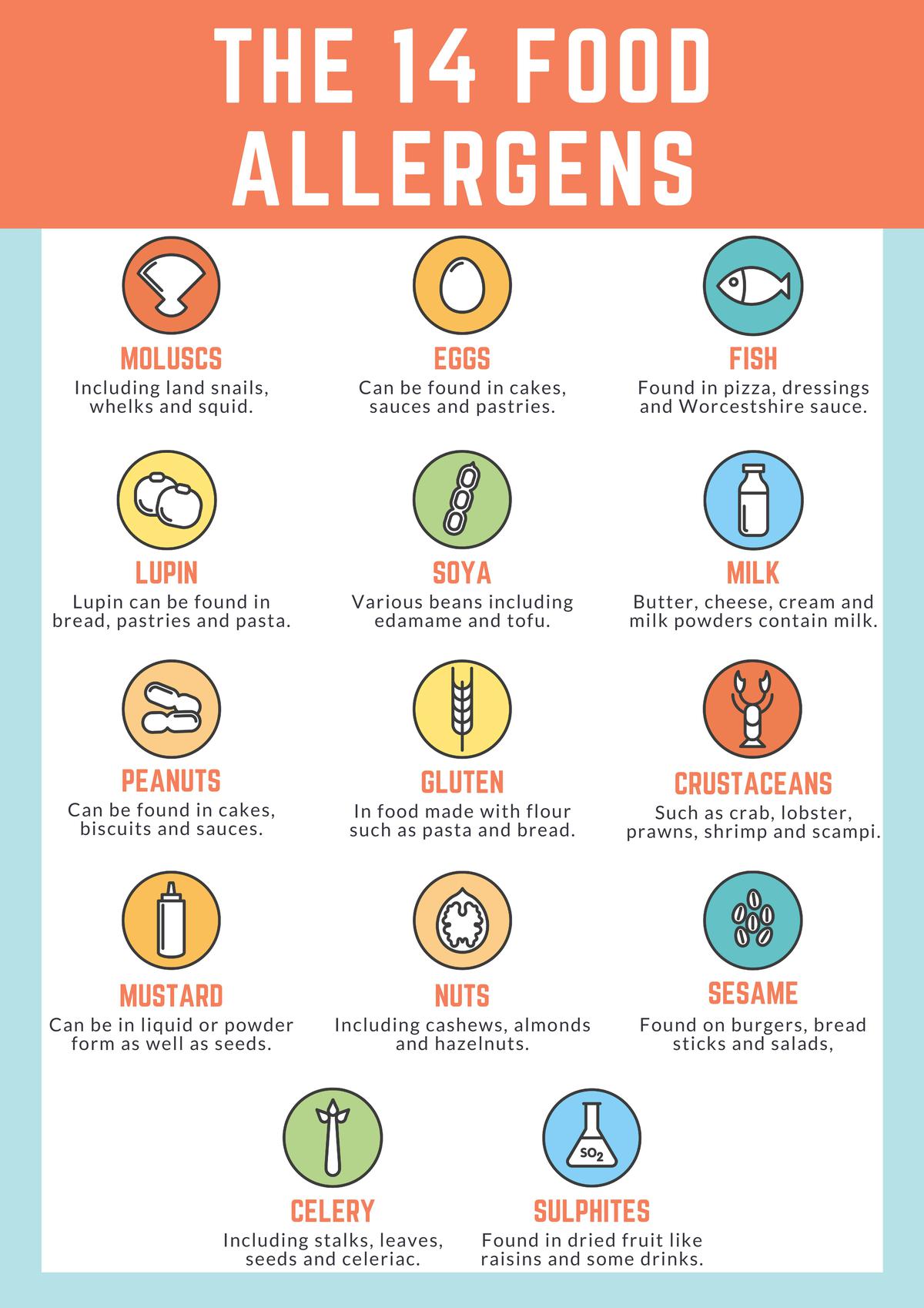
Allergens are proteins that can cause an adverse immune response in people with allergies, and the presence of allergens in food can lead to serious health risks. Controlling the presence of allergens in food products ensures that products are safe for consumption by individuals with food allergies. This is typically done through allergen control programs, allergen testing, ingredient verification, process segregation, and use of allergen-free processing lines.
The 14 Food allergens are:
Celery
This includes celery stalks, leaves, spice and celery salt. It is often found in salads, some meat products, soups and stock cubes. People with a celery allergy also need to avoid celeriac, as they are varieties of the same species. n included.
Gluten
Gluten is the name of a family of proteins found in wheat, barley, rye and oats. It is often found in foods containing flour and therefore bread, baked goods, cereals and pasta. It can also be found in barley-based products such as beer, malt, malt vinegar and food colouring.
Crustaceans
These include crabs, lobsters, prawns, crabs and scampi. They are
invertebrates and have segmented bodies and jointed legs. They are often
found in shrimp paste used for curries. Around 60% of people with a
shellfish allergy experience their first symptoms as adults. This
allergy can be suffered even without eating. The proteins in shellfish
can be transmitted through the air when fish is cooked. As this allergy
can be severe in many, it is especially important for sufferers to be
careful.
Eggs
These are often found in cakes, some meat products, mayonnaise, mousses, pasta, quiche and food brushed with egg. Egg allergy is one of the most common foods to trigger allergic symptoms in babies and young children, however most children outgrow the allergy. Egg allergy can occasionally develop later in life. Reactions to egg are usually triggered by the protein part of the egg, mainly the white or albumen. Having another type of allergy increases the risk. Eggs do not have to be eaten to cause a reaction, and coming into contact with eggshells or raw egg may trigger a reaction in sensitive individuals.
Fish
Often found in fish sauces, pizzas, relishes, salad dressings and stock cubes. Fish and shellfish allergies are one of the most common allergies in adults, and can develop at any point in life with no previous symptoms experienced when eating fish. Although treated as separate allergies, a fish, crustacean or mollusc allergy increases the risk of having another of these three.
Lupin
This includes lupin seeds and flour and can be found in some types of bread, pastries and pasta. Sometimes called lupine, it is a legume belonging to the same family as peanuts. It is frequently consumed in the Mediterranean, especially in the form of lupin flour. Lupin beans are eaten whole after boiling and drying as a snack in many countries.
Milk
This is found in butter, cheese, cream, milk powders, yoghurt and
foods glazed with milk. Cow’s milk allergy affects around 3-6% of
infants and young children, while some people might tolerate goat, ewe's (sheep) or camel milk. The allergy can be caused by the enzyme lactose or the milk protein.
Molluscs
These include mussels, land snails, squid and whelks. They are often found in oyster sauce or as an ingredient in fish stews. Molluscs are soft bodied invertebrates, with some having a shell. Those that have a shell which opens and closes are called bivalve molluscs such as oysters and clams.
Mustard
This includes mustard powder, liquid mustard and mustard seeds. It is often found in breads, curries, marinades, meat products, salad dressing, sauces and soups. Because it is often hidden as an ingredient it is important to note it may not be obvious by sight, smell or taste. Mustard seeds are produced by the mustard plant, a member of the Brassica family. The seeds vary in colour and are frequently ground down to use in cooking. Mustard allergy is more common in countries where it forms a larger part of the cuisine and affects affects more often persons with hay fever.
Nuts
These include almonds, hazelnuts, walnuts, cashews, pecan nuts, Brazil nuts, pistachio nuts, macadamia or Queensland nuts. They can be found in breads, biscuits, crackers, desserts, ice cream, marzipan, nut oils and sauces. Ground, crushed or flaked almonds are often used in Asian cooking. Those with a peanut allergy have a an increased likelihood of developing a tree nut or sesame seed allergy as they have similar proteins.
Peanuts
These can be found in biscuits, cakes, curries, desserts and
sauces. They are also in groundnut oil and peanut flour.
Peanuts are a legume and different from tree nuts, but they have
proteins that are similar.
Signs and symptoms of a peanut allergy can occur within minutes of
contact. Because of the often
severe reaction to a peanut allergy, it is vital to check ingredient
lists.
Sesame seeds
These can be found in bread, bread sticks, as a garnish, in hummus, sesame oil and tahini (sesame paste). Sesame allergy is becoming increasingly common, due to increased consumption. Sesame is known as Benne, Gingelly, Till or Teel, Simsim or Anjonjoli on foreign products. Many people with a mild allergy to sesame are able to eat buns coated with sesame seeds because the protein causing the allergy is only released when the seed is squashed or broken.
Sulphur dioxide
Sulphites are preservatives, used in dried fruit, meat products
and vegetables as well as in wine and beer. Sulphites can cause allergy-like symptoms in people with
underlying conditions such as asthma.
Soya
This can be found in bean curd, edamame seeds, miso paste, soya
protein, soya flour, tofu and a very wide range of processed foods. It
is often used in some desserts, ice cream, meat products, sauces and in
vegetarian products. Soya is widely used in
food manufacture and is difficult to avoid with as much as 60% of
manufactured foods containing soya. In the UK the Food
Standards Agency advises that refined soya oil (the main ingredient of
many vegetable oils) should be safe for most people because the proteins that
cause the allergy are removed during the refining process.