What is waste management?
| Site: | Plattform für Weiterbildung und Internationalisierung der Hochschule Weihenstephan-Triesdorf |
| Course: | Entrepreneurship in Food |
| Book: | What is waste management? |
| Printed by: | Gast |
| Date: | Sunday, 26 July 2026, 5:45 AM |
Description

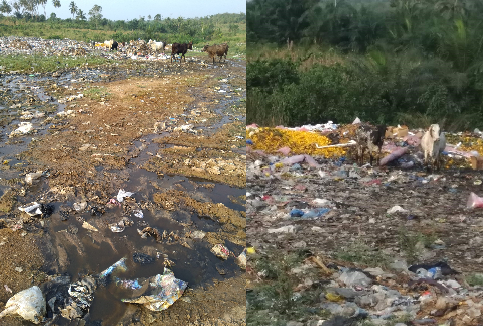
What comes to your mind when you see images like these of the municipal waste dump in Adeiso, Ghana?
1. The many R's of waste management
Watch the animated video below in fullscreen mode for better visability.
Transcript of the animated video above:
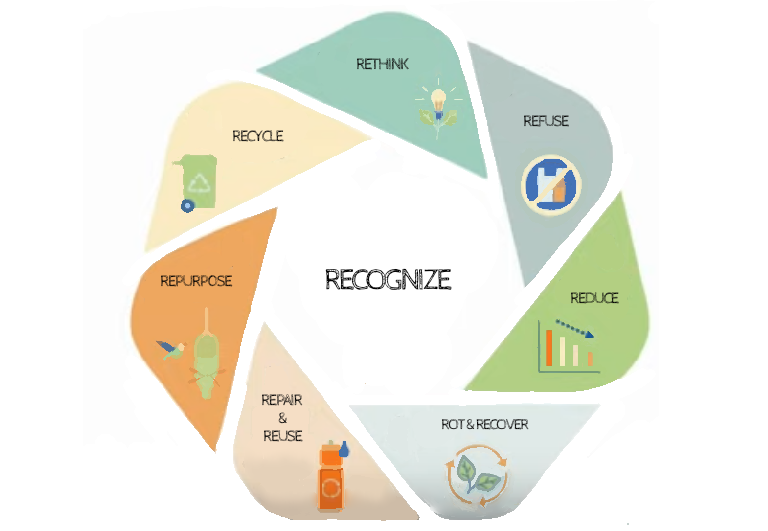
The principles of waste management can be described by a number of mottos that all start with an R:
Recognize - to be able to manage waste it is necessary to understand where in the production process which kind and quantity of waste is produced.
Rethink - waste management starts with understanding the problems created by neglecting the issue of waste and thinking of better solutions.
Refuse - the best way to manage waste is by not producing it in the first place. Once you recognized the areas where you produce waste make changes towards buying recyclable products and refusing unnecessary product packaging.
Reduce - if waste cannot be avoided completely try to find solutions to at least reduce the amount of waste created.
Reuse - try to find options of materials that can be used more than once before they turn into waste.
Repurpose - many materials might be suitable for 'upcycling', meaning they can be used again with a different purpose or made into something else.
Repair - instead of disposing of a broken piece immediately check if repairing it is a viable option to prolong its lifespan and delay its becoming waste.
Recycle - waste that has been collected seperately can be used for recycling, like paper, glass, metals and certain plastics.
Rot - organic wastes are an important source of nutrients and organic matter and should be collected seperately to be composted and returned to the nutrient cycle.
Recover - if nothing else can be done to repurpose or reduce the waste, the remaining garbage should not end up in a landfill, but be incinerated in such a way that it can be used to recover the energy as heat or electricity.
2. Recognize
Source: https://www.netsolwater.com/composition-and-characteristics-of-solid-waste.php?blog=3573
When developing a waste management strategy, the first step is always to to assess the types
and quantities of waste produced, as well as the extent of the problem it
currently creates. This includes:
- an inspection of the waste handling on site, possibly also the dump site where waste is disposed
- interviews and discussions with staff to gain an understanding of problems perceived
- investigation of possible structural problems that lead to unnecessary waste
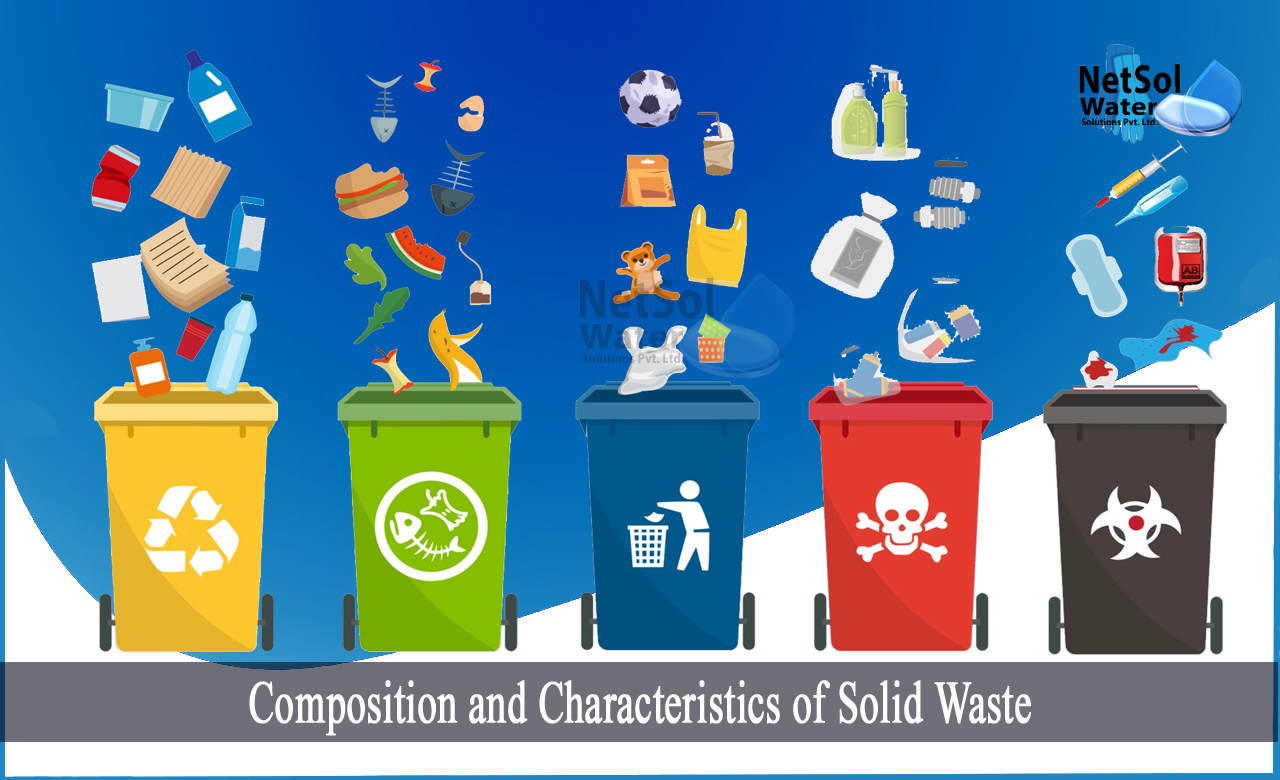
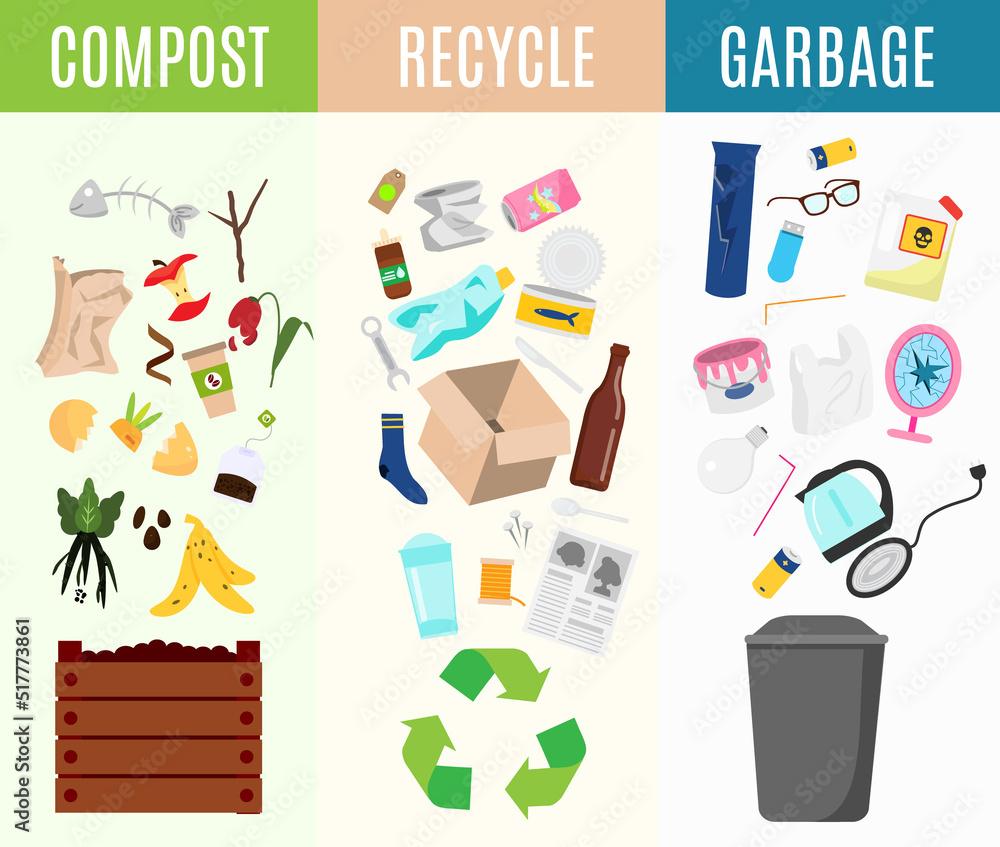
To be able to manage waste it needs to be categorized and collected seperately. The different categories of waste are:
recyclables - any material that can serve as the source to make similar materials instead of the original raw material. Examples: glass (sorted by color),
aluminum (cans, foil, re-heatable food packaging, etc.), PET water bottles and other recycable plastics, scrap metal including wire and cables, paper,
textiles, wood, rubber, etc.
organic waste -
any material that is biodegradable and comes from either a plant or an
animal. Examples are: food scraps, fruit & vegetable peels and
off-cuts, yard sweepings, landscape prunings, leaves, animal bedding,
food-soiled paper, untreated wood shavings, ash from organic sources,
potting soil, bones and shells, etc.
other solid wastes - any material that can not be recycled because of its state of processing or because it consists of a mix of unseperable different materials. These wastes are considered as garbage and have to be dumped in landfills or incinerated. Examples: toys, sports equipment, ceramics, polystyrene or styrofoam, photographs, soiled packaging,
construction and demolition waste - materials that need to be disposed after construction or demolition. Many of these have to be handled as hazardous waste, as they contain toxic chemicals or heavy metals. Others however, might be treated as recycables. Examples: scrap lumber and treated or painted wood, plastics, glass sheets, concrete and cement, paints and solvents, adhesives, coatings, metals, cables, wires, lightning, bricks or tiles and other ceramics, contaminated soil, etc.
e-waste - are electronics like: computers, cellphones, keyboards, lamps, cameras, batteries, solar panels, and other
electronic and electric equipment and appliances, of which some need to be treated as hazardous waste, but others can be used for recycling, especially of rare earths. It should be handled by qualified e-waste recycling companies.
hazardous waste - any material that poses a threat to human health or environmental safety because they contain active pathogens or chemicals, are toxic, sharp, corrosive or flammable. Examples: Organic compounds as found in solvents, pesticides and dioxines, heavy metals like cadmium, mercury and lead, cleaning solutions and desinfectants, paints and inks, batteries, glues, pesticides, weed, insect and rodent killers, petroleum products, engine oil and break fluids, bio-hazardous waste like infected or infested plant material, materials stained with blood or body fluids, materials carrying pathogens, glass shards, needles, blades, etc.
sewage - waste water is another category of waste many companies need to deal with, though not categorized as solid waste or garbage. Wastewater can be classified into two categories: blackwater and greywater. Blackwater is the wastewater from toilets that contains faecal matter and urine as well as water from kitchens and dishwashers which contain grease. Blackwater can contain pathogens and possibly be harmful. Greywater on the other hand is the wastewater that comes from sinks, washing machines, bathtubs and showers. It contains lower levels of contamination, making it easier to treat and process. Recycled greywater is commonly used in irrigation and constructed wetlands.
3. Rethink
Check out the website of HPW. HPW is a fruit processor in with facilities in Ghana and Ivory Coast. In 2019 they developed a new waste management strategy and looked at:
1. environmental factors
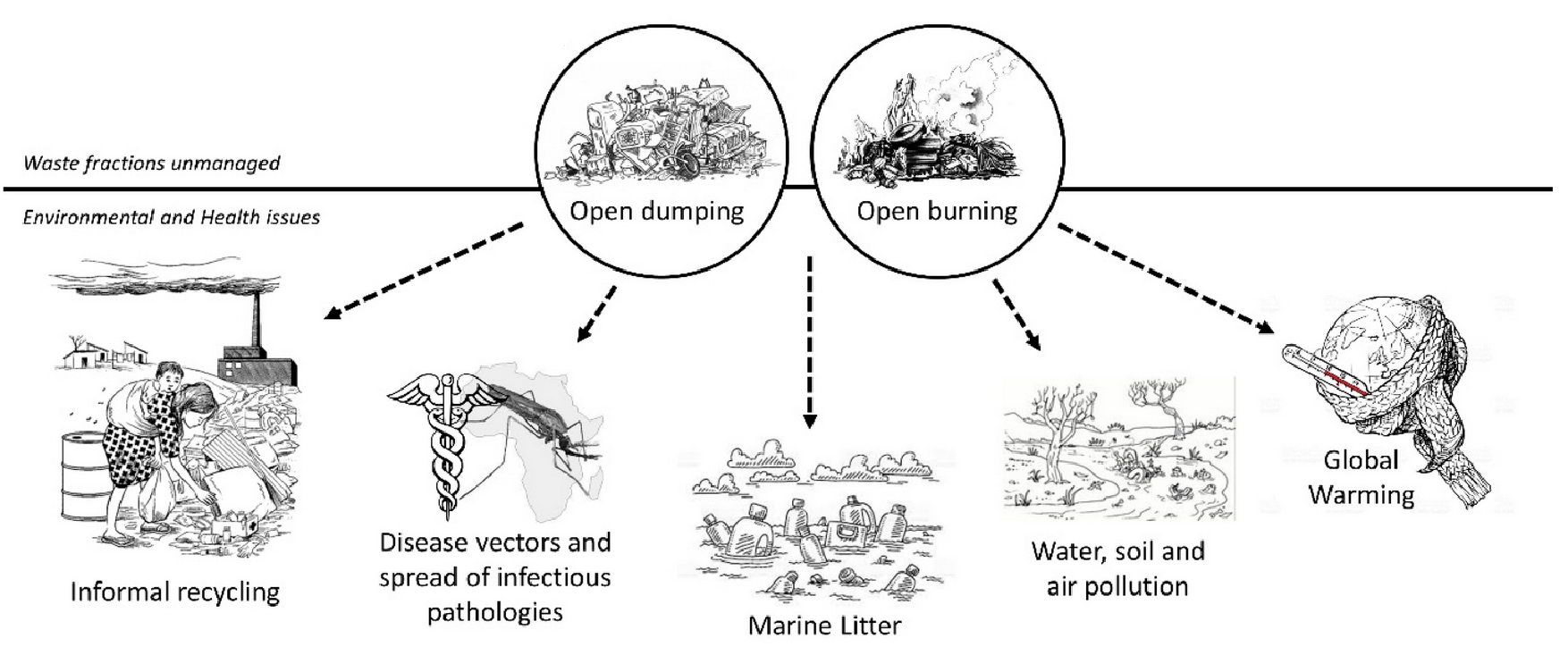
2. the brand image: companies can use their waste management efforts to communicate their environmental policies and to brand themselves as commited and responsible. In this day and age it is also important for companies to avoid public relation disasters that could be caused by images of bad waste handling appearing on social media.
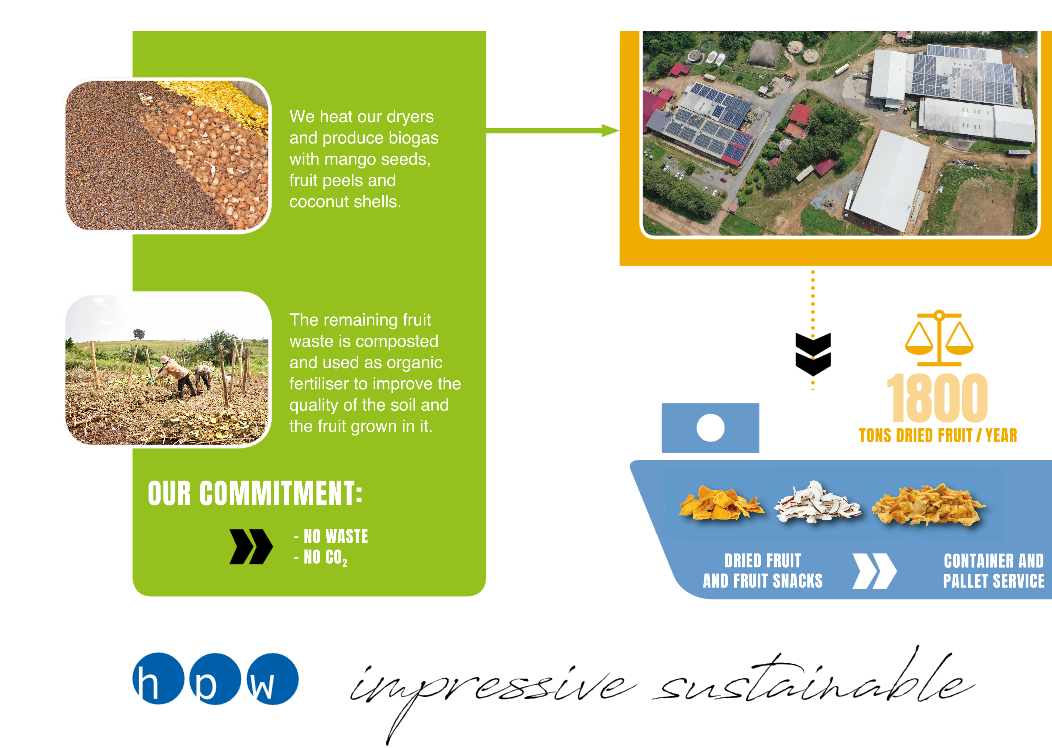
3. various cost aspects: Aspects that need to be considered can be cost of hiring a waste disposal service provider, cost of inhouse waste disposal (transport, manpower, etc.), cost of energy that could be produced from waste vs. investment in burner, cost of freshwater vs. wastewater treatment, cost of fertilizer vs. cost of composting, cost of alternative packaging materials, cost of waste as percentage of purchased raw material, cost of storage, cooling or logistic equipment vs. cost of storage losses, etc.
4. efficiency of processes: a large amount of raw material can be lost before processing if logistics of purchase (timing of harvest and transport, ripeness of crop, etc.), storage and cooling at the facility and order of processing (e.g. FIFO) are not coordinated adequately leading to unripe or overripe crop being delivered to the facility at times with limited cooling or storage capacity, etc. Investment in software that helps monitoring and planning might be necessary to improve inefficient processes. It could also be useful to rethink organizational structures if the chain of command and responsibilities are unclear or overly long, manpower allocations are unjustified or inadequate, or structural conditions of the buildings lead to errors or difficulties.
5. possible new products: in some cases valorization of waste can be a viable option. Some examples will be disussed in chapter 7.
4. Refuse
When it comes to "zero waste" Sierra Nevada Chico Breweries in the US is an interesting company. It has been certified as a platinum-level zero waste company—the highest possible certification level awarded by the US Zero Waste Council.
Since 2013, they have been diverting 99.8% of its solid waste
from landfill to instead being used as livestock feed or composted. 'Zero waste' has also been incorporated into the company
culture, and employees are gifted reusable bags, water
bottles, and containers, and encouraged to eliminate the waste normally
generated throughout their working day.
You can check out their different efforts on this interactive map.
As a company owner you have to make choices that impact the amount of waste you produce and have to dispose (usually at a cost). The smaller the amount of waste created in your facility, the less waste you need to manage. Refusing to buy from suppliers who use a lot of unneccessary or difficult to recycle packaging material, providing your workers with a water dispenser instead of water satchets, or using software for inhouse communication instead of printed materials are steps in a good direction.
5. Reduce
To reduce the amount of waste created by your company the highest amount of management is needed. It starts with making responsible decisions along your supply chain, setting up workflows, organizational structures and procedures that ensure low pre-processing losses, ensuring that waste can be collected seperately at all stages and is recycled as much as possible, collaborating with the HR department to close information and training gaps among staff, perfecting storage, logistics and sales to prevent after-processing losses, investing in technologies that help reduce waste, and to keep yourself informed about any developments, problems, and opportunities in your business that could lead to increased waste or help reduce waste. Waste reduction should become part of your company's culture and your waste management strategy should be reviewed regularly.
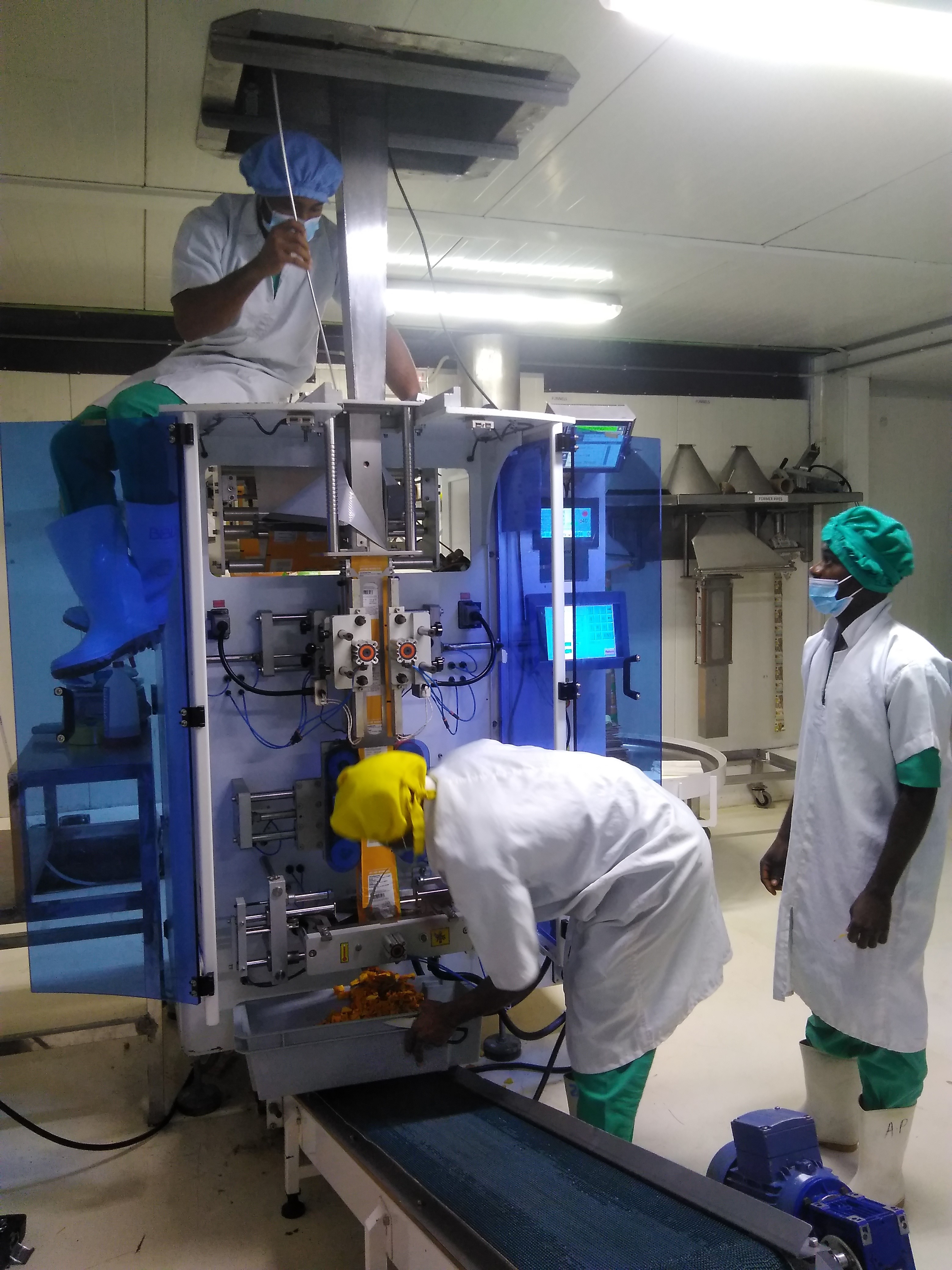
Example: You produce 3 different products. The machine that packs and lables your products is difficult to adjust. Everytime, you change from packing one product to another, it takes a large amount of packing material and labels to fine-tune the machine, before you can start packing. This causes large amounts of unnecessary packaging and label waste, which is also costly. To reduce waste you can either minimize the amount of times you change over from one product to another and package as much as possible of one product at each run, or you bring in a technician from the machine seller to improve the machine settings and train your staff better. In any case, it is important for management to be aware of these kinds of problems to be able to address them.
6. Reuse
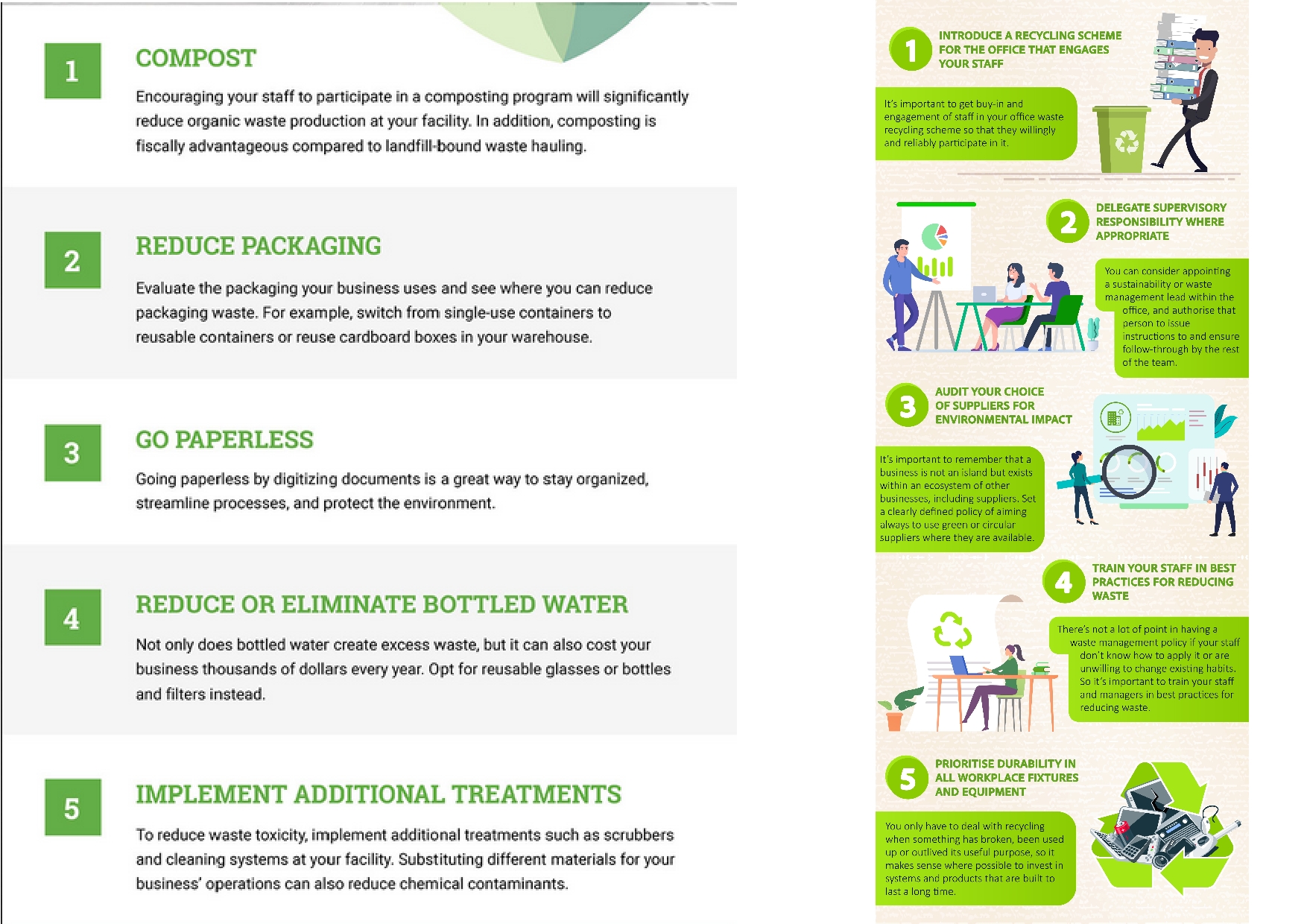
To reduce waste it is easiest to not produce it in the first place. Avoid single-use items wherever possible and replace them with items and materials that can be re-used. This can be an issue in food processing businesses, where high hygiene standards require the use of personal protective gear (PPEs), like gloves, masks, paper towels, etc.
In the case of most single-use PPE, it’s highly advised not to try and recycle your used products. This extends to:
Disposable face masks
Gloves
Aprons and hair covers
Paper towels, tissues and napkins
Disinfecting wipes
These pieces of equipment are often flimsy and clog
machinery at recycling plants. Check for the availability of programs that collect, clean and then repurpose PPE made from materials such
as vinyl, latex and nitrile. Therefore, before a purchase decision is made check if the item in question can be
recycled.
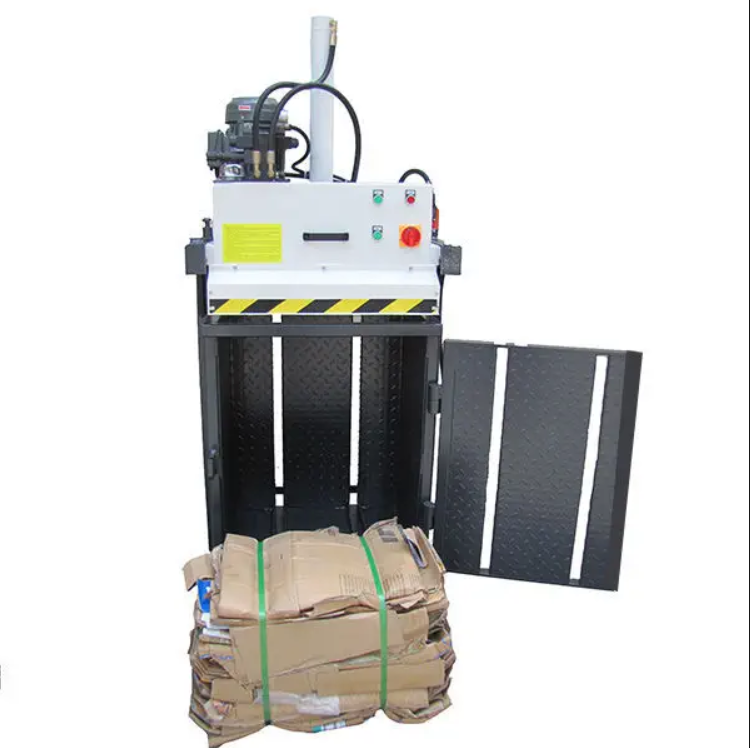
Paperbased items that cannot be recycled, like papertowels, etc. can be pressed into pallets or brickets and used as fuel.
Avoid individually packed meals or beverages and invest in plates, cutlery, cups and glasses, as well as water dispensers.
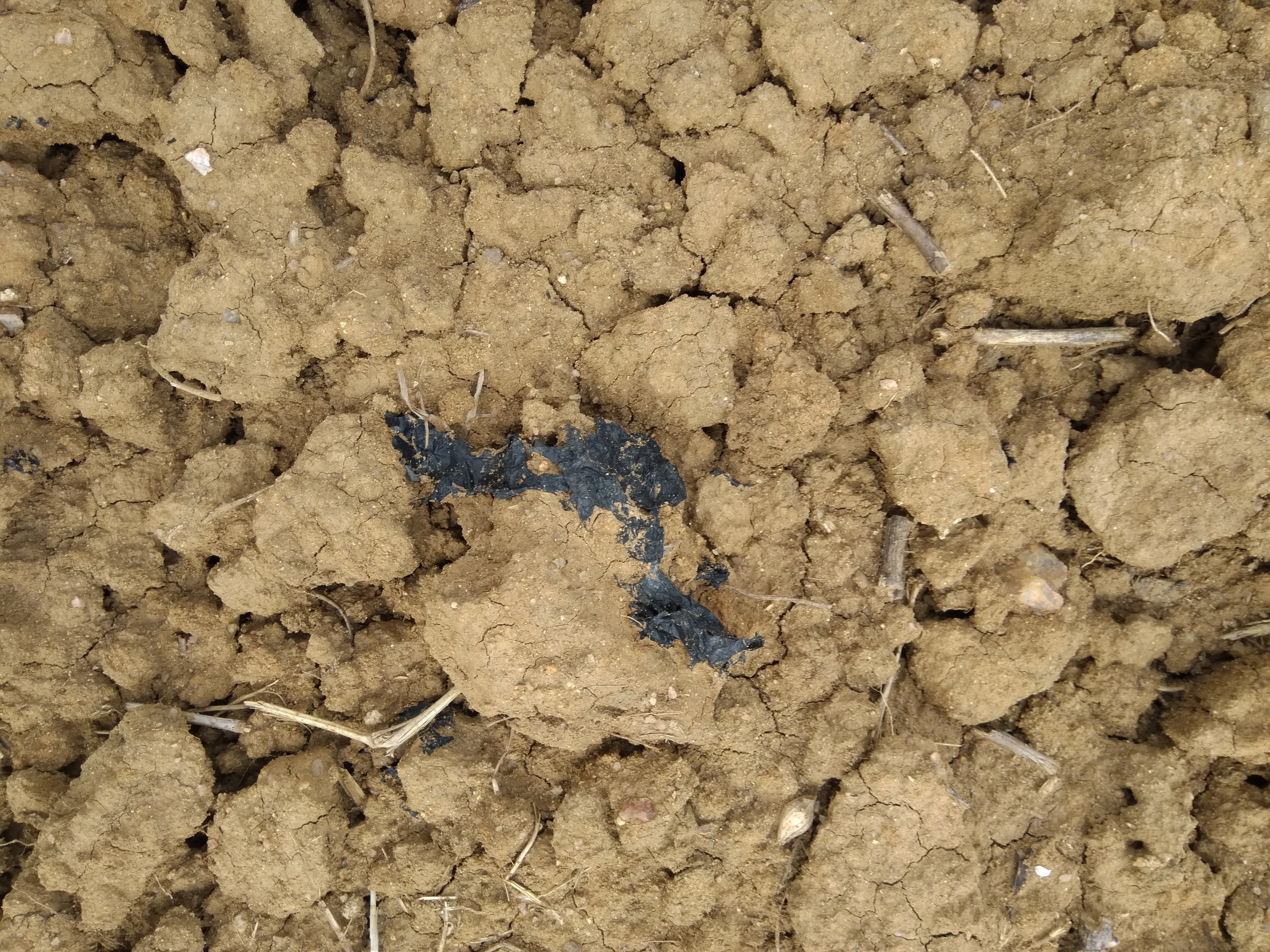
Image: Plastic mulch residues in a ploughed field
Some cultivation methods, e.g. for pineapples, require that the soil between the rows is completely covered to avoid evaporation and weed growth. Plastic mulch is common, however cannot be recovered during harvest and is usually ploughed into the soil, where it very slowly breaks down contaminating the soil with microplastic. A better option would be a mulch that decomposes completely, like cardboard or grass cuttings, or a leguminous cover crop.
7. Repurpose
Many waste products from food processing can be repurposed, e.g. as animal feed, to produce black soldier flies for poultry feed, to produce cosmetics like soaps and scrubs, to upcycle into bags and jelwery, or to make other food products. Pineapple peels e.g. can be used to produce vinegar (a recipe is attached under resources), apple peel can be used to thicken jams, etc. These processes are called waste valorization. Old IT and telecommunications equipment as well as machines and appliances might find new life with other users instead of being send to the landfill.
If you are interested, you can read here how Jim Belles, the agriculture manager of the Sierra Nevada Chico brewery scoured the brewery for spare materials to repurpose for a chicken coop.
Or check out the products made from water satchets in Nigeria here, or in Ghana here.
Paperwaste from your office or from paper packaging might be a welcome resource for your local kindergarten or an artisan crafts(wo)man who makes beautiful paperbeads and jewelery out of paper. In the worst case, paper can be compressed into briquettes and used to fuel cooking fires or dryers.
8. Repair
The waste management principle behind repairing equipment instead of disposing, is the extension of the life-span of the item. It's simple: if the initial investment cost of a piece of equipment is 1000 $ and you use it for 1000 days, it costs 1 $ per day. If you repair it for 200 $ and use it for another 1000 days, it only costs 60 Cents per day. You kept it out of the landfill for another 1000 days and used up only half of the resources needed to build the equipment, as you doubled its lifespan. These ideas are part of the 'zero waste' and 'circular economy' movements, which appeal to certain customer segments.
9. Recycle
10. Rot
Composting is one of the most important and frequent solutions in food processing companies, as organic wastes from pre-processing of fruits and vegetables represents the biggest quantity of wastes in such companies. Especially if the company also grows its own crops, returning nutrients from processed vegetables or fruits back to the farm/field plays an important factor in sustainable soil fertility management.
Procedure of compost making:
1. Identify compost site.
2. Erect shelter to protect area from direct sun (if necessary).
3. Collect all compostable materials
and transport to composting site.
4. Remove all plastic or other non-compostable materials.
5. If compostable materials from processing site are mostly Nitrogen-rich, collect as much rough materials and Carbon-rich materials as possible and also transport to the compost site.
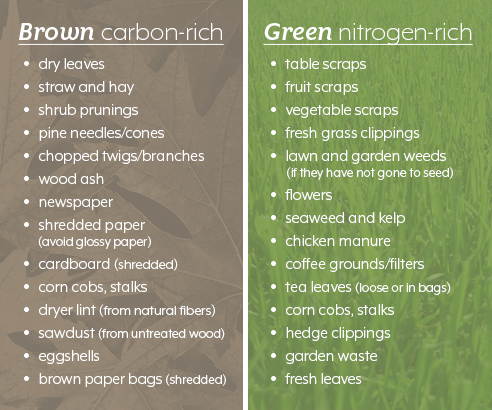
6. Organize any other inputs, like wood ash, rockphosphate and manure. These are not necessary, but addition improves the compost quality. Mix in 1 handfull of wood ash and or rockphosphate per m3 of compostables. Manure can be added at any rate, however, chicken manure needs to be matched with sufficient amounts of dry matter (Carbon-rich materials).
7. Lay out the width and length of the row in such a way that the compost row will be sheltered but also that the tractor and trailer can drive over it to offload the wastes from the factory. The bottom layer should consist of rough materials (branches etc.) to allow airflow.
8. Shred all materials roughly. They should not be cut too finely to provide enough structure to the compost heap for better aeration. If not composting immediately/continously heap them up nearby the compost row to allow easy access and handling during compost making.
9. Compostable materials can be offloaded directly onto the row by slowly driving over it along its length. Enough laborer (3-5) need to be onsite to then cover each layer with carbon-rich materials and some soil/old compost. Alternatively, materials can be shredded directly onto the compost row by a power shredder or wood chipper, that ejects the shredded materials over a longer distance.
10. Once all materials are incorporated the row should have a height of at least 1 meter to avoid drying out. Effluent or grey water could be added if the compostable materials are too dry.
11. The finished compost row should be covered with a protective layer of either long grass, palm fronts or banana leaves. It should not be covered with plastic foil to allow sufficient airflow. Only finished (fully mineralized) compost can be covered with plastic foil during storage to protect it from rain.
12. The compost should ideally not be turned to avoid Nitrogen losses. On sloped terrain trenches need to be dug downstream from the compost heaps to collect leachate, to prevent it from being washed into nearby water bodies.
13. The compost should be ready for use within 3 months and can be taken
to the fields and applied widespread, ideally with a manure spreader. Application rate should be around 10 tonnes per acre/year.
Vermicomposting & black soldier fly production:
For companies that produce only small amounts of biodigradable wastes vermicomposting and/or black soldier fly production can be interesting methods to valorize these. In vermicomposting earthworms are kept in large boxes and fed with small amounts of organic wastes, slowly turning them into high quality compost and a liquid that can be used to stimulate plant growth. Black soldier flies feed on decomposing organic matter and are provided with corogated cardboard to pupate. The pupae are collected and used as chicken feed. More detailed information can be found in the glossary.
Biogas:
Nitrogen-rich organic materials can also be used to feed a biogas digester. However, the investment cost for a biogas digester (unless very small-scale) is rather high and the technical expertise needed to successfully operate a biogas digester is also significant.
11. Recover
Similar to the nutrient recovery process of composting, or energy recovery in biogas digestion, energy can also be recovered directly by using dry organic matter like corn cobs, wood shavings, scrap lumber, coconut, peanut or macadamia shells, dried mango seeds, etc. as fuel for burners e.g. to run dryers. They can also be charred and made into briquettes. This can reduce fuel cost in heat or fuel consuming operations.
Samllscale briquette making
Carbonization process using the top-lit kiln design:
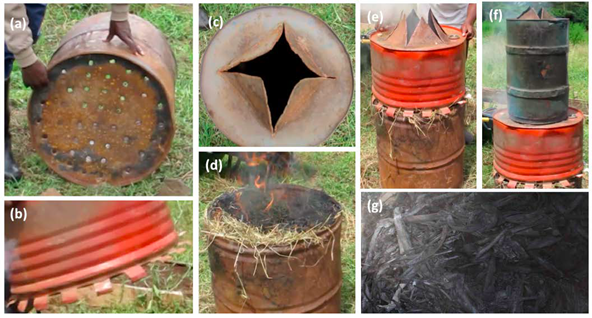
(a) The main kiln has an open top and many small holes at the bottom. The adapter has an alternatingly ridged/grooved bottom (b) as well as a star-shaped opening at the top (c). To operate the kiln, first set the biomass on fire from the top (d), and once the fire has spread all around, cover the main kiln with the adapter (e), immediately followed by the chimney (f). After about 20 minutes of pyrolysis followed by about 1-2 hours of cooling, charred biomass is recovered (g).
Smallscale briquette making
Carbonization process using the top-lit kiln design:
(a) The main kiln has an open top and many small holes at the bottom.
The adapter has an alternatingly ridged/grooved bottom (b) as well as a
star-shaped opening at the top (c). To operate the kiln, first set the biomass
on fire from the top (d), and once the fire has spread all around, cover the
main kiln with the adapter (e), immediately followed by the chimney (f). After
about 20 minutes of pyrolysis followed by about 1-2 hours of cooling, charred
biomass is recovered (g).
Materials: Obtain two 200-liter oil drums that have sealed bottom and top. Check the drum body so that there are no holes/leaks. One of these two drums will become the main drum, while the other one can be cut in half and made into two separate adapters. In addition, also locate a smaller oil drum with an open end (bottom) and a closed end (top) to serve as the chimney element.
Main kiln: To manufacture the main kiln, cut the top of the 200-liter oil drum open, and open about 20-30 small holes about 5 cm in diameter evenly throughout the bottom of the kiln. Find a metal sheet/cover that can seal the kiln tightly over the top when necessary. This is shown in (a).
Adapter: To manufacture the adapter, cut the other 200-liter oil drum longitudinally into halves. Each half will have an open end (bottom) and a closed end (top). Cut the bottom (open) edge of the kiln into about 10 pairs of alternating ridges/grooves, as shown in (b). Next, cut the top (closed) end of the adapter into an opening through which smoke can be directed, as in (c). Make sure that the opening is smaller enough to fit completely into the chimney piece (to be described below).
Chimney: To manufacture the chimney, cut the top (closed) end of the smaller oil drum into an opening similar to what is shown in (c).
Operating the kiln: Make sure that the ground is even, then elevate the kiln on three rocks about 5 cm above the ground. Load the biomass in alternating easy-to-light and difficult-to-light layers. Make sure that both the bottommost and the topmost layers are easy to light on fire. Once the kiln is filled, evenly light the top of the kiln on fire. Once the fire has spread throughout the kiln, as seen in (d), cover the main kiln with the adapter, followed by the chimney, as shown in (e) and (f). After about 15-20 minutes, the combusting layer (where the heat is located) should migrate from the topmost layer of biomass to the bottommost layer, at which point it is necessary to cover the kiln completely by applying the lid at the top, removing the stones at the bottom, and sealing all possible cracks with sand, as seen in (g). The kiln is then left to cool for 1-2 hours until it is safe to touch the exterior, or if in a hurry, the kiln can be cooled by applying water to it. After the kiln has cooled, the charred biomass can be harvested, ground to fine powder, and briquetted using a press and/or a binding agent.
Author: Kevin Kung