Materials for packaging
| Site: | Plattform für Weiterbildung und Internationalisierung der Hochschule Weihenstephan-Triesdorf |
| Course: | Entrepreneurship in Food |
| Book: | Materials for packaging |
| Printed by: | Gast |
| Date: | Sunday, 26 July 2026, 4:03 AM |
Description

1. Purpose of Packaging
Customers are usually not buying a product for its packaging but for the content. However, they expect the food they are buying to reach them in an hygienic, uncontaminated, safe to consume state, with an unaltered taste and color and aesthetic optics. Consumers also expect the packaging to allow for easy, safe, and convenient handling of the product as well as an adequate amount of information on the product.
Therefore, when choosing on the right packaging material for your product, you need to look out for a material that provides a sufficient barrier against microbial or other contamination, is hygienic, provides protection from light or heat where necessary, keeps the product safe during transport and is also attractive to the customer.
However, unless suitable for reuse or recycling, packaging material is usually discarded once the product is consumed. It is single-use by nature. When choosing the packaging material factors like its environmental impact, cost and volume or weight (which contribute to transport cost), also need to be considered.
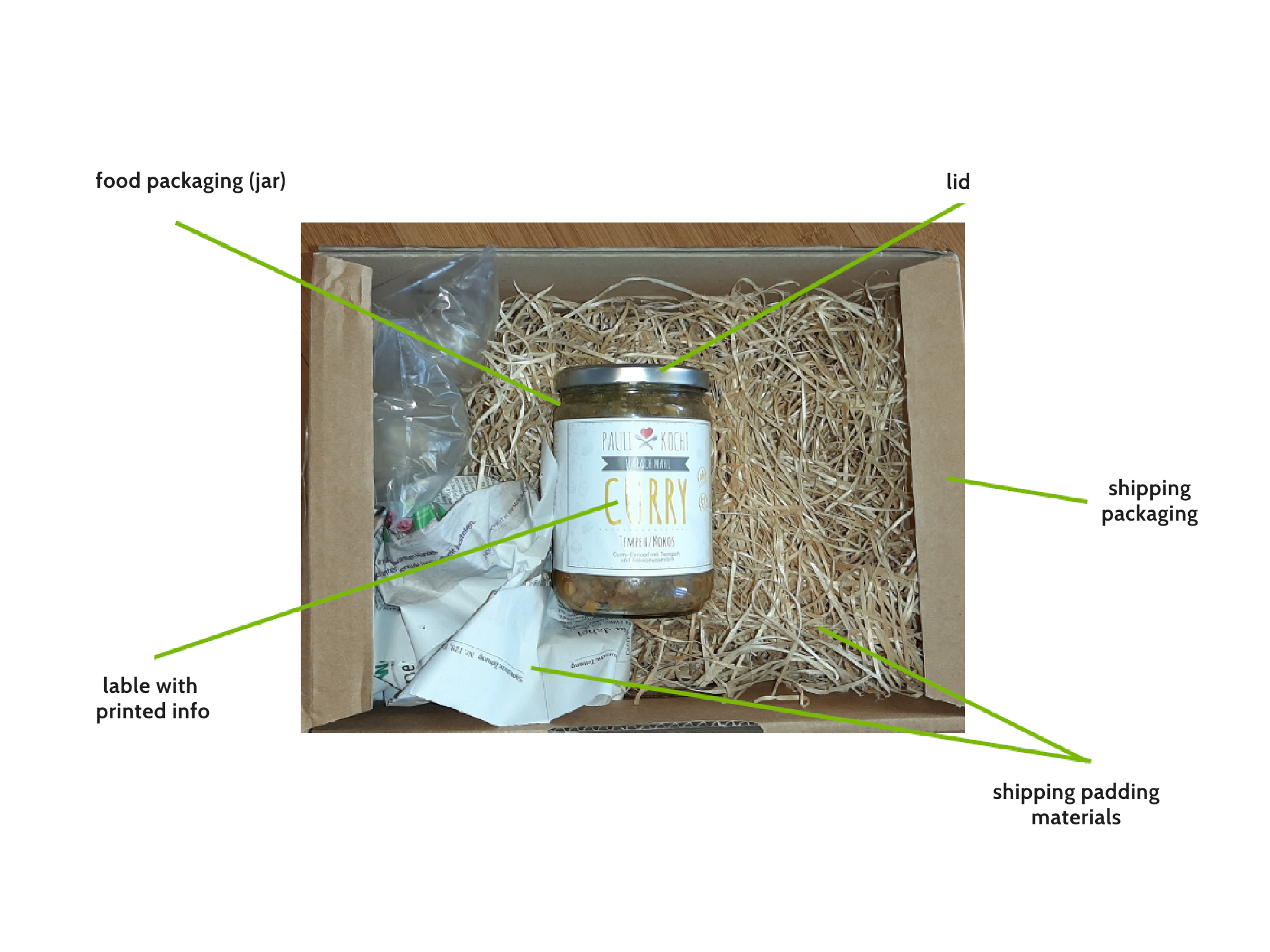
You can find a description of different plastic packaging types here.
2. Functional property requirements of packaging materials
|
|
Functional Property |
Specific Factors |
|
1 |
Gas permeability |
O2, CO2, N2, H2O vapor |
|
2 |
Protection against environmental factors |
Light, odor, microorganisms, moisture |
|
3 |
Mechanical properties |
Weight, elasticity, heat-sealability, mechanical sealability, strength (tensile, tear, impact, bursting) |
|
4 |
Reactivity with food |
Grease, acid, water, color |
|
5 |
Marketing-related properties |
Attractiveness, printability, cost |
|
6 |
Convenience |
Disposability, repeated use, resealability, secondary use |
|
7 |
Aroma |
Aroma compound barrier property |
3. Flexible packaging materials
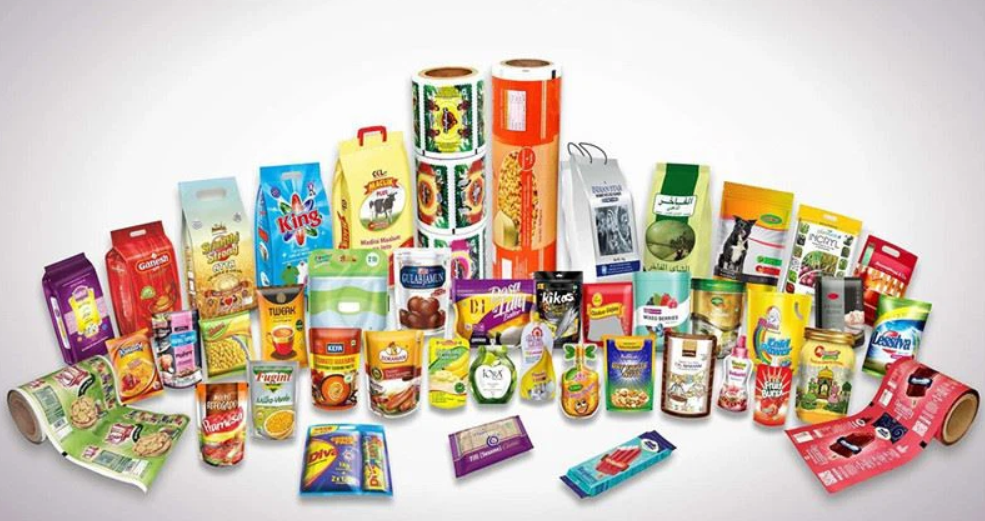
The shape of flexible packaging materials can be changed during filling or use. They are usually produced from paper, plastic film or foil, or aluminium foil or a combination of these materials:
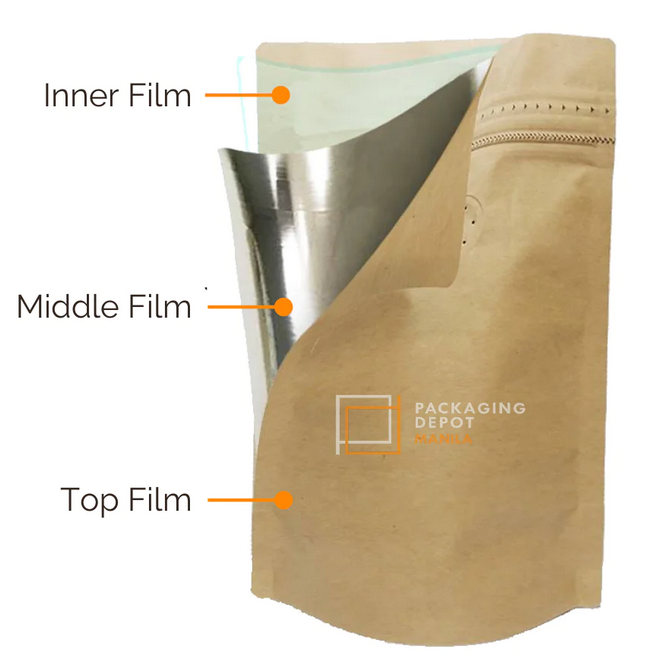
A little over 1/3 of all packaging materials used globally are
flexible materials. Their advantage lies in their convenience. They can be made to a variety of different shapes and sizes, they are easy to
peel open and can be resealed (where needed), they are light-weight and can be
see-through to show the product. They are often the most cost effective packaging solution and are used in sachets, pouches, etc. The disadvantage of flexible packaging materials is mainly the difficulty to print directly onto the material and the danger that it can be easily pierced or damaged and then no longer provides a barrier. Another disadvantage can be the difficulty to separate and recycle the different layers, causing larger amounts of non-recycable waste.
3.1. Top lidding films

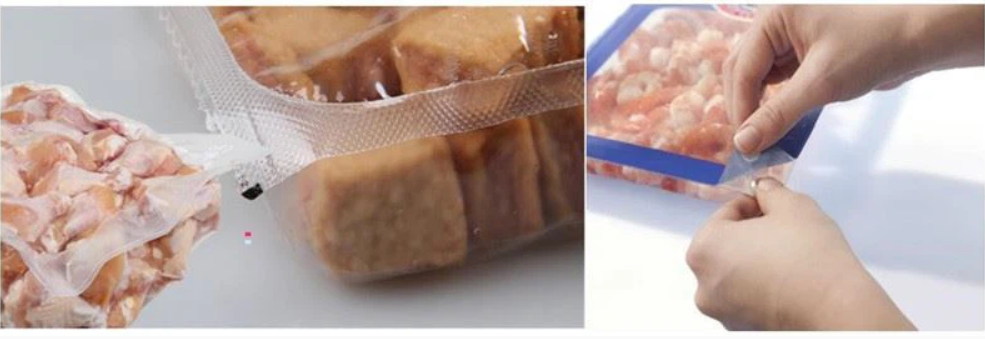
Top lidding films are used to cover and seal thermoformed rigid trays and can be used in modified atmosphere packaging (MAP) or
vacuum skin packaging (VSP). Although they are thin and lightweight, they seal well and provide a good barrier. They can be conditioned to be anti-fogging. That means moist or heated products can breath under such a cover without the film becoming foggy, so that the food is still clearly visible. These films are mostly used to pack convenience meals or fresh meat.
3.2. Flow pack films
Flow pack films, also known as flow wrap films or horizontal form-fill-seal (HFFS) films, are a widely used type of flexible packaging material. Theys are specifically designed for flow wrapping, where a product is wrapped in a continuous film by horizontally forming, filling, and sealing it. Flow wrapping is a high-speed packaging method, that ensures efficiency and cost-effectiveness in large-scale manufacturing. Flow pack films are versatile and can be used to package a wide range of products, like snacks, baked goods, etc. Another advantage of flow pack films is that they can be printed in high-quality.
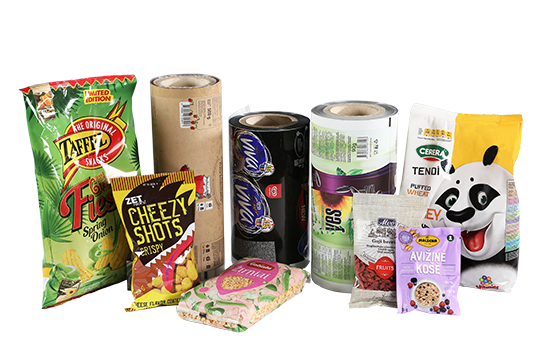
Source: https://iocopackaging.lt/en/flow-pack/
3.3. Doypack films
Doypack films, also known as stand-up
pouch films or flexible pouch films, are a versatile packaging choice due to their flexible design,
customizable features, and ability to protect and display a wide range of
products. T.heir most distinctive feature is their ability to stand upright, achieved through a bottom gusset, which expands when the pouch
is filled, providing stability and visibility. Compared to rigid packaging materials that provide a similar feature, doypack pouches are lightweight, which reduces the cost of transport. Resealable zippers, tear notches for easy opening and resealing, as well as bottletops for easy dispending can be incorporated into the pouches.
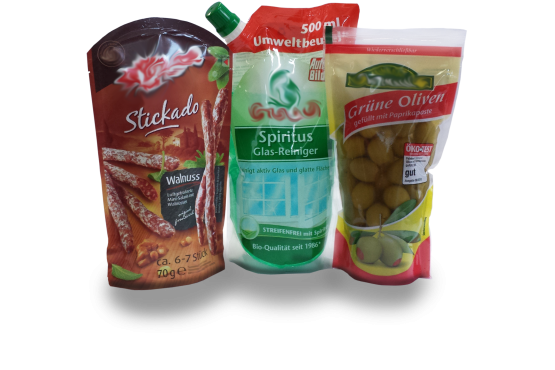
Source: https://www.tbs-pack.de/en/castelli-films/stand-up-pouches-doypack-bags/
3.4. Sachet films

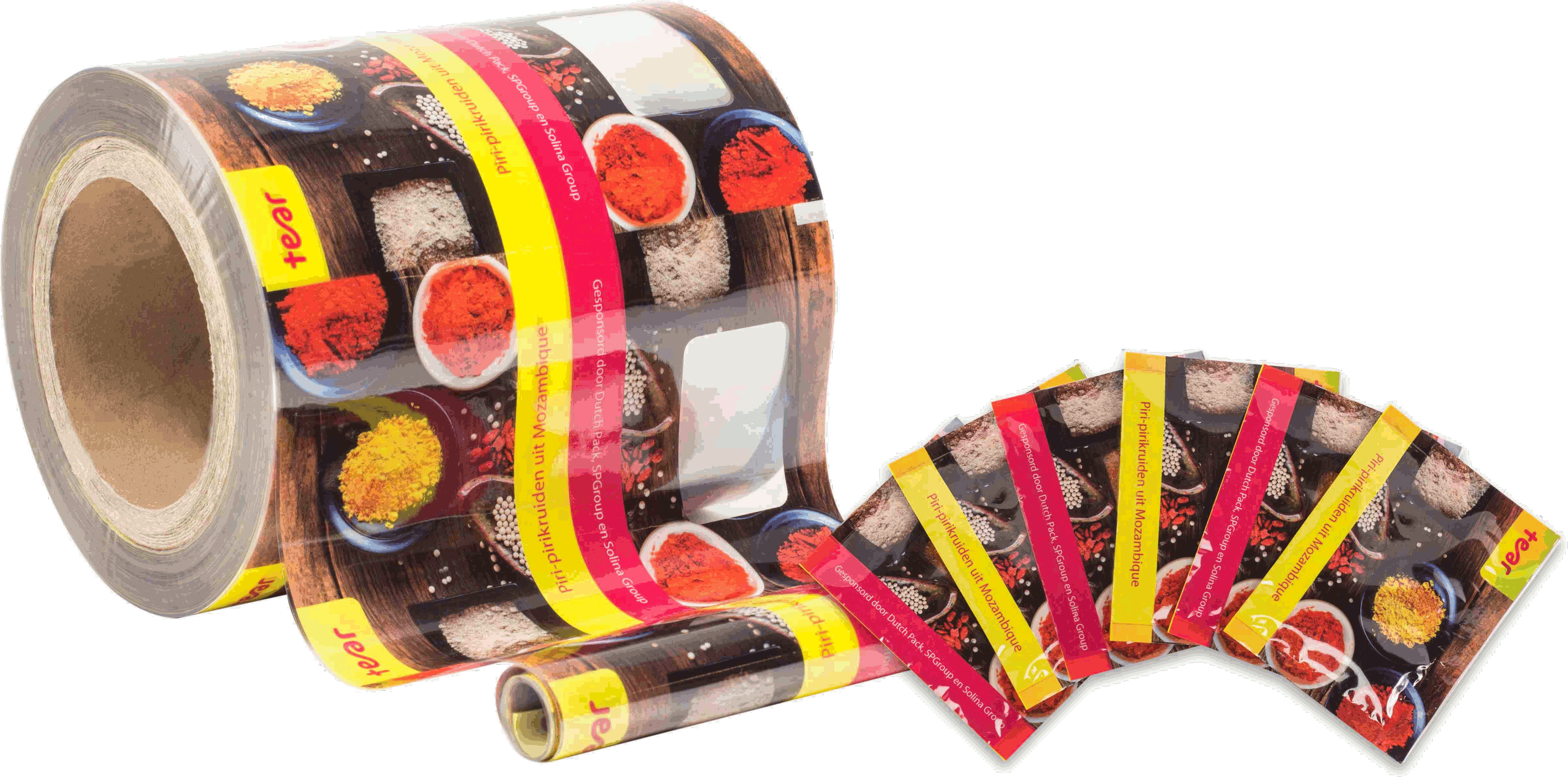
Sachet films are specialized packaging materials used to
create small, sealed pouches or sachets for a variety of products. They are identified by wide sealing lines of the pack. Sachet films can be made from a variety of
materials, including plastic (such as polyethylene, polypropylene, and PET),
aluminum foil, and laminates, to provide a barrier against oxygen, moisture, light, etc. depending on the product properties. They are used to pack small, single-use quantities at high volumes, using automated packaging machines.
Source: https://www.dutchpack.eu/en/products/film-on-reel/
3.5. APET metallized films
APET
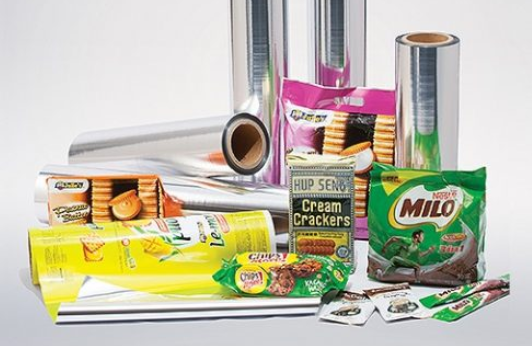
metallized films are made from APET to which a thin
layer of metal, such as aluminum, has been applied on the surface of the film. This process
imparts specific properties and characteristics to the film, giving it a shiny, reflective appearance and excellent barrier properties against moisture, oxygen, and light. This makes it a choice material for luxury products, or those which need protection especially from UV-light, like nuts or moisture, like freeze-dried powders or crisps. Like other multilayer films, metallized film is difficult to recycle and therefore not an eco-friendly packaging solution.
4. Rigid Materials
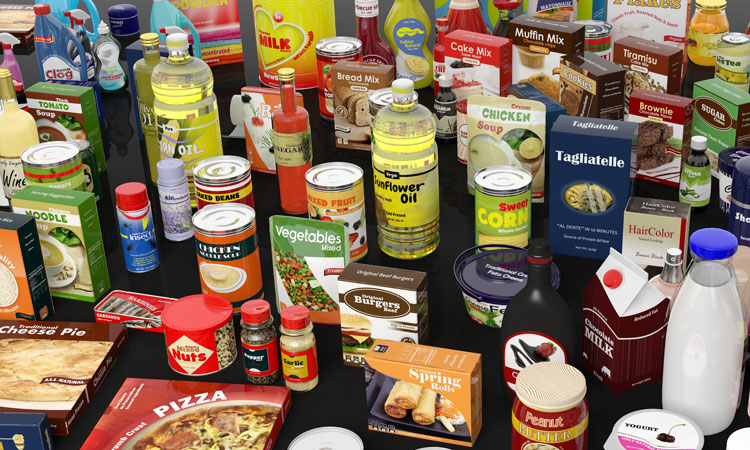
Rigid materials are those, which provide structural support and protection, like glass jars and bottles, hard plastics (PET or HPDE) tubs and bottles, aluminium cans, carton and cardboard boxes. Cardboard and fibreboard boxes are also used for transport packaging.
They can usually be easily printed or labled in high quality and can provide protection against light. Their disadvantage is their bulkiness, breakability, and releatively high weight.
4.1. Glass
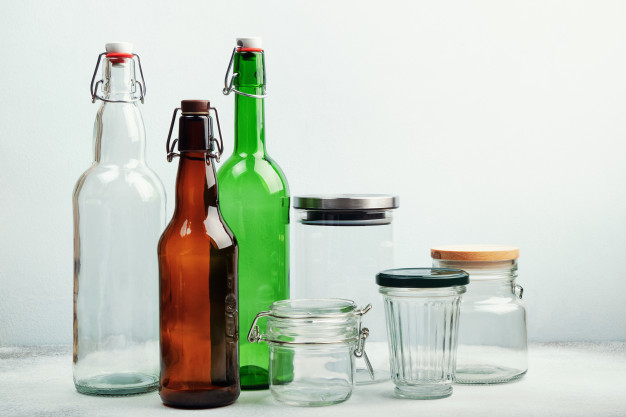
Advantages of glass packaging are their suitability for all kinds of foods as well as sterilized conserves (121◦C) and pasteurized conserves (<100◦C). Glass packaging gives the impression of a high quality product compared to plastic packaging. Another advantage is that glass containers are reusable (can be opened and closed whenever needed) and are recyclable.
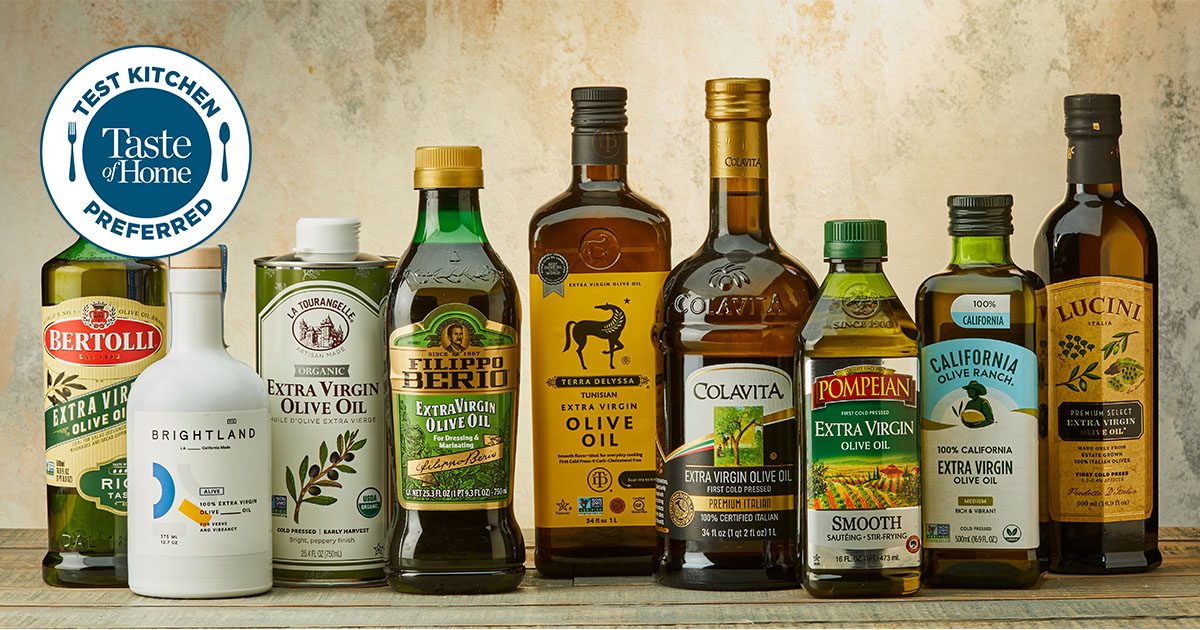
The major disadvantages of glass is its breakability and its heavy weight, which both are a cost factor in transport. Glass is also see-through and does provide only limited UV-protection, which can cause discoloration or oxidation/rancidity of the product (e.g. unsaturated oils, like rapeseed oil, pumpkin seed oil, etc.). Higher UV-protection can be achieved by using colored glass (usually green or brown). These are often used for unsaturated oils, dairy products or other beverages.
4.2. Lids
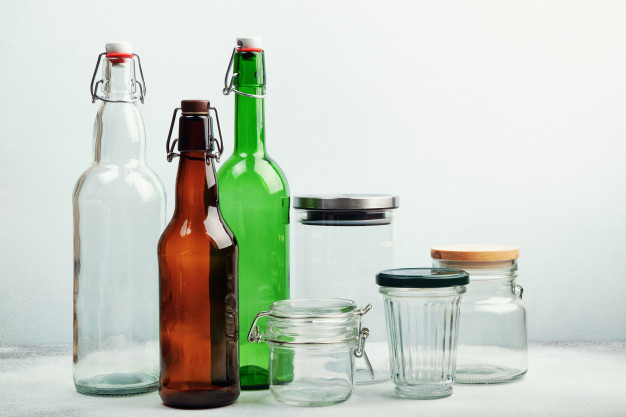
Glass bottles and jars need to be sealed with a lid. Depending on the product and the bottle or jar type, different alternatives are available:
1. Twist-off and continous thread (CT) lids
Twist-off and CT lids are ideal for closing jars. Both are suitable for hot-filling. However, for products that need sterilization by water bathing or otherwise a high-heat lid, a continuous thread lid is the better option.
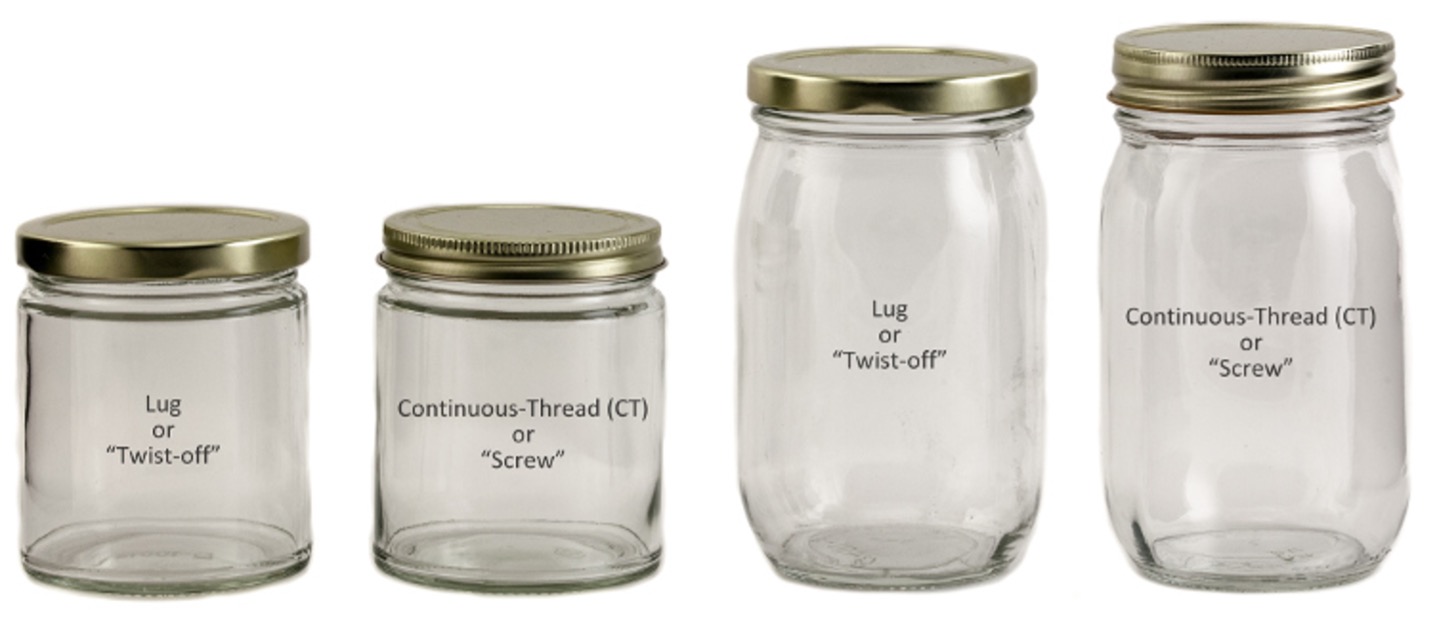
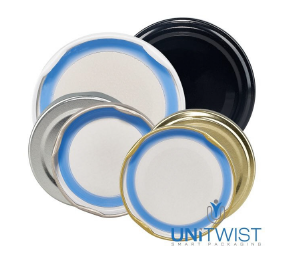
2. Special lids for oily foods (e.g. blue seal, thermoplastic elastomere)
The sealing material on the inside of conventional twist-off lids is not oil-proof, as it can dissolve when in contact with oil. For oil or oil containing foods, loke dressings, marination, chutney, etc. it is necessary to use special, oil-proof lids as described below:
|
|
used for: |
|
type E |
Cold filling, without further treatment |
|
type T |
Cold or hot filling, pasteurization at max: 95◦C for 1hour, without pressure, minimum 5-7% headspace |
|
type K |
Hot filling, sterilization at max: 121◦C for 1hour, 2,5 bar pressure, min. vaccum -0,35 bar, max. pressure difference: 1 bar, minimum 7-9% headspace |
3. Aluminium screw caps:
Aluminium screw caps come in many versions, some are for manual bottle sealing, while the roll-on cap is for machine-sealing of bottles. Some come with sleeves (for wine), twist-off rings for product safety, or even pourers for flow-control (e.g. used in oil bottles).
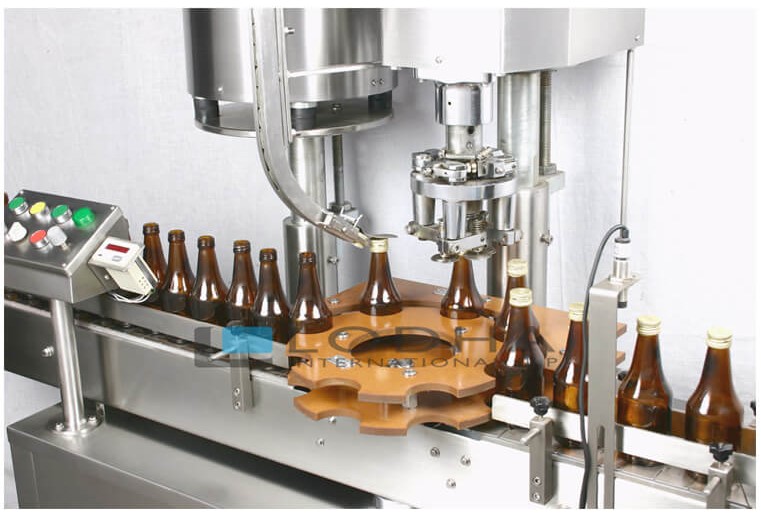
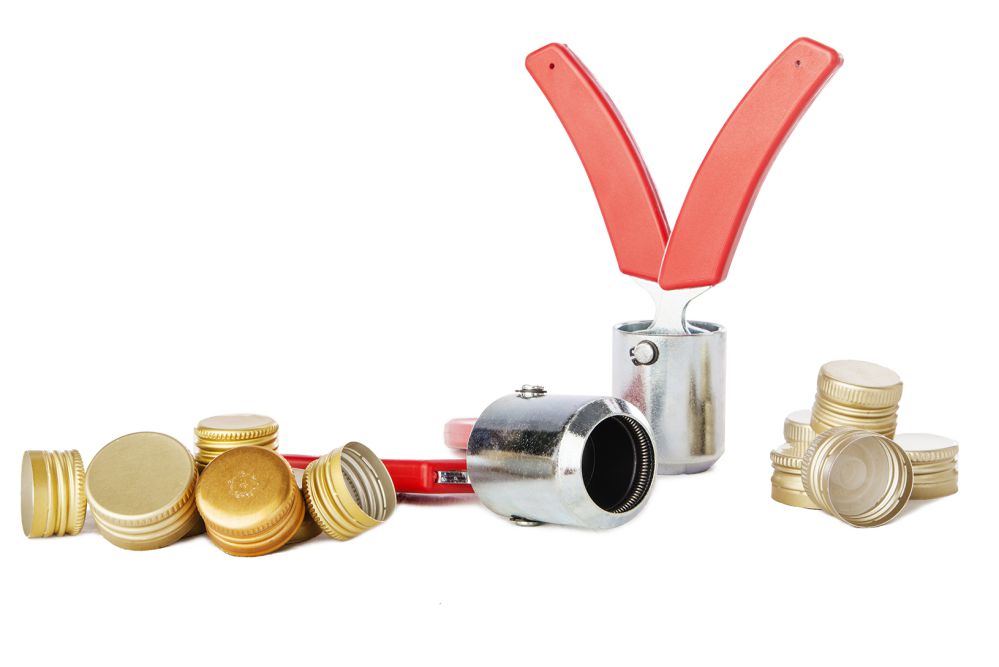
Automated capping with screwcaps Manual screwcap sealer
Image source: https://www.lodhapharma.com/cap-sealing-machine.php Image source: https://www.tenco.it/en/manual-cap-sealing-tool-bottles
For hotfilling of fruit or vegetable juices, these caps can come with a ventilation system (see gif of VACU VENT below), which releases gas or hot air under pressure and produces a vaccum seal when cooling down.
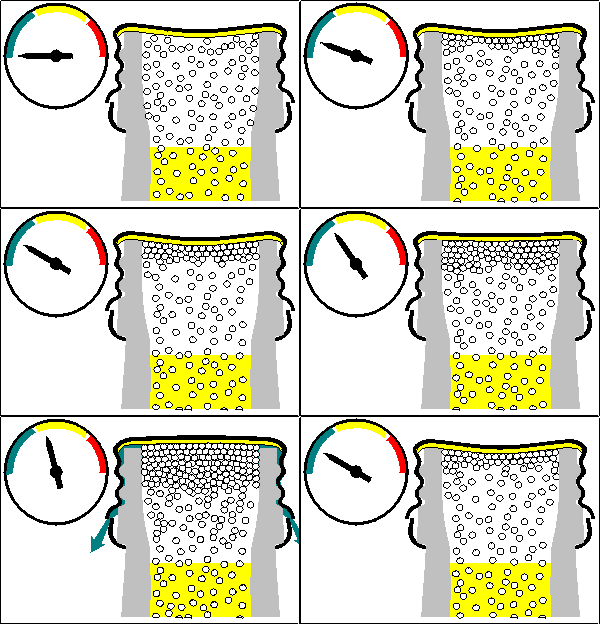
VACU VENT source: http://www.mw-wipperfuerth.de
4. Bottle caps (crown cork)
The bottle cap is a single-use lid, usually used for beer or sodas, which are sold in bottles smaller than 1 liter. A bottle opener is needed to remove the cap. They can be used industrially but also in small, ma´nual production.
5. Clip-on or swingtops and rubber seals
Jars used for preserving fruits and vegetables through pasteurization or sterilization are usually covered with a fitting glass lid and a rubber seal. To keep both in place during the pasteurization or sterilization process they are clipped on with either single clips or swingtop clips. Swingtop lids are also sometimes used for beer bottles. To ensure a tight sealing between jar and lid it is crucial to ensure both the seal and the rim are compelete clean when closing the jar.
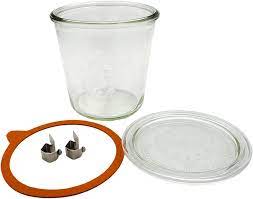
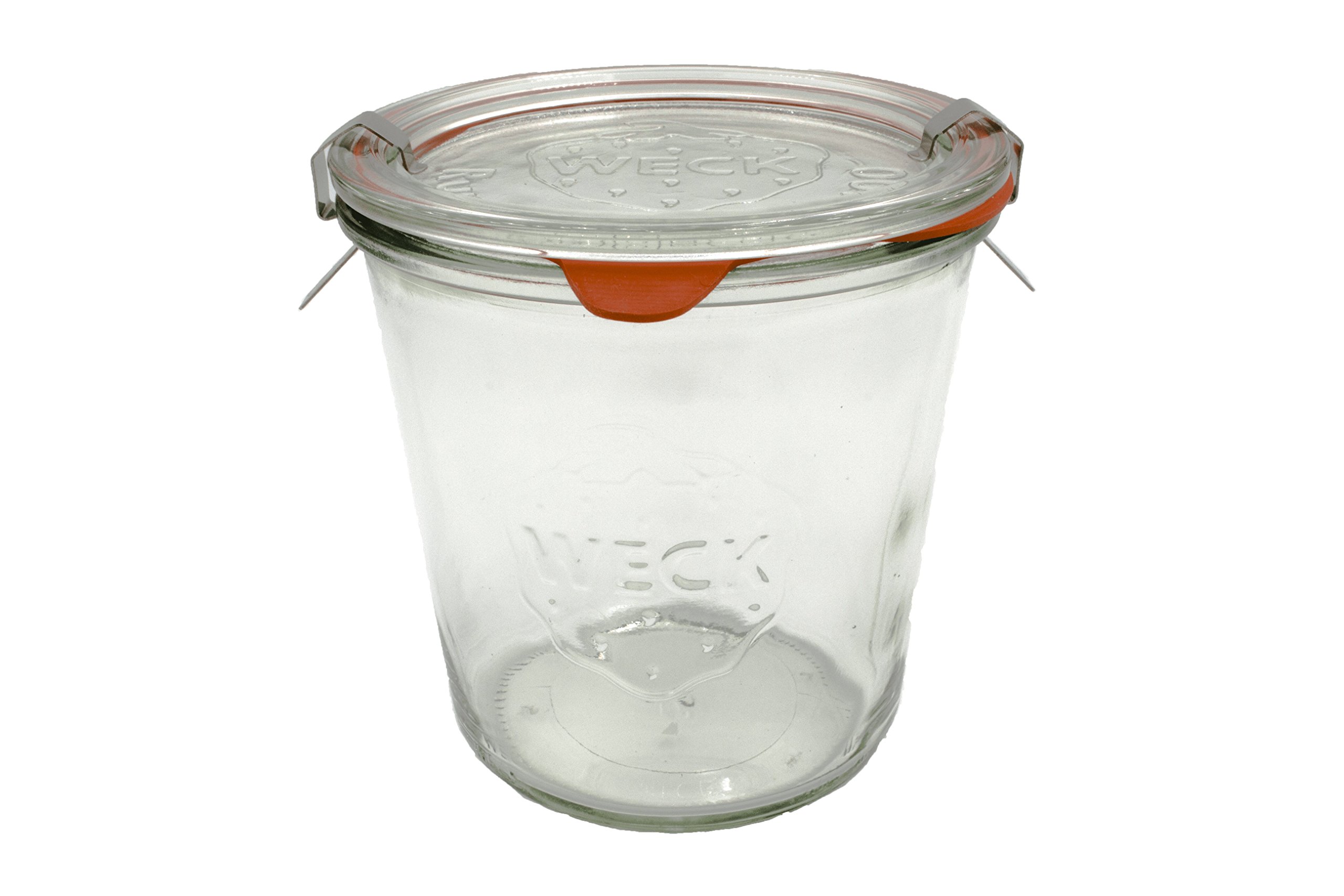
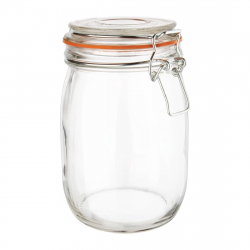
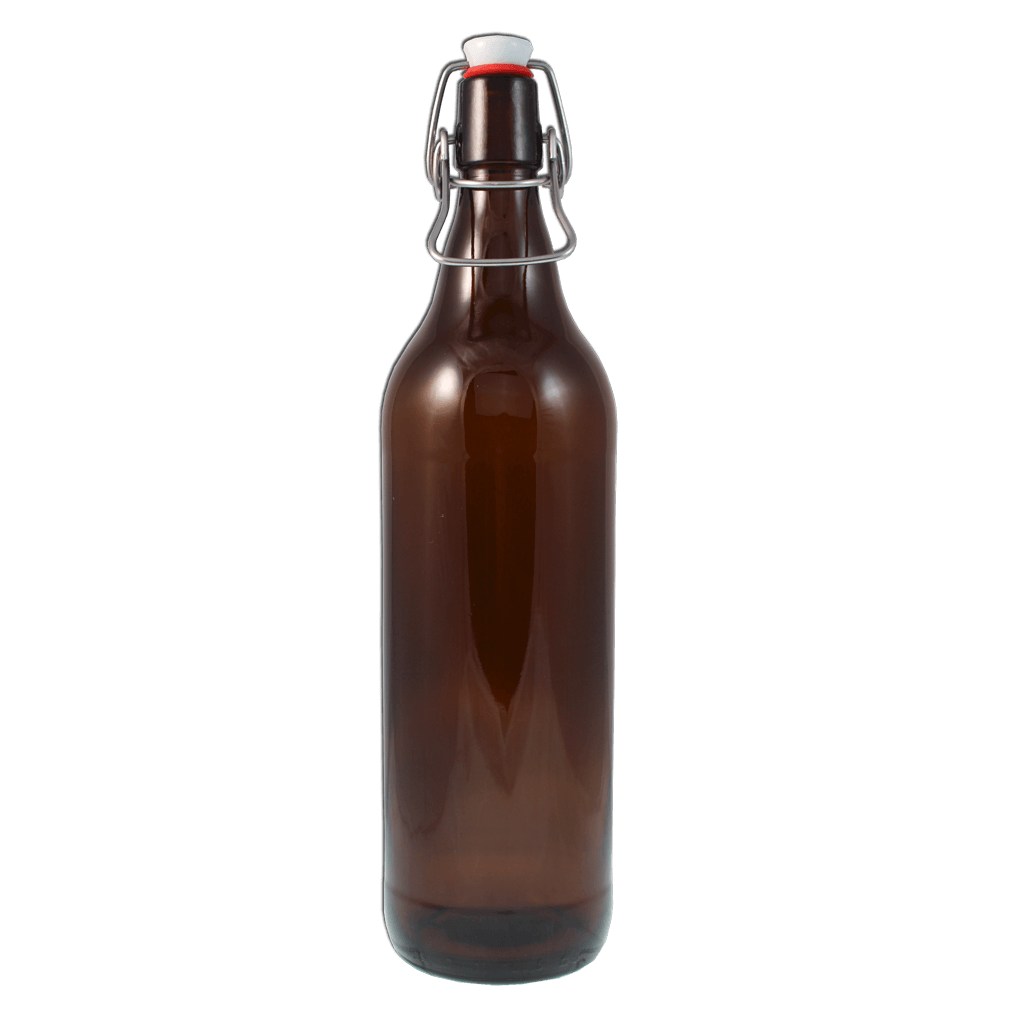
jar, lid, seal and clips closed jar jar with swinglid bottle with swinglid
4.3. Metal cans
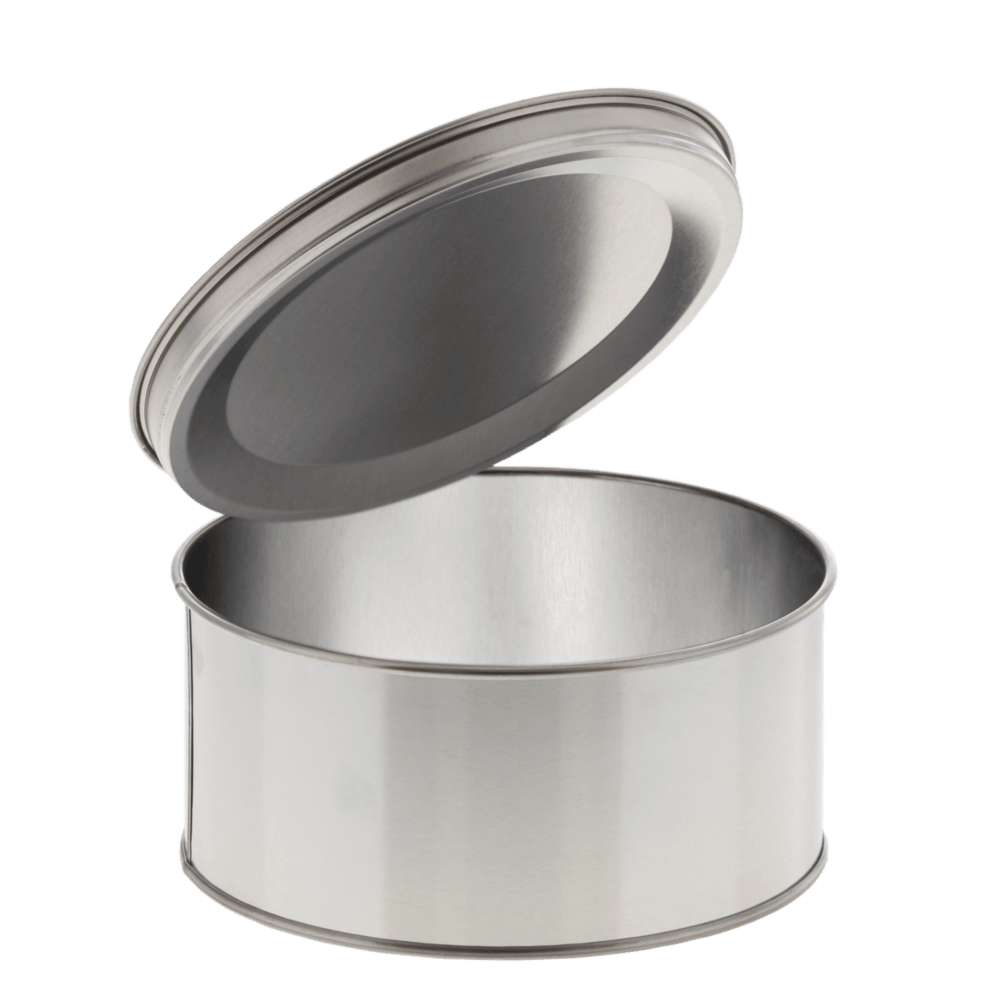
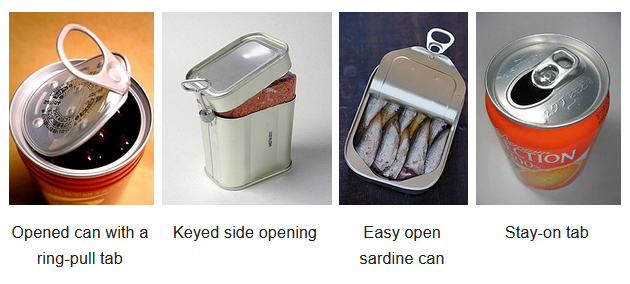
Cans are made either from non-coorosive tinplated steel or from aluminium, which is cheaper and light-weight. For use with acidic foods it is necessary to use tinplated cans with an appropriate inside coating, as it can errode the tin layer causing tin to dissolve into the food, causing nausea and digestive problems. However, the currently common coatings contain Bisphenol-A (BPA), a controversial chemical compound, which also leaches into acidic foods. Other disadvantages of metal cans are that the product is not visible. For these reasons canned food generally has a cheaper image than glass conserves and is therefore not so useful for high quality products.
On the other hand do cans also have several advantages as packaging materials: hot and cold filling is possible, and the filling process is easy and fast due to the large and straight mouth of the can. Canned foods have a long shelf live and provide absolute protection from light and oxygen and therefore also against discoloration or oxidation of the product.
Cans are closed with a metal lid and equipment is needed to close/seal the cans. Also sterilization of the filled cans is necessary to avoid spoilage from
microorganisms. Therefore, cans are only suitable for products that are cooked and can
withstand temperatures of 121◦C.
4.4. Rigid plastics
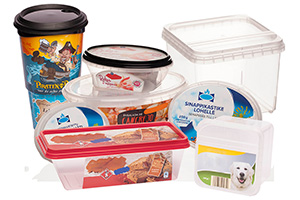
Rigid plastics are used for their thermoformability, which means they
can be molded into any shape, size and form. They can be
clear/transparent or colored. They provide high stability and excellent
barrier properties. Among them are PET or APET and HDPE. If they are mono materials, meaning not layered with another material, they are theoretically recycable, but in reality that is rarely the case, except for PET water bottles.
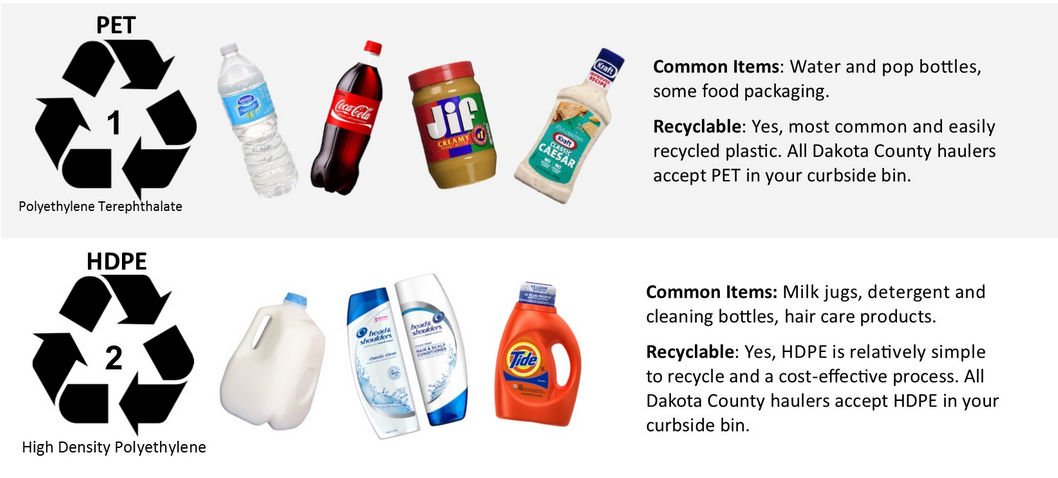
Image source: https://dakotavalleyrecyclingmn.gov/curbside/whats-up-with-plastics
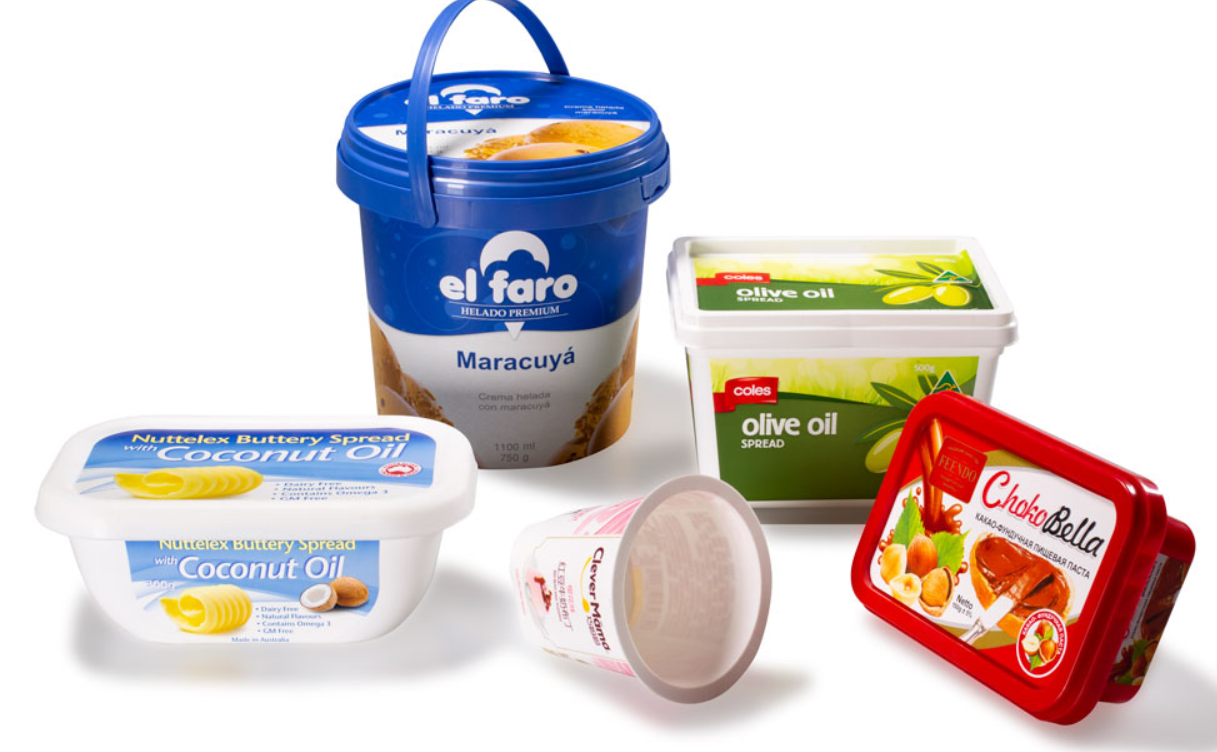
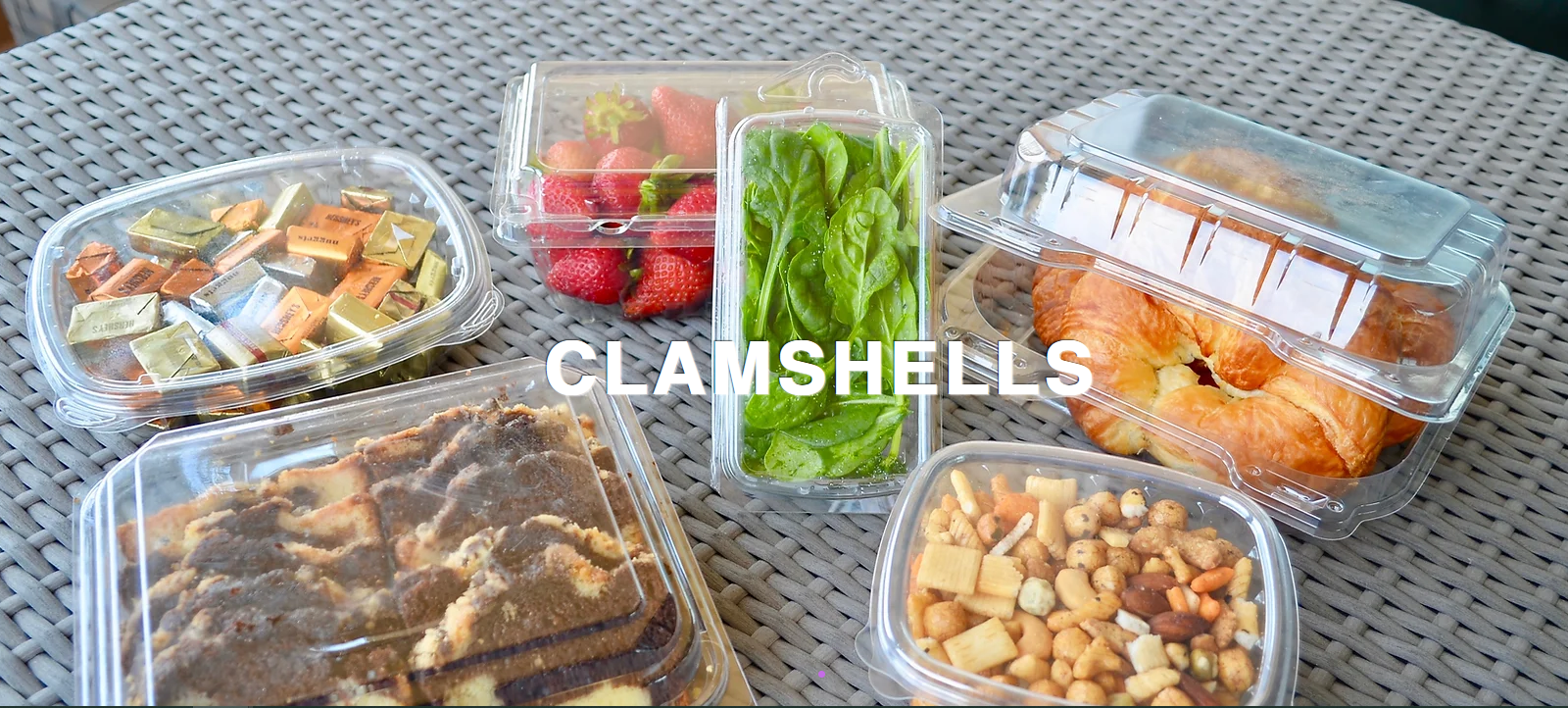
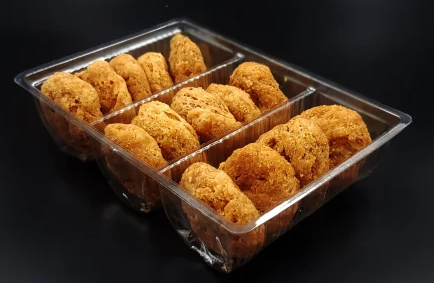
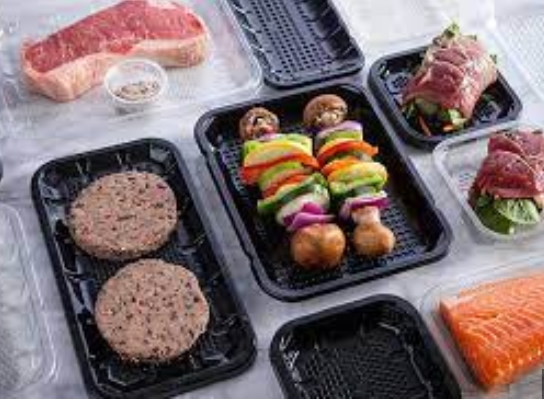
Image Sources: https://www.honokage.com/heres-iml-first-choice-plastic-packaging-containers/ ; https://www.pinnpack.com/clamsells ; https://www.indiamart.com/sarvodayacompany/food-packaging-tray.html ; https://www.easypak.com/knowledge-center/meat-and-protein-tray-packaging-design-trends-2022
5. Sustainable packaging materials
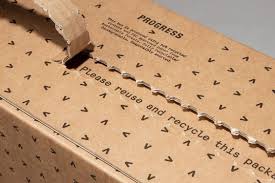
To assess whether or not a packaging material can be classified as sustainable it is necessary to look at it's environmental impact from sourcing of raw materials, through processing and fabrication, transport, to lifespan and disposal. This is sometimes called the cradle to grave impact or life-cycle assessment.
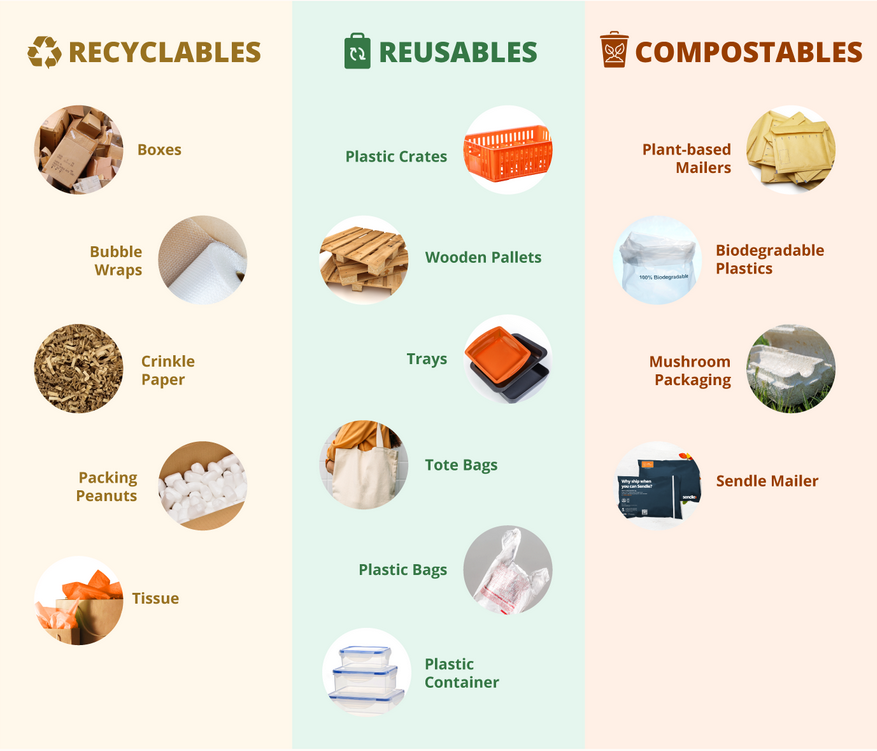
Sustainable materials must have a low impact on resources (e.g. be made from renewable or recycled resources), be sourced/extracted/produced in an environmentally friendly way that does not destroy or pollute the environment, should be light-weight and non-bulky to reduce the environmental impact during transport/distribution and ideally, instead of being disposed after use, it should be reusable, recycable or biodegradable.
5.1. APET cycle films
The term cycle
films usually refers to films that are designed for a recycling cycle, meaning
they can be reused or recycled after their initial use.
APET cycle films are another eco-friendlier option than virgin PET as it is produced from 30% chemically recycled resin, while still offering excellent transparency and a gloss finish just like virgin PET film. After their initial use, APET cycle films can recycled again into new products or films, contributing to sustainability efforts.
APET
cycle films are used for their clarity, strength, and moderate heat resistance.
They are used for packaging where visibility of the packaged product and
recyclability are important considerations.
5.2. rPET films
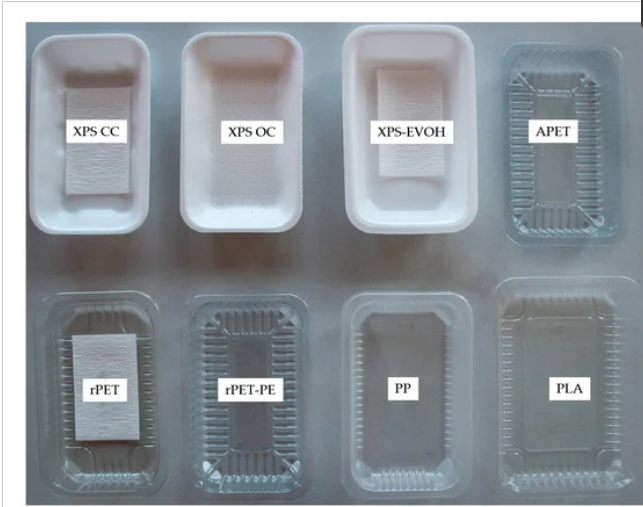
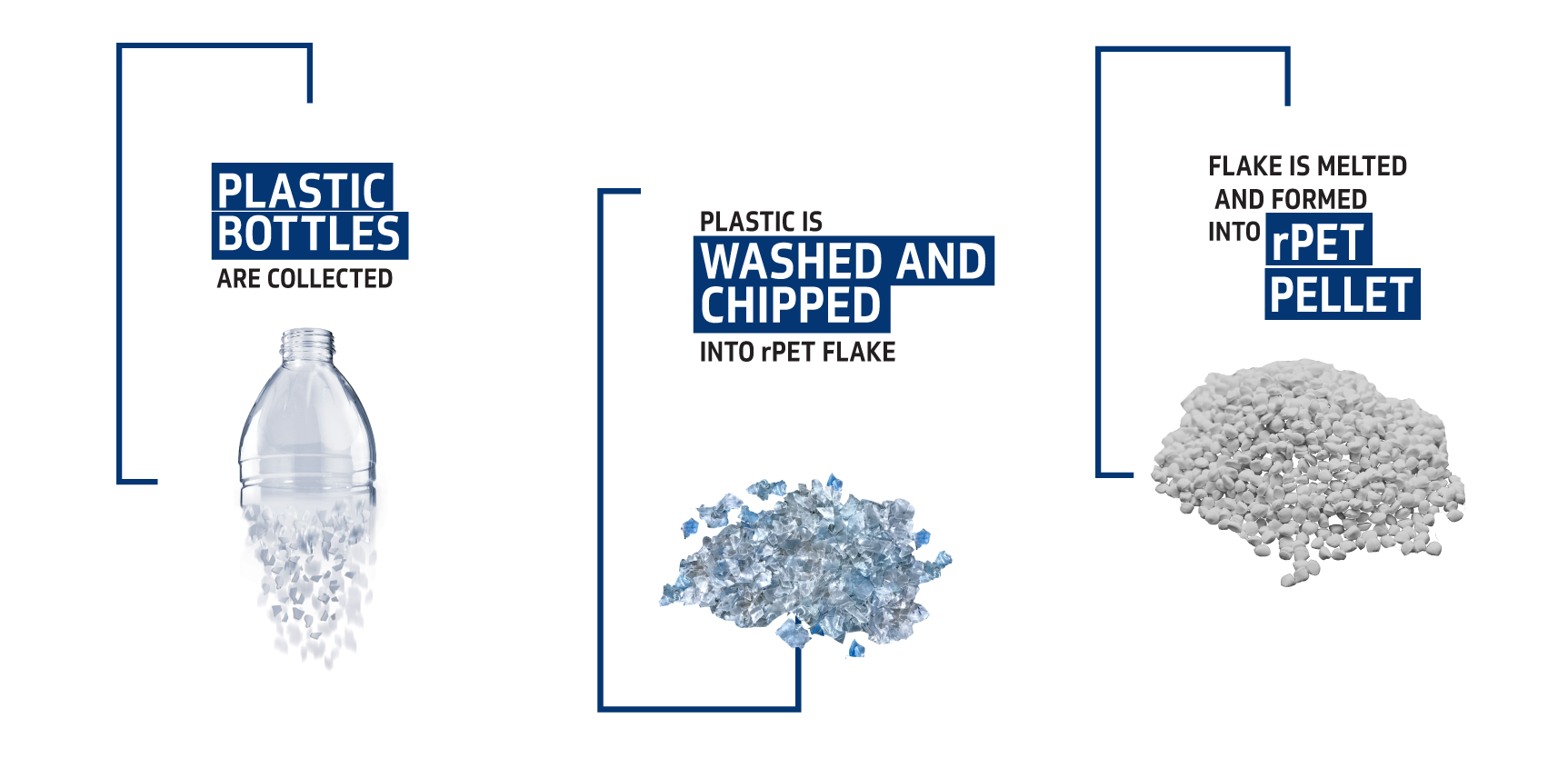
rPET films are made from recycled PET and therefore an eco-friendly alternative to virgin PET as it reduces plastic waste and makes use of recycled resources. The transparency and barrier properties of rPET
films make them suitable for displaying and preserving food. They are commonly used for packaging salads, sandwiches,
bakery goods, etc. rPET can also be used for shrink sleeves or labels on PET bottles.
5.3. Biodegradable plastics (Bioplastics)
Bioplastics
are a group of different materials that are either fully or partially biobased (from natural non-petrochemical sources like sugarcane ethanol) but non-biodegradable, such as Bio-PE and Bio-PET, or biobased and biodegradable, like PLA and PHA.
Polylactic acid (PLA) is a bioplastic that is both biosourced and biodegradable. It is made of renewable resources such as corn or sugar cane which are fermented into lactic acid, and then transformed into a monomer called lactide. This lactide is then polymerised to produce PLA.
The compostability of PLA had until recently been limited since it
required constant high temperatures and long composting times. A recently permitted additive now allows microorganisms in the compost to assimilate PLA faster and together with other biowastes.
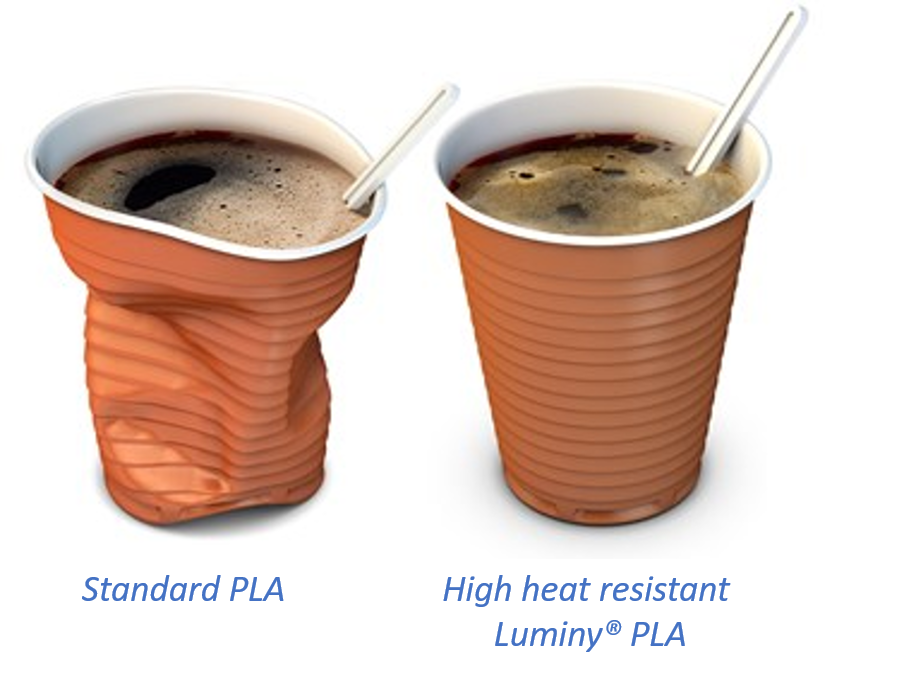
PLA products include clear bottles for cold filling (max. 40ºC), used for dressings, smoothies, non-carbonated beverages, etc.; single-use cups and lids for drinks, fingerfood, fruits and salads; re-usable freezer bags, etc.
Other biobased engineering plastics such as PTT, or TPC-ET or new biodegradable plastics made from fossil resources such as PBAT and PCL are currently developed.
Cellophane (cello) bags are made from plant cellulose and are 100% compostable. They are are aesthetically pleasant packaging for baked goods, nuts, candy, musli and more. They can be closed with string, ribbons or clips.
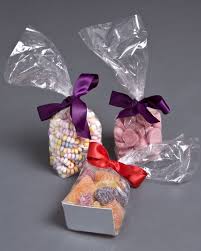 Image source: https://www.bagitplastics.co.uk/cellophane-sweet-bags-block-bottom-with-card-base-cello-clear-candy-food-safe-22453-p.asp
5.4. New Developments in Paper Packaging
Plastic packaging has a bad reputation due to its negative environmental impact (waste problem, microplastic pollution, single-use, etc.). Lately, many packaging producers have started exploring and designing more sustainable solutions and alternatives to plastic, like paper, which is a renewable, recycable and biodegradable material.
Paper packaging gives products a natural, eco-firendly and artisan image. Many beautiful options from craftpaper and grease-proof paper are nowadays available. They can be combined with see-through windows made from sustainable cellophane.
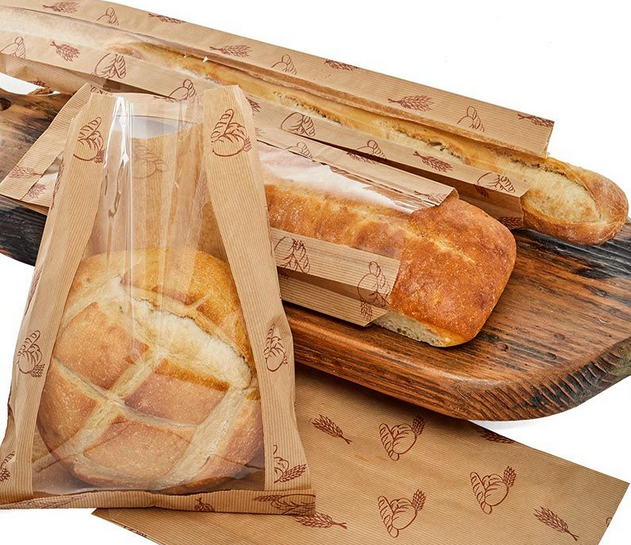
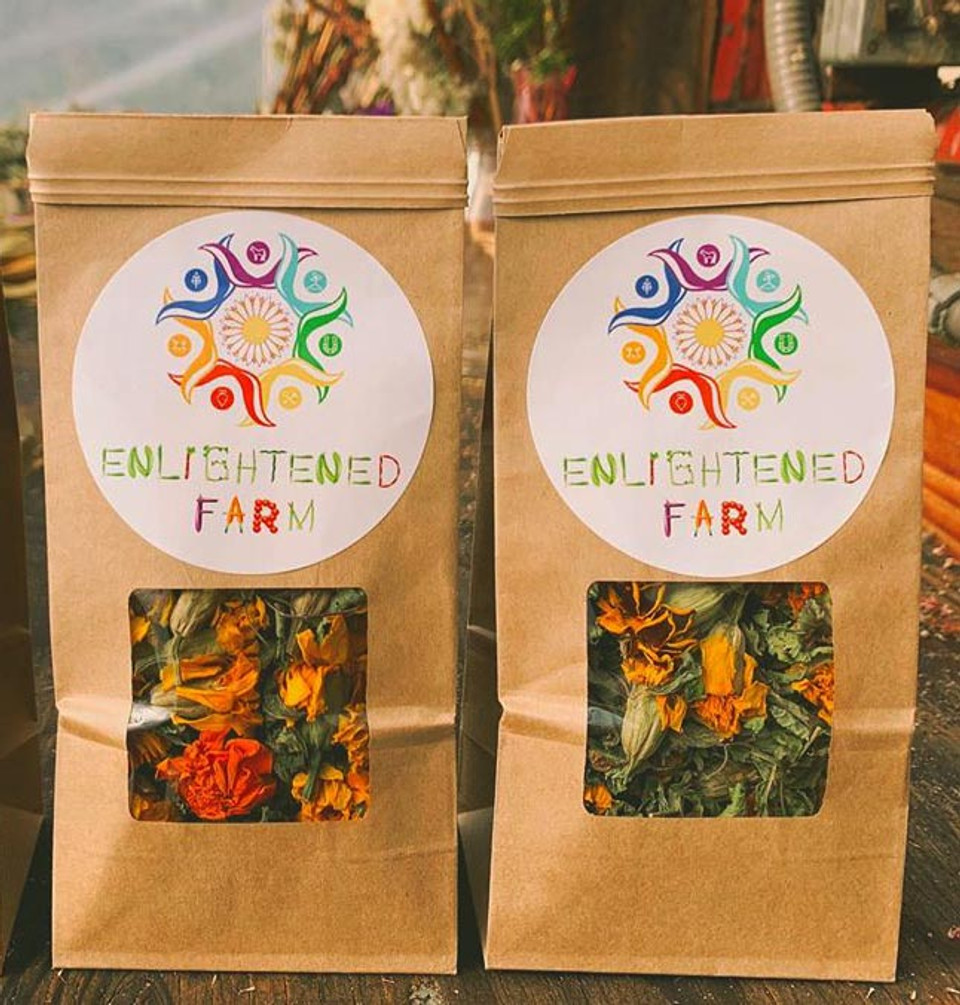
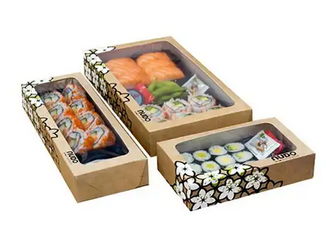
They can also give very thin plastic film packagings the necessary structural strength and help to reduce the amount of plastic used.
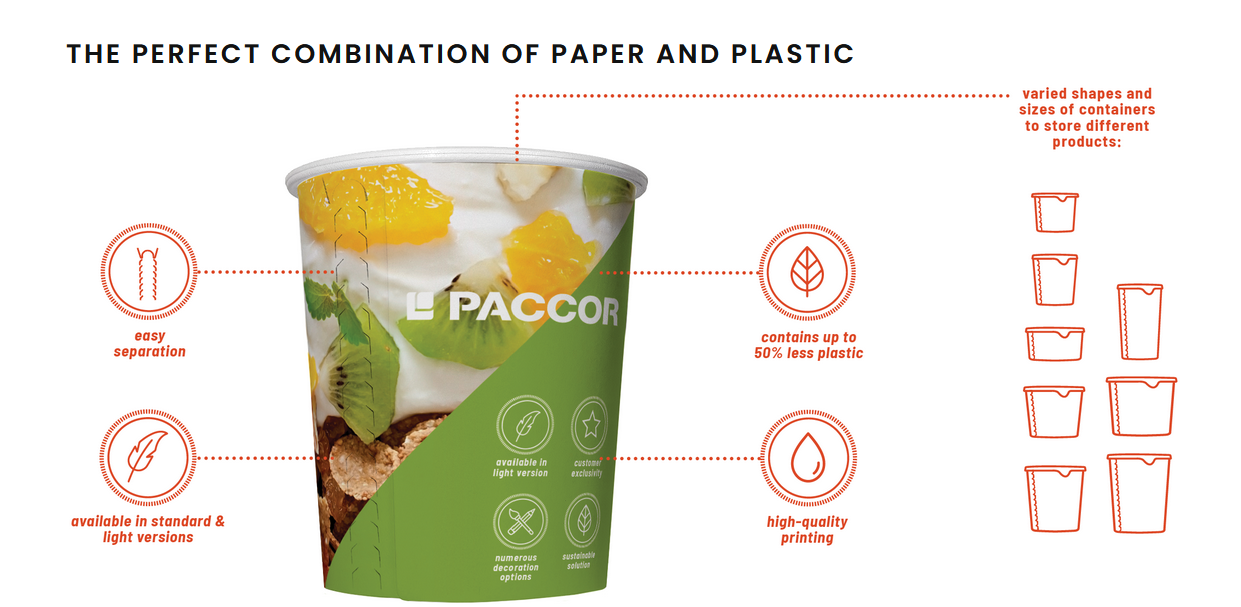
This can be useful, when a strong barrier against moisture is needed (e.g. for liquid or dried products). However, if paper and foil are layered, the foil has a paper feel and paper look, but is not an eco-friendly packaging, as the different,materials are difficult to separate. Biodegradable options are papers with PLA coating.
Watch a slideshow of different paper-based packaging soultions here.
Author: Rick Lingle
5.5. Transport packaging and padding
1. Corrugated cardboard
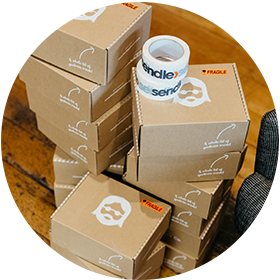
Cardboard is the most often used packaging material in shipping of goods. Cardboard boxes can be made from up to 100% recycled
material. They are also reusable or can be recycled up to 25 times, which extends their lifespan. They can also
to be composted, making them an all-round sustainable packaging material.
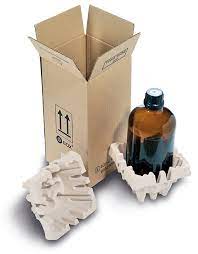
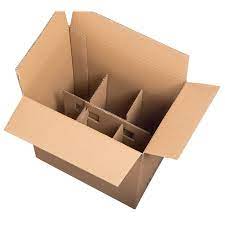
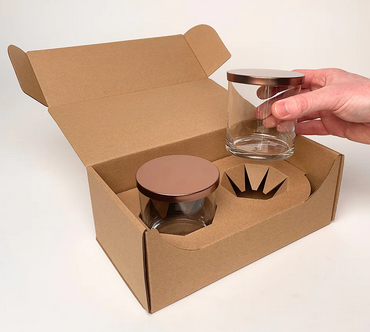
The strength of the cardboard box should be sufficient to protect your product during transport and shipping. If necessary it can be strengthened with formed cardboard pieces that can also assist to separate products like bottles or to hold them securely in place.
2. Packing paper
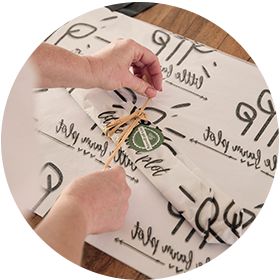
To cushion the product inside the transport box to prevent rattling and breakage a variety of different 'void fill' is used to lock products
in place. Paper is a popular choice for this, either crumpled up
into paper balls or as shredded paper, stuffed around the product. More delicate items can be wrapped in tissue paper.
Paper packaging, like cardboard, is reusable, recyclable and can also be composted.
Alternatives for shredded paper that are also sustainable are shredded cellulose or wood wool.
3. Reusable plastic tubs
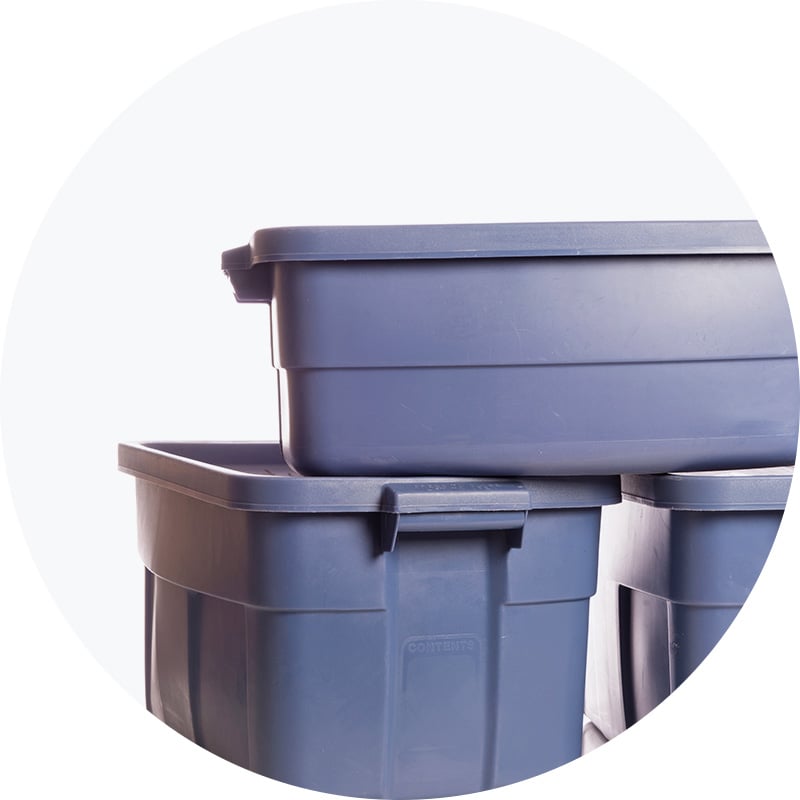
Plastic tubs are cosidered sustainable as they are reusable and have a long lifespan. They can be used in distribution systems where the customer returns the shipping box (like subscription or community schemes) or for internal transport/distribution and storage purposes. Although their initial cost is higher than that of cardboard boxes, this cost can be amortized over their lifespan. Especially if they are made from recycled or recycable plastic, they are considered sustainable as they can replace large numbers of cardboard boxes, thereby reducing the use of resources and energy.
4. Mushroom packaging
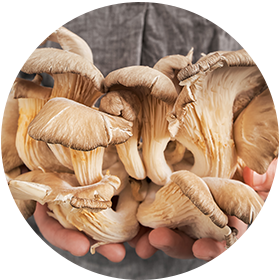
Protective cushioning can be made by growing mushroom’s root system (mycelium) into any shape and baking it to become inert. This material is afully-compostable replacement of unsustainable polystyrene packaging.
One major company pioneering its use for packaging their products is Ikea.
5. Compostable mailers
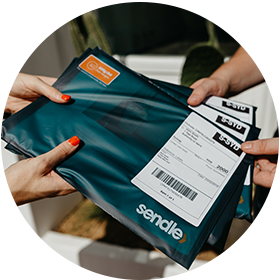
Compostable mailers are shipping pouches made either from bioplastics (renewable plant material like corn husks and straw) that can be composted, or are made of recycled paper products that can be composted commercially.
6. Biodegradable packing peanuts
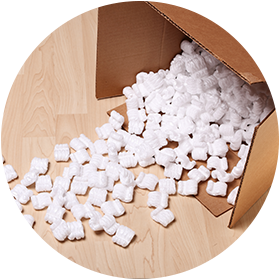
Although called packing peanuts, they are usually made out of non-biodegradable and non-recyclable polystyrene.
Sustainable, eco-friendly substitutes are made from plant sources, such as sorghum and corn starch. They are completely biodegradable and dissolvable with water.
Source: https://blog.sendle.com/sustainable-packaging-guide
7. Popcorn
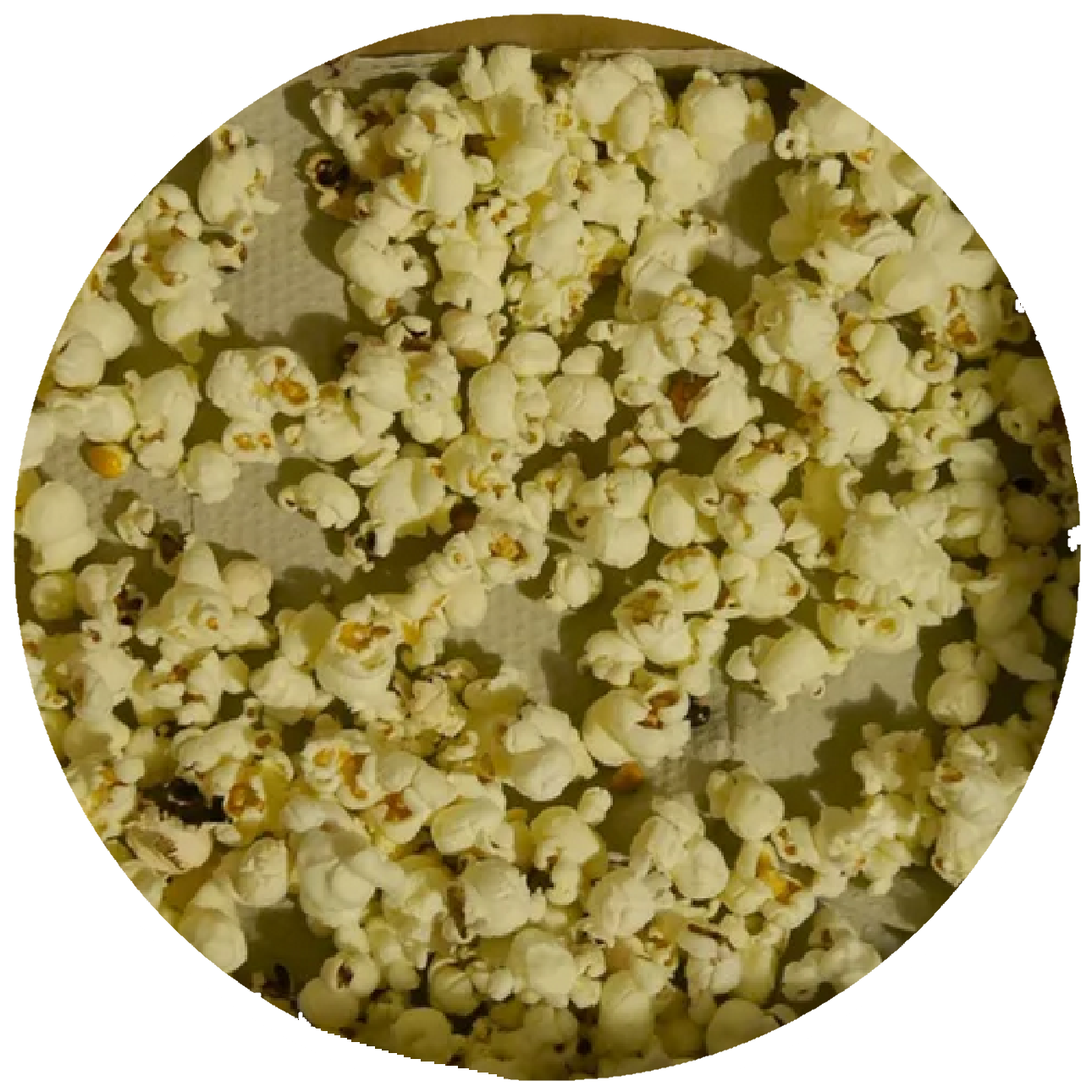
Air-popped corn provides a lightweight void fill that'll protects products in shipping boxes just as well as packing peanuts (see above). Popcorn packaging is fully biodegradable.
8. Hemp thermopadding
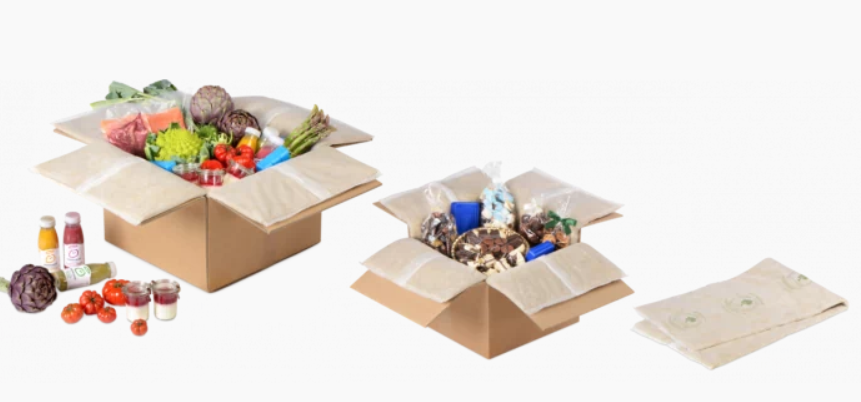
Image source: https://www.rausch-packaging.com/de/mecatherm-thermo-faltbox-hanf
Thermopadding made from hemp or other biodegradable fibre can be used to insulate cardboard boxes against heat to keep perishable or frozen foods cold during transport.
9. Biodegradable air cusions and bubblewrap
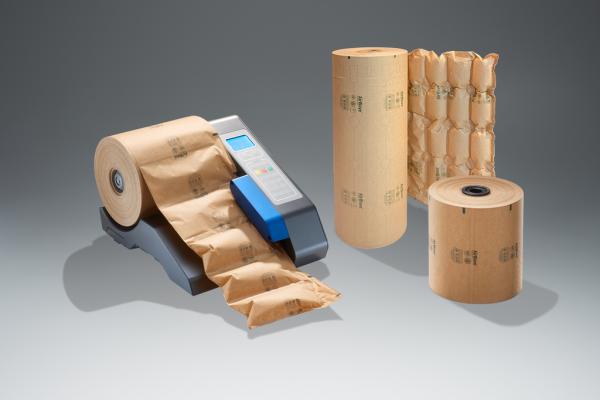
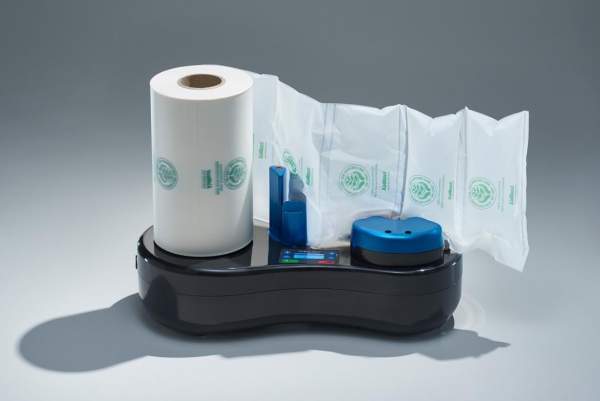
Air cushions and bubblewrap is made from foil filled with air pockets. The foil used can be made from sustainable material like paper or PLA, which are both biosourced as well as biodegradable. Another advantage that air cusions provide is their small size during transport and storage, as they can be blown up just before use, with small and inexpensive eqiupment as shown in the pictures above.