Taskforces and committees
| Site: | Plattform für Weiterbildung und Internationalisierung der Hochschule Weihenstephan-Triesdorf |
| Course: | AGRI-MOCKS |
| Book: | Taskforces and committees |
| Printed by: | Gast |
| Date: | Tuesday, 4 August 2026, 7:42 AM |
Table of contents
- 1. Project Steering Committee
- 2. T1.6 Topical Taskforces and Report
- 2.1. TF Twin transition in agriculture and rural development education and training
- 2.2. T2.1.1 Facilitated webinar for HE teachers and youth trainers, with focus on newcomers, on designing e-internship and twin transition
- 2.3. TF Intercultural dialogue and civic participation in education and training
- 2.4. T.2.1.2 Facilitated webinar for HE teachers and youth trainers: Intercultural dialogue and civic participation through e-internship
- 2.5. TF Entrepreneurial mindset in agriculture and rural development education and training
- 2.6. TF Career guidance in agriculture and rural development education and training
- 2.7. T2.1.3 Facilitated webinar for HE teachers and youth trainers: Entrepreneurial learning and career guidance through e-internship
- 3. Communication & Dissemination (CDE) team
- 4. TFI Y e-internship for youths
- 5. TFI HE
- 6. TF-TL Taskforce on Transformative Learning
- 7. E-internship Program Committee
- 8. TF RV Taskforce on Recognition & Verification
- 9. TF GP Taskforce for Green Paper
- 10. Sus-TF Project Sustainability Strategy Taskforce
1. Project Steering Committee
SC is the core decision-making body consisting of one representative from each partner institution. This representative shall be the project coordinator of each institution or a person nominated by the coordinator as her/his deputy.
SC will meet online up to four times a year to discuss and review the progress of project activities, make decisions, approve deliverables, resolve possible conflicts and agree on any risk contingency measures. Other tasks of this implementation body may include:
~ Providing input to the monitoring and evaluation strategy of the project;
~ Providing advice on the budget;
~ Helping to achieve the project outcomes;
~ Identifying the priorities in the project – where the most energy should be directed;
~ Identifying and responding to potential risks;
~ Approving reports coming from the quality teams;
~ Providing advice (and sometimes making decisions) about changes to the project.
1.1. Committee Members
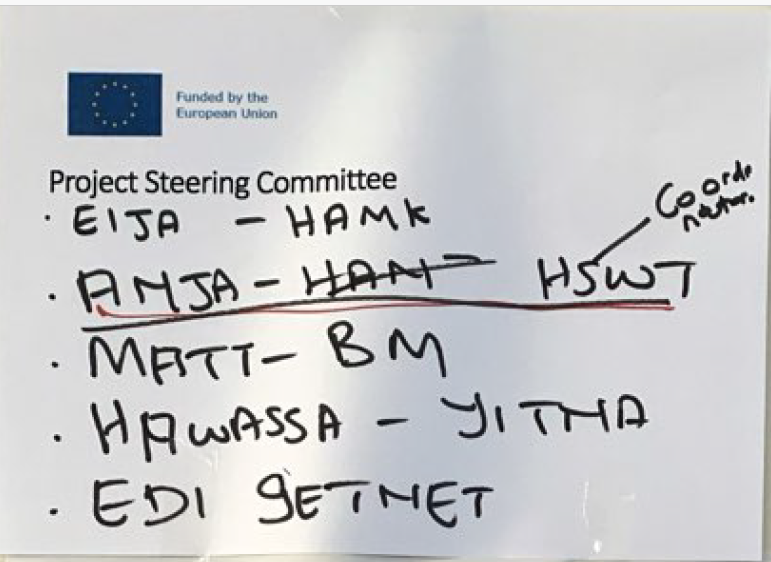
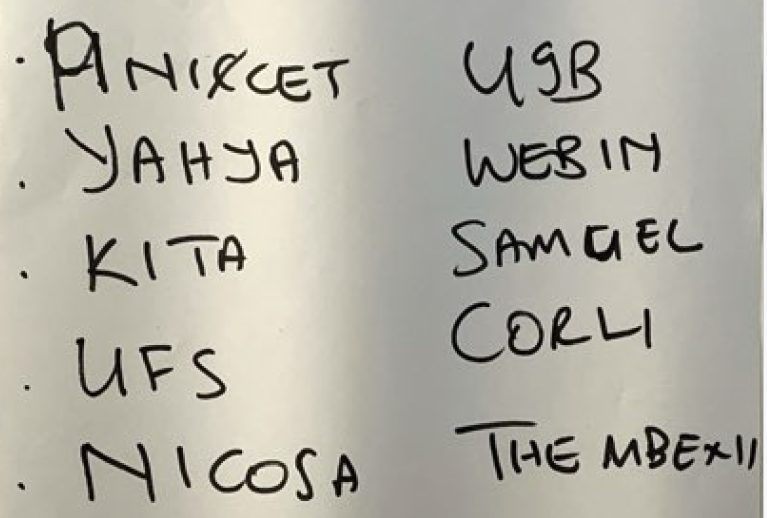
HSWT - Anja Weber
KITA - Samuel Owusu-Takyi
NICOSA - Thembeni Mazamisa
WEBIN - Yahya Adow Ibrahim
UFS - Corli Witthuhn
Hawassa University - Yitna Gebreab
UGB - Anicet Manga (or Prof. Ousmane THIARE)
EDI - Getnet Dadebo
BizMetrics - Matthew Ash
HAMK -Esko Lius
2. T1.6 Topical Taskforces and Report
Each TF constitutes of members from each partner.
Each TF has 2 months to collect data, analyse the state of the art, and to prepare a basline report in the following 4 areas for each partner country:
- Twin transition in agriculture and rural development education and training
- Intercultural dialogue and civic participation in education and training
- Entrpreneurial mindset in agriculture and rural development education and training
- Career guidance in agriculture and rural development education and training
2.1. TF Twin transition in agriculture and rural development education and training
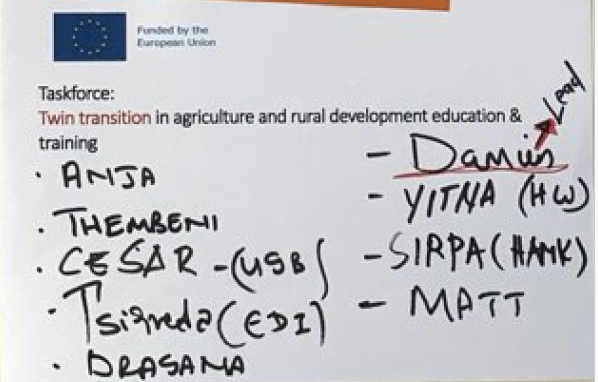
HSWT - Anja Weber
KITA - Antoinette Damien
NICOSA - Thembeni Mazamisa
WEBIN - Dragana Jovanović
UFS - ?
Hawassa University - Yitna Gebreab
UGB - César Bassene
EDI - Tsigereda Mekuria
BizMetrics - Matthew Ash
HAMK - Sirpa Ojansuu
2.2. T2.1.1 Facilitated webinar for HE teachers and youth trainers, with focus on newcomers, on designing e-internship and twin transition
In month 5, consortium will commence with WP.2 by organizing international facilitated webinar on designing e-internship and twin transition.
The webinar will be co-designed by HSWT and HAMK (segment for HEIs), and WEBIN and NICOSA (segment for youth workers).
The webinar will address partner (and other interested) staff from partner HEIs and youth sector, and will be dedicated to widening knowledge about and understanding of the concept of e-internships, as a model of developing organizational and business skills and attitudes through practical (virtual) experience, through the perspective of twin transition and methods to integrate green and digital approaches into an e internship.
It is expected it will bring together up to 40 participants from partner organizations and organizations outside consortium. Participation of female participants will be encouraged, and in case of excessive number of registrants, gender balanced selection will be carried out.
The webinar will last for 4 hours and will be split into 2 days. First day will be dedicated to HEIs, and second to youth organizations and organizations working on behalf of youth. Some of the key topics that will be addressed include:
Day 1:
- Introduction to e-internship in HE context and how HEIs may plan e-internships as learning method/unit/practice, or as an extra curricular activity;
- Virtual company simulation method;
- Virtual training programmes, topic selection and open learning pathways, and optimization;
- Twin transition (TT) and how to integrate the principles of TT into HEIs operations and programmes;
- Integration of e internship into curricula or as extra curricular activity;
- Recognition and validation of learning outcomes of e internships in HE.
- Introduction to e-internship in youth context and how youth organizations may plan e-internships as learning method/activity in their youth work programmes or projects,
- Virtual co-working simulation method;
- Virtual training programmes, topic selection and open learning pathways, and optimization;
- Twin transition (TT) and how to integrate the principles of TT into youth organizations operations and programmes;
- Integration of e-Internship as programm e-activity in onetime projects;
- Recognition and validation of learning outcomes of e-internships in youth work sector.
2.3. TF Intercultural dialogue and civic participation in education and training
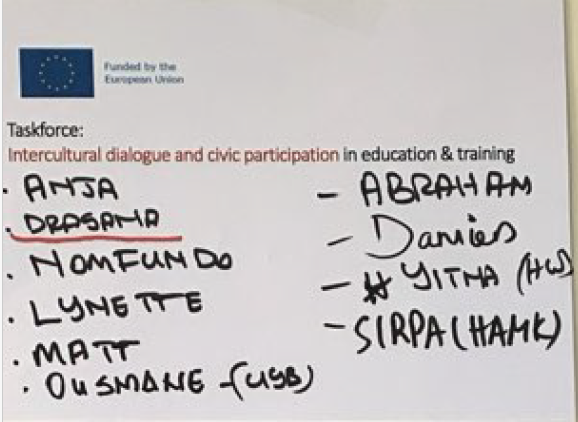
HSWT - Anja Weber
KITA - Antoinette Damien
NICOSA - Nomfundo Molefe
WEBIN - Dragana Jovanović
UFS - Lynette Jacobs
Hawassa University - Yitna Gebreab
UGB - Prof. Ousmane Thiare
EDI - Abrham Aberra
BizMetrics - Matthew Ash
HAMK - Sirpa Ojansuu
2.4. T.2.1.2 Facilitated webinar for HE teachers and youth trainers: Intercultural dialogue and civic participation through e-internship
Another international facilitated webinar (month 5) will be held to introduce facilitators (HE staff and youth workers) with use of the model of e internships to boost intercultural dialogue and civic participation.
The webinar will be co designed by NICOSA and WEBIN.
The webinar will address partner (and other interested) staff from partner HEIs and youth sector and will bring together up to 40 participants from partner organizations and organizations outside consortium. Participation of female participants will be encouraged, and in case of excessive number of registrants, gender balanced selection will be carried out.
The webinar will last for 4 hours and will be split into 2 days. First day will be dedicated to Intercultural dialogue, and second to civic participation. Some of the key topics that will be addressed include:
Day 1:
- What is a dialogue and role play;
- Meeting of cultures;
- Assertive speech;
- Test of tolerance; Role play;
- Civic participation and active citizenship concept;
- Universal rights and freedoms,
- Concept of public advocacy;
- Forms of civic participation;
- Participation in HE and in youth sector;
- International comparative practices;
- Small community projects.
2.5. TF Entrepreneurial mindset in agriculture and rural development education and training
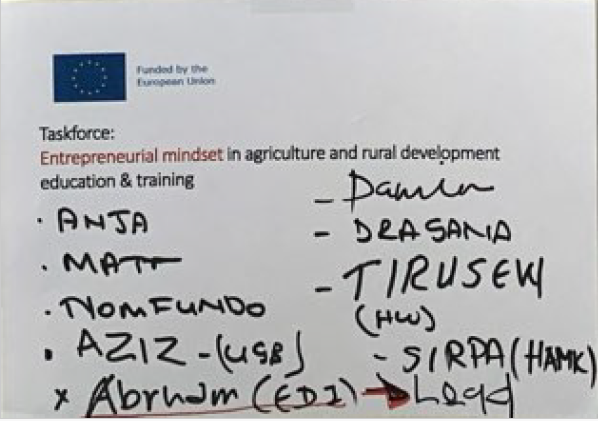
HSWT - Anja Weber
KITA - Antoinette Damien
NICOSA - Nomfundo Molefe
WEBIN - Dragana Jovanović
UFS - ?
Hawassa University - Tirusew Taye
UGB - Abdoul Aziz NDIAYE
EDI - Abrham Aberra
BizMetrics - Matthew Ash
HAMK - Sirpa Ojansuu
2.6. TF Career guidance in agriculture and rural development education and training
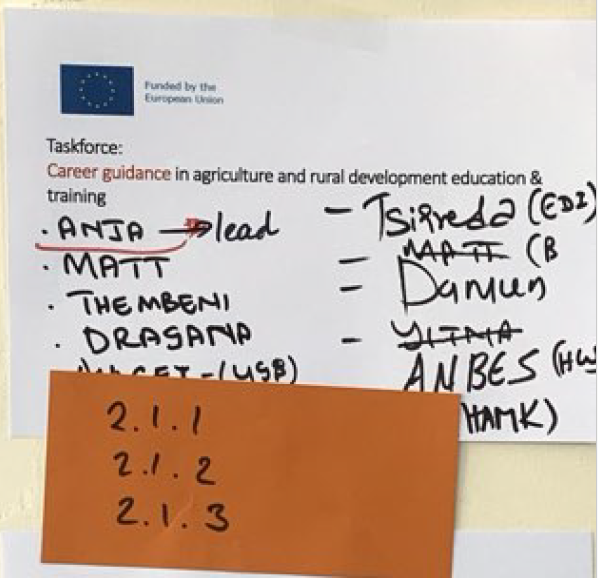
HSWT - Anja Weber
KITA - Antoinette Damien
NICOSA - Thembeni Mazamisa
WEBIN - Dragana Jovanović
UFS - ?
Hawassa University - Anbes Tenaye
UGB - Anicet Manga
EDI - Tsigereda Mekuria
BizMetrics - Matthew Ash
HAMK - Sirpa Ojansuu
2.7. T2.1.3 Facilitated webinar for HE teachers and youth trainers: Entrepreneurial learning and career guidance through e-internship
Another international facilitated webinar (month 6) will be held to introduce facilitators (HE staff and youth workers) with use the model of e-internships to boost entrepreneurial learning and career guidance . The webinar will be co-designed by HSWT, BM, EDU, and WEBIN.
The webinar will address partner (and other interested) staff from partner HEIs and youth sector and will bring together up to 40 participants from partner organizations and organizations outside consortium. Participation of female participants will be encouraged, and in case of excessive number of registrants, gender balanced selection will be carried out.
The webinar will last for 4 hours and will be split into 2 days. First day will be dedicated to Entrepreneurial learning, and second to career guidance. Some of the key topics that will be addressed include:
Day 1:
- Entrepreneurship and education;
- EntreComp as European competency framework in education and training;
- Model of integration of EntreComp into e-Internships;
- Introduction to career guidance and counseling;
- Identification of interests and talents and matching with professions;
- e-Internships as model for testing talents and interests;
- Career tracking system;
3. Communication & Dissemination (CDE) team
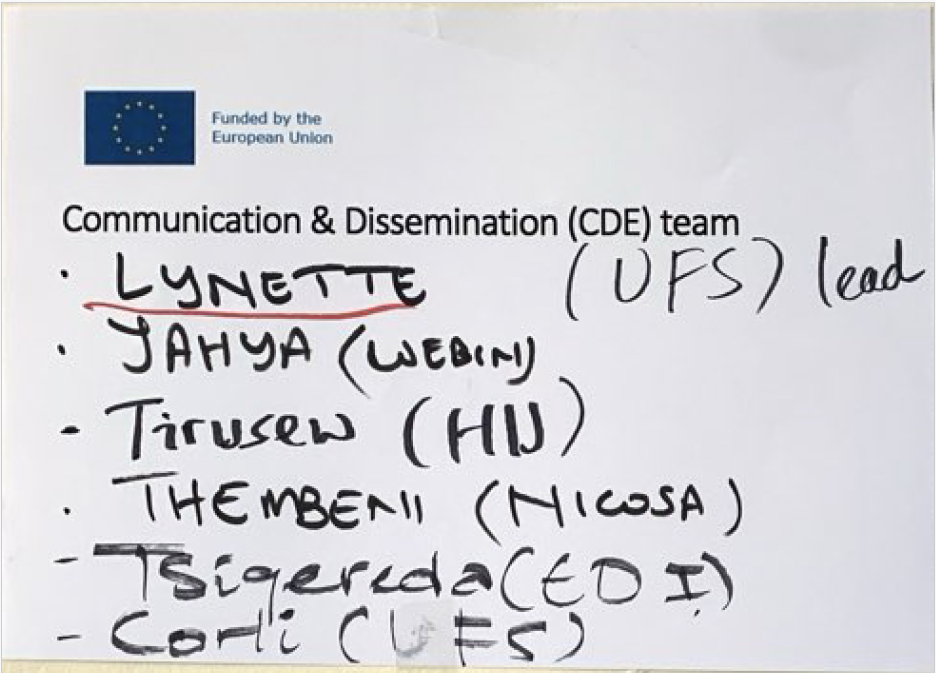
Lynette Jacobs (UFS)
Corli Witthuhn (UFS)
Yahya Adow Ibrahim (WEBÌN)
Tirusew Taye (Hawassa University)
Thembeni Mazamisa (NICOSA)
Tsigereda Mekuria (EDI)
4. TFI Y e-internship for youths
The Taskforce for e-internship for youths will be chaired by NYCP. TFI Y will have a min 5 members, representing partner organizations active in HE or in the youth sector. Each organization will contribute with their specific expertise in developing competence based curriculum of the internships.
The following Youth e-internship programmes will be developed:
- Facilitated e debate with youth workers and NGOs on twin transition, innovation and training/non formal learning in rural development and the future of skills needs (in line with 2030 sustainable development goals)
- Facilitated e debate with youth workers and NGOs on intercultural dimension and civic participation in rural development training, learning and working
- Virtual office collaborative simulation 3/6 weeks
4.1. TFI Y members
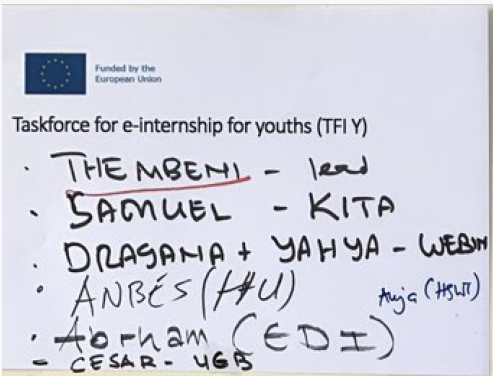
Thembeni Mazamisa (NICOSA)
Samuel Owusu-Takyi (KITA)
Dragana Jovanović (WEBIN)
Yahya Adow Ibrahim (WEBIN)
Anbes Tenaye (Hawassa University)
Abrham Aberra (EDI)
César Bassene (UGB)
Anja Weber (HSWT)
5. TFI HE
In month 6, consortium will start with developing the e-internship modules for students. The process will start by setting up a task force for e-Internship Programme Committee TFI HE (Task force for e-internship for students). The TF will be chaired by HAMK and will have a min 5 members, representing partner organizations active in HE. Each organization will contribute with their specific expertise in developing competence based curriculum of the internships.
The following e-internship program will be created:
- Facilitated e-debate with HE staff on twin transition, innovation and training/non formal learning, agriculture/rural development and the future of skills needs (in line with 2030 sustainable development goals)
- Intercultural dimension and civic participation in agricultural/rural development teaching, learning and working
- Student virtual company simulation 3/6 weeks
- Project development MOOC 1/6 weeks
- Civic participation and advocacy training 1/6 weeks
- Youth entrepreneurship and innovation training 0.5/6 weeks
- e-learning pathway elective 0.5/6 weeks
- Development of small community group projects in agriculture/rural development with climate change focus 1/6 weeks
- National competition of small community projects in agriculture/rural development with climate change focus
- International competition
- Evaluation of e-internship
5.1. TFI HE members
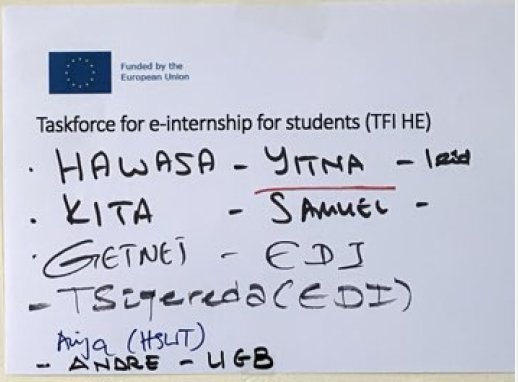
Yitna Gebreab (Hawassa University)
Samuel Owusu-Takyi (KITA)
Getnet Dadebo (EDI)
Tsigereda Mekuria (EDI)
Andre Diatta (UGB)
Anja Weber (HSWT)
Esko Lius (HAMK)
5.2. T2.2.3
HU will coordinate the development of
- virtual co-working e-internship modules materials,
- e-internship instructions for collaborative work of participants
- e-learning resources for e-internships
6. TF-TL Taskforce on Transformative Learning
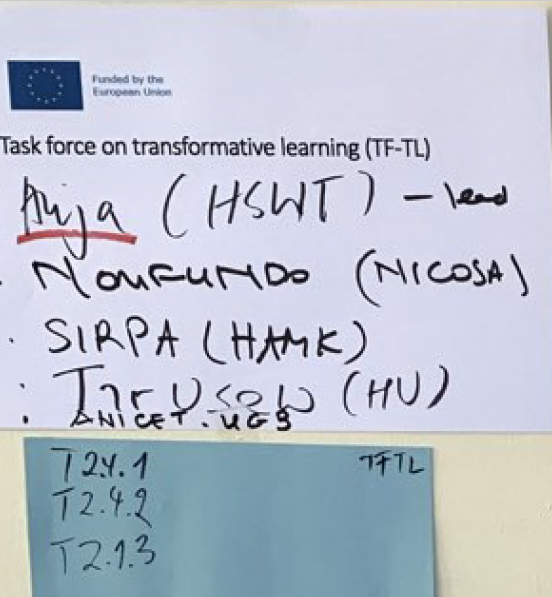
Anja Weber (HSWT)
Nomfundo Molefe (NICOSA)
Esko Lius (HAMK)
Tirusew Taye (Hawassa University)
Anicet Manga (UGB)
Esko Lius (HAMK)
7. E-internship Program Committee
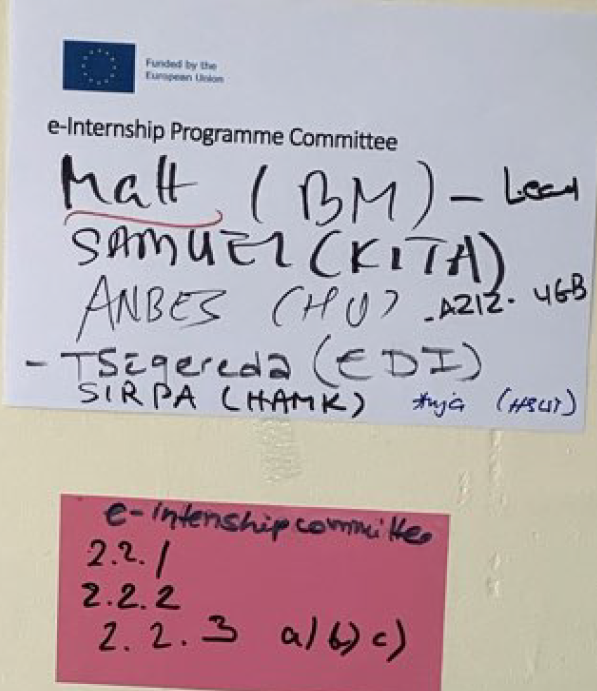
Matthew Ash (BizMetrics)
Samuel Owusu-Takyi (KITA)
Anbes Tenaye (Hawassa University)
Abdoul Aziz NDIAYE (UGB)
Anja Weber (HSWT)
Tsigereda Mekuria (EDI)
Esko Lius (HAMK)
8. TF RV Taskforce on Recognition & Verification
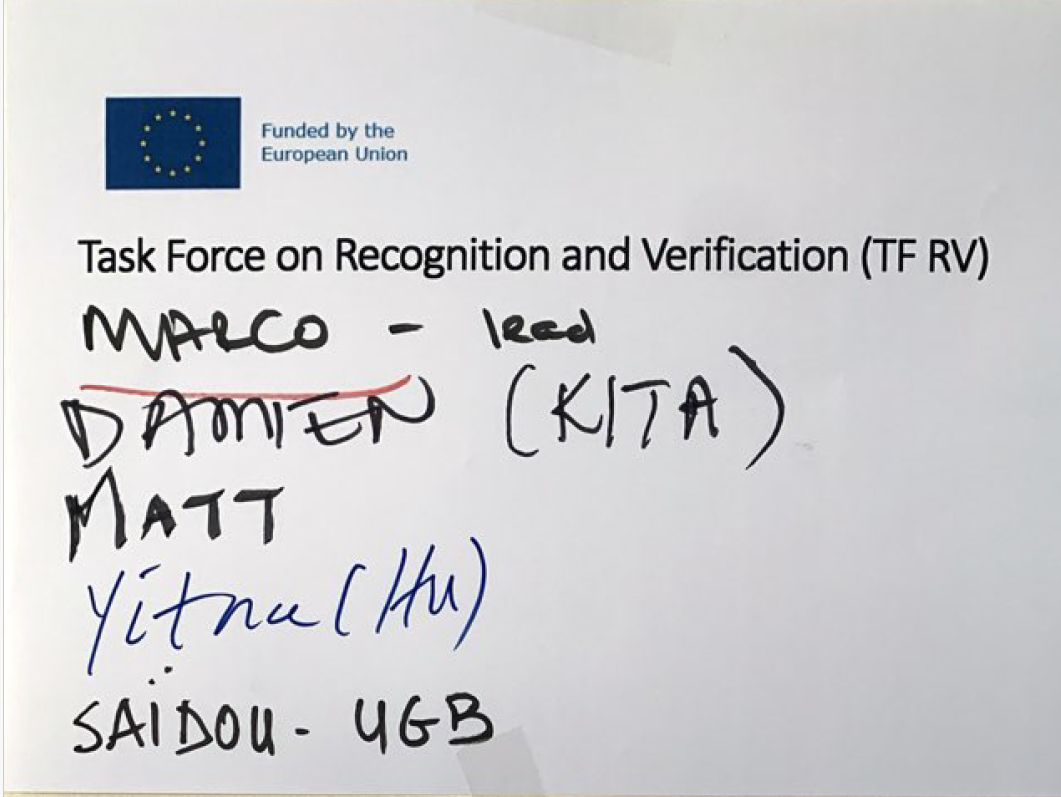
Marko Stojanović (WEBIN)
Antoinette Damien (KITA)
Matthew Ash (BizMetrics)
Yitna Gebreab (Hawassa University)
Saidou Sall (UGB)
9. TF GP Taskforce for Green Paper
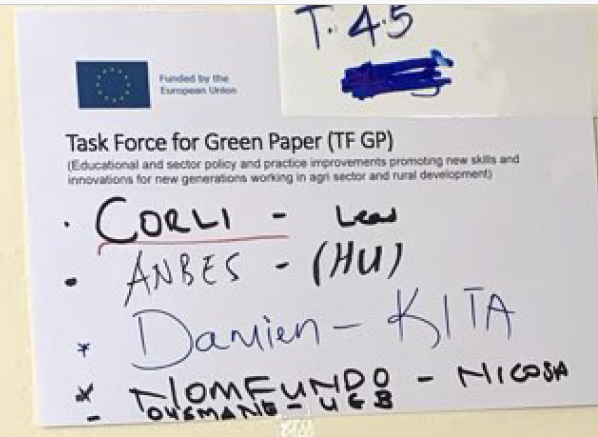
Corli Witthuhn (UFS)
Anbes Tenaye (Hawassa University)
Antoinette Damien (KITA)
Nomfundo Molefe (NICOSA)
Prof. Ousmane THIARE (UGB)
10. Sus-TF Project Sustainability Strategy Taskforce
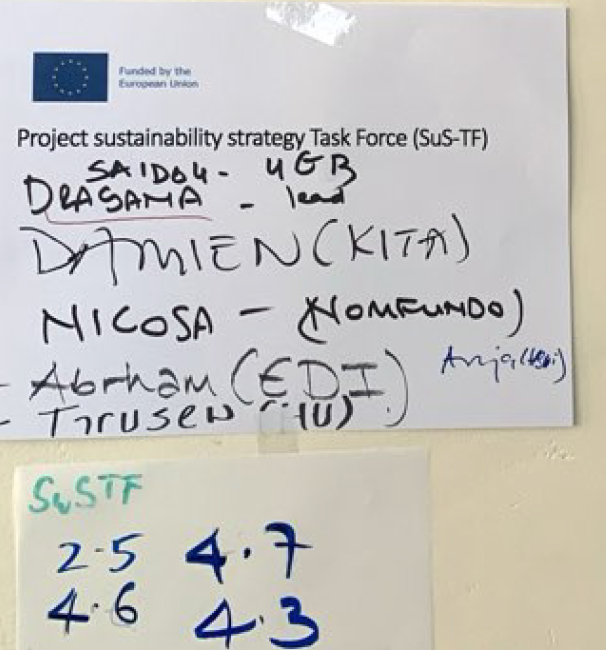
Dragana Jovanović (WEBIN)
Saidou Sall (UGB)
Antoinette Damien (KITA)
Nomfundo Molefe (NICOSA)
Abrham Aberra (EDI)
Anja Weber (HSWT)
Tirusew Taye (Hawassa University)