
Glossary
Not
every single piece of interesting or useful information can be
contained in the lectures of this course. The digital format of this
course however, makes it easy to provide and link extra information in a
glossary. We hope you enjoy reading through the glossary entries and
make good use of the treasures we have 'hidden' here.
Special | A | B | C | D | E | F | G | H | I | J | K | L | M | N | O | P | Q | R | S | T | U | V | W | X | Y | Z | ALL
K
KachasuKachasu is an alcoholic spirit popular in Zimbabwe. Wild edible fruits locally called masau (Ziziphus mauritiana)
are allowed
to undergo natural fermentation and then distilled to achieve an alcohol content of up to 45% Vol. | |
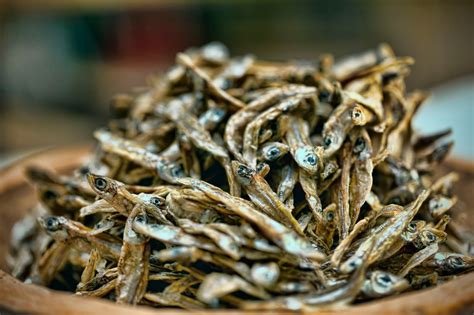
KapentaKapenta is a term for two related species Lake Tanganyika sardine (Limnothrissa miodon) and Lake Tanganyika sprat (Stolothrissa tanganicae). They are very small, school-forming sweetwater fish found in Lake Tanganyika and Lake Malawi. The fish is also known as matemba in Zambia, Malawi and Zimbabwe. A related but different fish, known as dagaa in Tanzania and omena in Kenya, is the silver cyprinid (Rastrineobola argentea), which is found in Lake Victoria. All three species are caught in large quantities and usually sun-dried. Sometimes they are salted before drying at a ratio of 1:12. In the kitchen kapenta/matemba as well as dagaa/omena are cleaned and washed, then boiled, and afterwards shallow fried with garlic, onions, and tomatoes. Other vegetables, like okra or peppers can be added.
| |
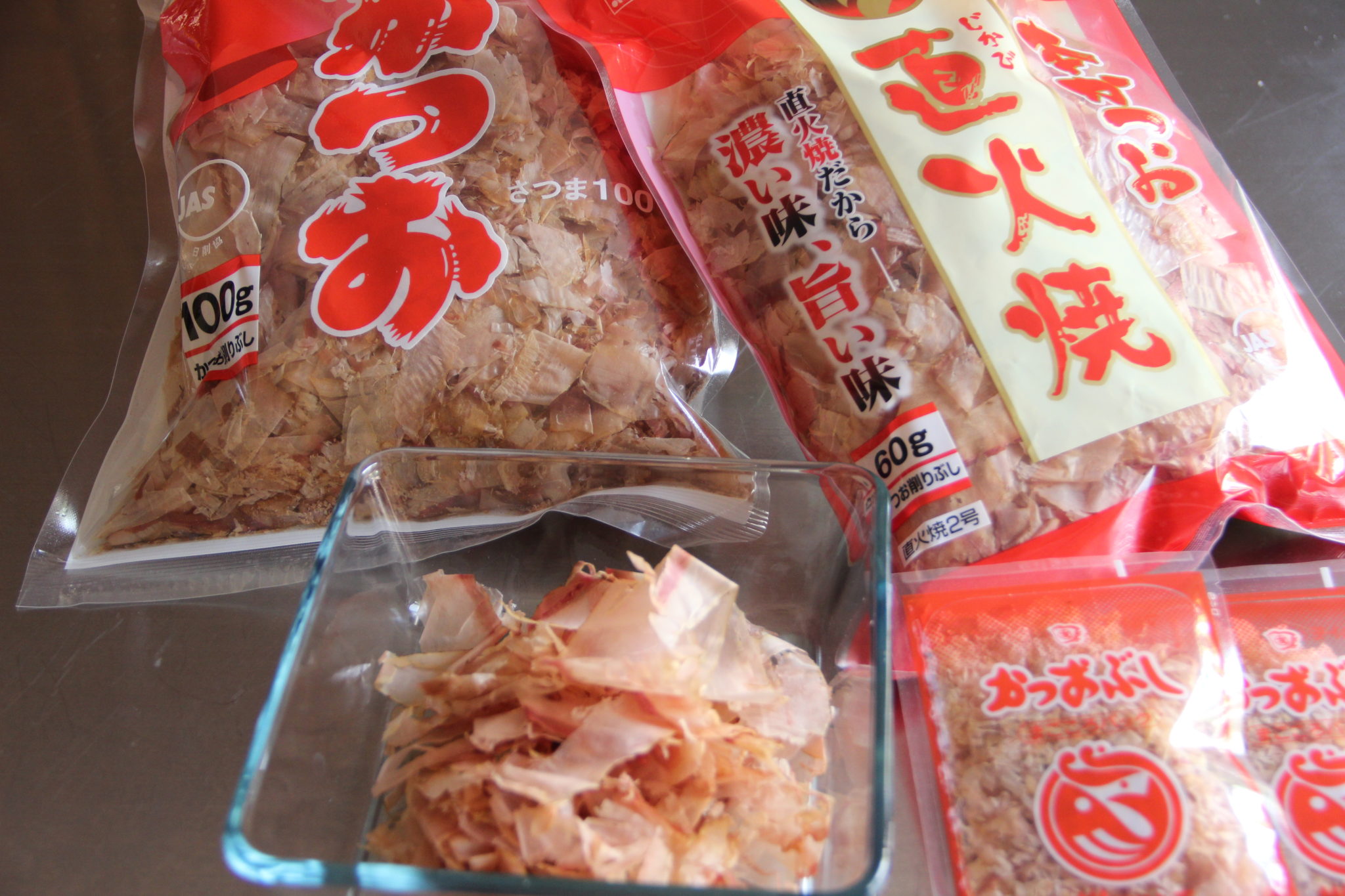
KatsuobushiKatsuobushi is dried, smoked bonito, a kind of tuna.Katsuobushi is smoked and then ripened with a special kind of mold for months to a couple of years. Katsuobushi is usually sold as flakes or shavings. Katsuobushi has a smokey savory taste that provides an accent for many
Japanese dishes. It is an importamt ingredient in Dashi (Japanese fish broth), which
is a crucial component for Japanese cooking. Katsuobushi also can be
sprinkled on simple vegetables to give them a deeper flavor.
| |
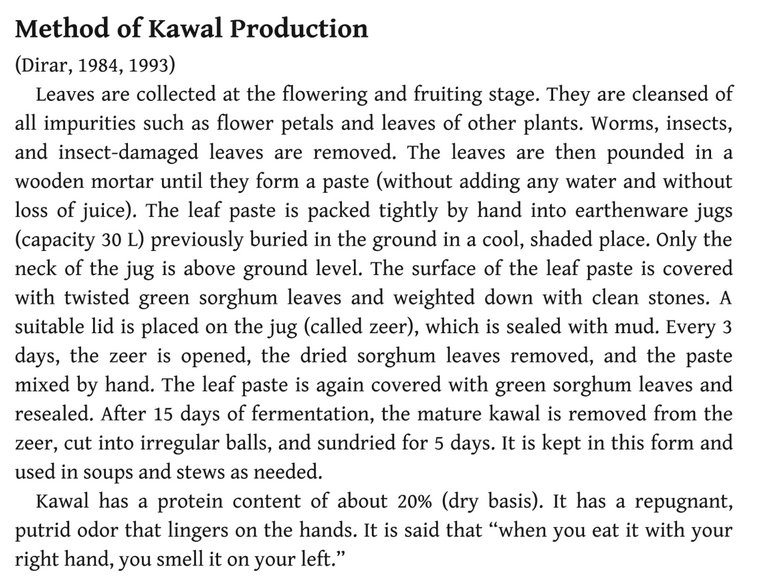
KawalKawal is a Sudanese meat substitute with a peppery flavour, made from fermented Cassia obtusifolia leaves. | ||
KelpKelp are large brown algae (Phaeophyta) that live in cool, relatively shallow waters close to the shore. There are about 30 different species of kelp worldwide, that grow in so-called kelp forests. Kelp is a good source of iodine, potassium, magnesium, iron, calcium, vitamin K, B vitamins, iron, zinc and omega 3 fatty acids. Umami, one of the five basic tastes along with sweet, sour, salty and
bitter, is the most pronounced flavor in kelp. Like all types of seaweed, kelp is high in
glutamates, an amino acid that provides a savoury taste. Once
kelp dries out, glutamate rises to the surface and can be seen as a white
powder covering the dried kelp blades: As kelp grows kin ocean water it is also salty. Kelp has a meaty but also tougher and thicker texture than other seaweeds, whereby dried and rehydrated kelp is tougher compared to fresh kelp that is more tender and gelatinous. Kelp can be eaten fresh, dried, cooked, added to smoothies and sauces as
a powder or served on food as dried granules. In Japan, dried kelp has
been a staple in dashi broth, which is a combination of bonito flakes
(dried, smoked tuna) and dried kelp. It also rehydrates well and can be
added to soups and stir fries. | |
KeriboKeribo stands as a testament to the rich cultural heritage of fermented foods in Ethiopia, showcasing unique flavors and traditional techniques that have been passed down through generations. Preparation of Keribo: Keribo is an indigenous fermented beverage from Ethiopia, particularly popular in the South Ethiopia region. The traditional preparation of Keribo involves the following steps: Ingredients: Keribo is mainly produced from barley and sugar. The dehusked barley is soaked in water overnight, then toasted, milled, and mixed with water and dried gesho leaves. This mixture is fermented in a clay container for two to three months. Fermentation Process: The fermentation of Keribo is initiated by the chance inoculation of microbes from the environment. The fermentation period for traditional Keribo is about 8 hours, during which the mixture undergoes natural fermentation with the assistance of yeast and LAB (Lactic Acid Bacteria). Microorganisms Involved: The dominant LAB (Lactic Acid Bacteria) responsible for Keribo fermentation include Lactobacillus mesenteroids, Lactobacillus acidophilus, Lactobacillus plantarum, and Lactobacillus delbrueckii. Yeasts like Saccharomyces cerevisiae, Rhodotorula glutinis, Yarrowia lipolytica, and Saccharomyces rouxii are also involved in the fermentation process. Shelf Life: Keribo has a short shelf life and tends to turn unacceptable shortly after fermentation. To refresh an over-fermented Keribo, sugar is often added to the product. The fermentation temperature and anaerobic conditions play a crucial role in the success of Keribo fermentation. Information provided by:Abenezer Tesfaye Beyene | |
Keto | |
Key MessagesThe things you most want customers to remember about your business. | |
Key performance indicators (KPI)Quantifiable measures that help determine how well businesses are
performing. More specifically, they help determine a company’s
strategic, financial, and operational achievements. | |