Sanitation Standards
| Site: | Plattform für Weiterbildung und Internationalisierung der Hochschule Weihenstephan-Triesdorf |
| Course: | Entrepreneurship in Food |
| Book: | Sanitation Standards |
| Printed by: | Gast |
| Date: | Sunday, 26 July 2026, 4:03 AM |
Description

1. Requirements for food processing or handling premises
The most important global standard for anybody involved along the food value chain, is the Codex Alimentarius,
which a collection of harmonised international food standards,
guidelines and codes of practice, put together jointly by the FAO and
the WHO. You can download the chapter on food hygiene under resources.
Legislation for the hygiene and safety standards for food processing or handling premises is usually modelled after the HACCP concept, which we covered in lesson 14.
Contamination can be caused in many ways, e.g. by condensation, foot traffic,
hygiene of the plant and its employees, and breached protocols, among
other things. Therefore, hygiene is looked at from 3 different aspects: firstly, hygiene within the premises, this concerns the building, secondly product hygiene, which concerns the production or handling procedures, and lastely, personal hygiene, which covers cleanliness of staff members and their clothing.
In accordance with the findings of the hazzard analysis, each processor must develop a hygiene and cleaning protocol, which defines the cleaning method, frequency and names of the responsible staff member for each area, piece of equipment, etc. Staff members need to be trained on sufficient cleaning methods and cleaning standards need to be monitored frequently.
2. Premises hygiene
Special attention must be given to design the facility layout in such a way that ensures employees
can easily adhere to food safety protocols as well as access hard-to-reach areas for cleaning, including behind equipment
and inside it. Food processing and handling areas must not be used for other, unrelated activities, like parking bicyles, storing junk, etc.
Floors, walls and ceilings must be in good repair and finished with a water- and chipping- proof coat that is easy to clean and does not promote the collection of dirt, condensation water, or molds, as well as. Floors should be designed that they are slightly sloped and fitted with drains for ease of
frequent cleaning. Edges between floor and wall made from rounded resin to avoid dirt build-up in difficult to clean crevices.
Lighting in all areas of a food processing premises has to be sufficient to discover areas of soiling or mold development easily and immediately.
Windows must be covered with screens to keep insects, birds and rodents out. Screens must be intact and in good repair. Window sills need to be dusted regularly and must not be used to store items. Doors should be kept closed or the doorway needs to be blocked with a heavy plastic screen, which keeps dust and insects out.
All surfaces which come in contact with food must be constructed from waterproof material with a smooth, easy-to-clean surface, and in good repair.
Sinks for washing produce or utensils must be seperate from handwash basins.
Handwash basins should be equipped with hot and cold water, a soap and paper towel dispensers. To avoid contamination during handwashing, water taps, soap and desinfectant dispensers should be contact free, so they don't have to be touched. This can be done through foot pedals or through proximity infrared sensing dispensers.
Toilets must be equipped with a handwash basin and must not be directly connecting to the processing area.
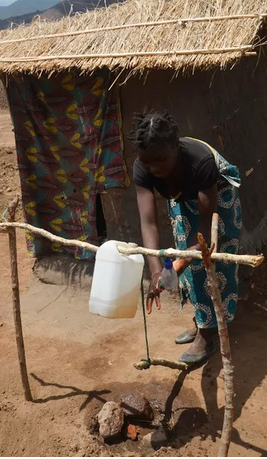
'Tippy tap', avoids touching the water container through a food-pedal contraption.
Image source: Sian White
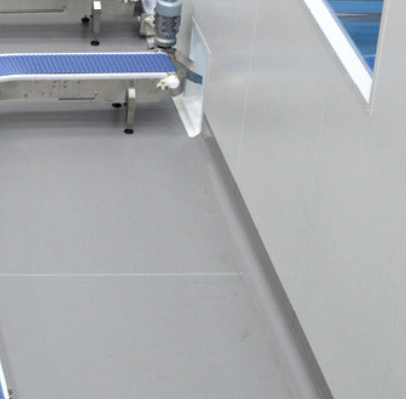
Edges between floor and wall made from rounded resin to avoid dirt build-up in difficult to clean crevices.
Image source: https://www.flowcreteaustralia.com.au/
2.1. Segregation of “dirty” and “clean” duty areas
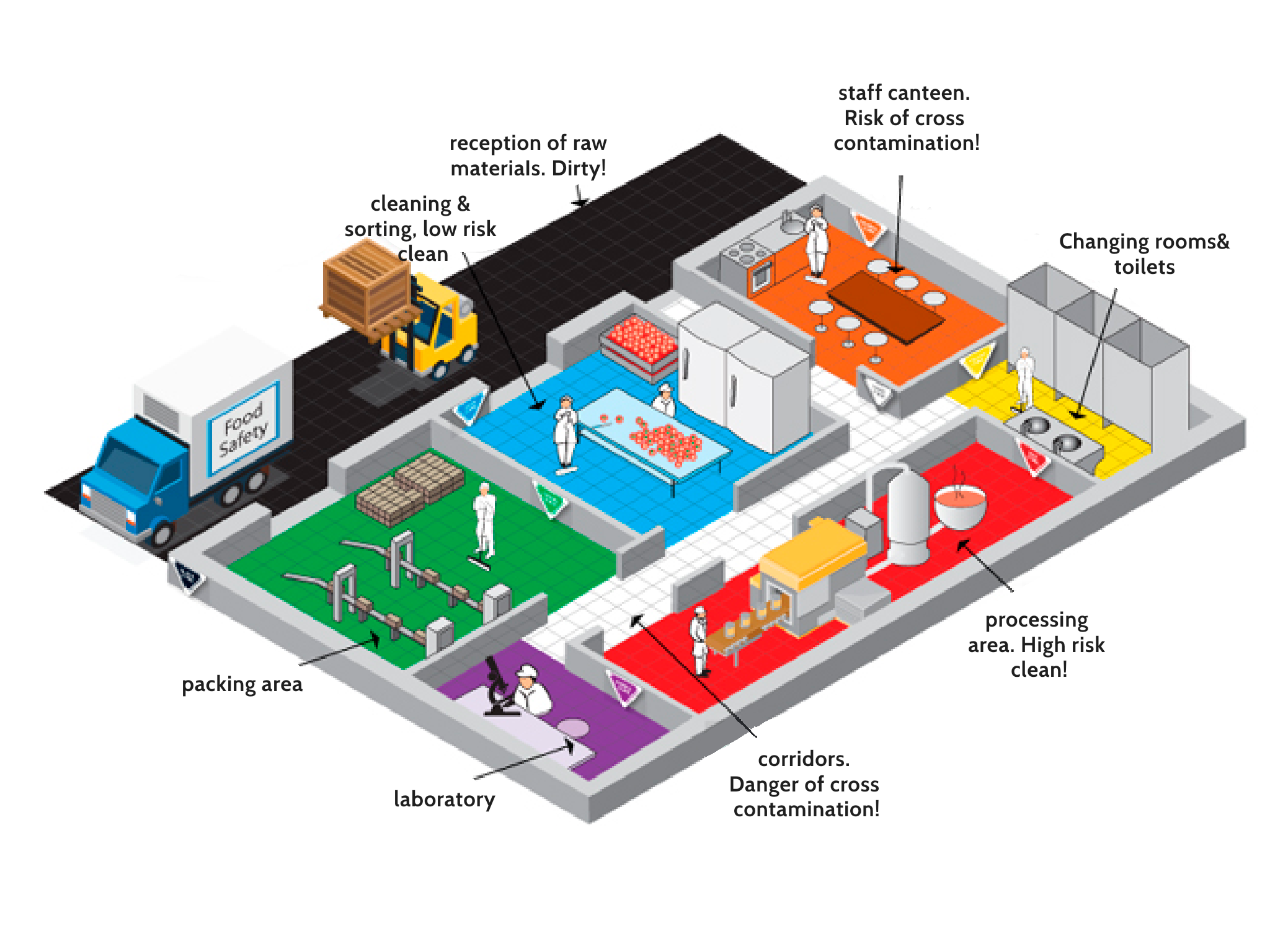
To protect food processing plants against cross-contamination it is important to segregate different areas, e.g. those where allergens are handled from free-of-allergen areas, raw vs. cooked, and clean vs. dirty areas. Essentially, clean spaces should
be barricaded from contaminants e.g. with
physical barriers and the layout of workspaces that follows the workflow from receiving uncleaned raw materials to clean processing and packaging areas.
3. Storage
To safely store food, it is necessary to:
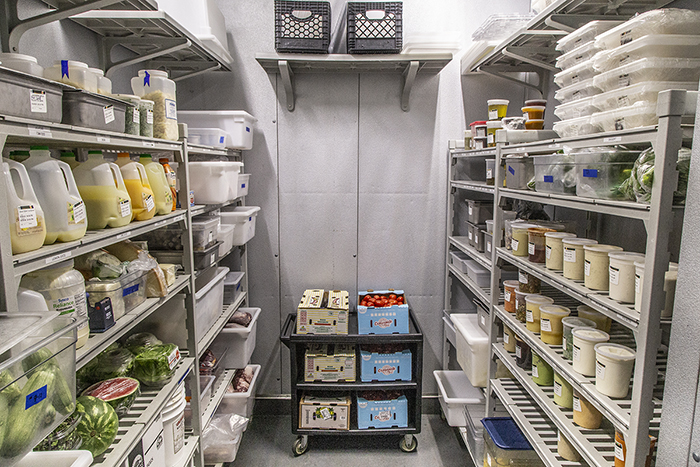
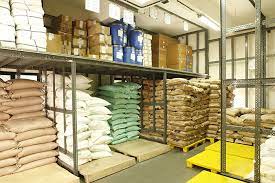
store food in areas specially designed for food storage, such as refrigerators, coolrooms, pantries and food storerooms
store food in clean, food-grade storage containers
never store food on the floor or on pallets, or in areas containing chemicals, cleaning equipment, clothing or personal belongings
avoid storing food at the temperature danger zone at which bacteria grow quickly in high-risk foods ( 5°C - 60°C)
keep perishable foods at 5 °C or colder, and keep frozen foods frozen solid during storage at –15 °C or colder. Cool rooms, refrigerators and freezers must have proper thermometers, and temperatures should be checked regularly.
place newly received goods at the back of the shelf and the oldest items at the front to ensure a FIFO system (First in - first out). Remove and avoid using foods that are past their use-by dates, spoilt, or are in damaged containers or packaging
keep raw foods and ready-to-eat foods separate, to avoid cross-contamination
not store food in opened cans, repurposed single-use (dispoasable) containers, or containers that have been used to store things other than food
always wash and sanitize storage containers before use and dispose of containers in poor condition
cover food with tight-fitting lids, foil or plastic film, to protect the food from dust, insects and cross-contamination
not leave food out to cool for more than 1 hour. Large portions of food cool faster if divided into smaller portions. As soon as food has cooled, place it in the refrigerator or freezer
Take special precausions when handling fresh eggs or egg-containing raw food products. They must be regarded as highly perishable, stored under cold conditions and be used up within 24 hours
Transport vehicles are to be regarded as extended storage facilities and to be treated in the same way
train staff in safe food handling and storage
4. Personal hygiene
To prevent contamination of food through the person handling it, it is necessary to ensure hygiene at staff level.
These pertain to the staff members' appearance and cleanliness, as well as to their habits.
It is mandatory to wash hands thoroughly before starting to work, before handling food, after using the toilet and between handling raw and cooked food, as well as between tasks.
Keep yourself clean by taking daily showers, keeping your hair and nails short and clean.
Street clothes should remain in the changing room and the facility should only be entered in work apparel. Work apparel should not be worn outside the facility.
Work surfaces and the floor in the workers vicinity should be kept free of debris and cleaned regularily.
Smoking, chewing gum, spitting, scratching your hair, etc. are prohibited
If showing signs of sickness inform your superior and only report to work if no risk of infection exists.
Avoid cross-contamination between raw and cooked foods, or between meat and foods meant for raw consumption, etc.
Handle desinfectants etc. with care and according to instructions.
Sneeze or cough into a tissue and dispose it immediately.
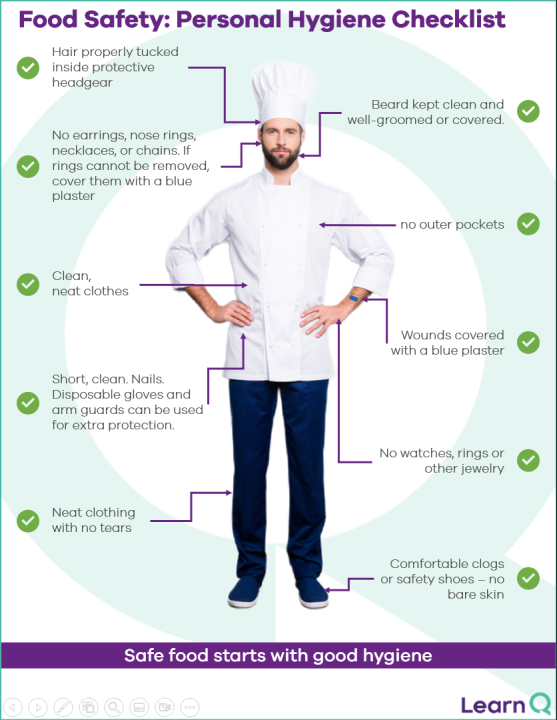
Image source: https://www.linkedin.com/pulse/free-personal-hygiene-checklist-poster-learnqualltd
4.1. Find the hotspots on the baker
Click on the hotspot that you can find.
4.2. Protective clothing
The choice of protective clothing
depends on the working conditions. Firstly, protective clothing has to
protect workers from safety hazards, like harmful chemicals that could
come into skin or eye contact, slippery, wet floors, sharp knifes or
other blades, etc. To provide optimum protection it is important that
workers know how to wear the protective items properly, and that worn
out protective clothing is repaired or replaced in good time.
Protective clothing should be
well-fitting and comfortable to wear as not to tire out or distract
workers unnecissarily, as this could increase the risk for accidents.
Loves and aprons need to provide sufficient protection but must not
hamper the task at hand or get entangled with moving machine parts.
5. Tool and equipment hygiene and maintenance
Equipment can be categorized with regard to cleaning method as follows:
Mechanical Cleaning. Often referred to as clean-in-place (CIP). Requires no disassembly or partial disassembly.
Clean-out-of-Place (COP). Can be partially disassembled and cleaned in specialized COP pressure tanks.
Manual Cleaning. Requires total disassembly for cleaning and inspection. This is the most time-intensive type of cleaning where you use rags, brushes, mops, and other tools to clean machinery that isn’t water proof or needs to be dismantled.
In food processing industry equipment maintenance plays an important role in a unique way:
1. Maintenance is important to avoid equipment breakdown and unplanned downtime.
2. It is important to ensure that the food, which comes in contact with the equipment, remains uncontaminated, is prepared to specification and safe to consume. Everything from random
debris to flakes of rust and paint, etc. need to be kept clear from
foodstuffs. Therefore it is necessary to keep food processing facilities spotlessly clean and to check and maintain equipment on a regular basis.
3. If the process is continuous the breakdown of one piece of equipment can cause a halt of the entire production line. Breakdowns in the production line put the product itself at risk, especially in case of temperature sensitive foods. The longer semi-processed foods are on halt during an equipment failure, the higher the risk of spoilage or not-to-specification production. This can cause expensive losses.
4. An additional difficulty specific for food processing equipment is the often wet environment and the use of fat or protein dissolving detergents. Equipment must be
designed and built to withstand these conditions, e.g. by using
only food-grade stainless steel, and electrics/electronics/monitors, which are protected from moisture.
5. Regular inspection, calibration and maintenance of equipment and replacing faulty items, must be part of the standard operation procedures (SOPs) and be documented accordingly also for compliance with food safety regulations.
6. Some machines, e.g. in packing etc. might be highly complex and there’s very often
a need for specialized training to diagnose and solve problems with each
individual piece of equipment. In that case condition monitoring and predictive maintenance can be useful to prevent breakdowns.
7. A partricular difficulty in maintaining food production equipment arises if it is used as part of a continuous process. Finding the right time to perform inspections or routine maintenance might be difficult when different tasks have their own schedules. Careful maintenance planning is crucial.
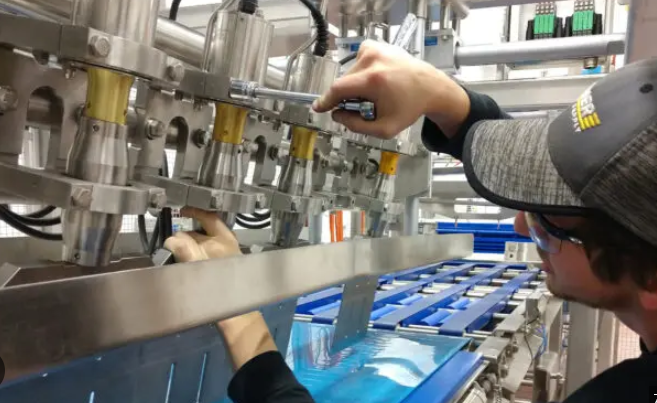
8. Equipment maintenance or repairs must be carried out in such a way that they don't pose a food safety risk due to contamination with chemicals, debris or aerosols, etc. Ideally, repairs should be carried out away from the
production line. In case that is not possible, the work
area or the machine itself should be covered in order to prevent debris
from coming into contact with food production surfaces. Maintenance personnel must adhere to strict hygiene rules and wear protective gear, wash their hands before entering a food processing area, avoid placing greasy or dirty hands on surfaces that make contact with foodstuffs, and clean equipment after completing repairs.
9. These guidelines put out by the University of Nebraska can help keep you informed on Good Manufacturing Practices.
5.1. The Seven-Step Approach to Cleaning and Sanitizing
Cleaning and sanitizing should be opart of the company's Sanitation Standard Operating Procedures (SSOPs). Staff members who areinvolved in cleaning and sanitizing must be properly trained and fully understand the reasons behind each task. The cleaning and sanitizing work surfaces generally follows a 7-step procedure:
1. Remove debris:
Using a lint-free cloth or wipe, physically remove soil deposits off of food contact surfaces. Soils include dirt, gross solids, mineral salts, large particles, proteins, lubricants and other residues. Soil removal can also include the use of scrapers, dry floor push mops, brushes for collecting soil and dust, dry or low moisture steaming, and vacuuming.
2. Rinse all residue:
When
rinsing equipment during this step, use warm (less than 48.9° C)
potable water. Anything warmer could cause soil and particles to become
adherent to a surface and prevent removal. To avoid recontamination
issues, using high-pressure hoses is discouraged since a high-pressure
rinse could aerosolize soils and chemicals onto areas and equipment that
have already been cleaned and sanitized. In addition, high-pressure
methods could also possibly damage processing equipment.
An exception to this step is if the area or equipment being cleaned needs to stay dry. Exposing dry food products to moisture can lead to mold and bacterial growth. Consequently, dry food processors have to apply interim dry-cleaning methods in-between any periodic wet cleaning. Instead of a rinse, thoroughly wipe down the equipment using pads, brushes or dry lint-free towels with a cleaning solution that is suitable to use on food contact surfaces. Use lint-free towels to dry all surfaces. Alcohol-based wipes and other solvents that dry quickly are also options as a rinse for dry areas.
3. Apply detergent and a good scrubbing:
At this point, it is essential to use chemical cleaners intended to remove fat and protein where necessary. Use foam detergents to achieve the greatest efficacy and coverage of the surface or equipment in use. In addition, ensure detergents are properly mixed by looking for dilution rates and contact times provided by the cleaning product manufacturer. If this information is not available, reach out to the manufacturer immediately. They should always be ready to help as not knowing dilution rates and contact times can be a food safety risk.
Knowing the proper concentration amounts is important because over-diluted solutions may not be as effective and could even lead to bacterial tolerance. Conversely, high concentrations of detergent could lead to product adulteration and employee safety issues. End-users should also keep in mind that detergents can be affected by water pH and hardness levels.
To make cleaning efforts productive, manual scrubbing of surfaces —
especially with a registered foaming agent — is strongly recommended. If possible do not use pressurized water. Instead, use manual processes so that cleaning and sanitization
materials remain in contact with the surfaces to be sanitized, and do
not further spread potential contaminants.
This step generally does not apply to dry processing environments; however, special situations require a dry/low-moisture steam or a minimal amount of water with detergent, followed by a rinse and alcohol-based sanitizer. If this is the case, it is crucial that contact surfaces are moisture-free before production continues.
When it’s time for equipment used in a dry area to receive a periodic cleaning, the equipment should be disassembled so all stationary parts can be cleaned and sanitized. All removable parts should be taken to a separate cleaning area where detergent and a potable water rinse can be applied. Once parts are clean and dry, they should be returned to the equipment area on a clean, dry cart for sanitizing and reassembly.
4. Give a thorough rinse
Before
proceeding to the sanitizing stage, do a final rinse with potable water
to completely remove the detergent and any residue. This step is very
important because detergents are alkaline and most sanitizers are
acidic. Without a thorough rinse, the sanitizer could be neutralized by
any remaining detergent on the equipment surface. Contrary to the warm water temperature that is recommended for the first rinse, in this second rinse you should use hot water. Use gloves while handling it.
As mentioned before, a rinse is not recommended in dry areas unless equipment parts are being cleaned in a separate area or unique circumstances require a minimal amount of water to remove soils. In the latter case, surfaces must be dry before applying a sanitizer or disinfectant.
5. Take a closer look
Inspect and, if necessary, spot clean any areas where there are still visible signs of residue or detergent.
Pay special attention to hard-to-reach places. If you are a foodservice operator, be aware of commercial food equipment whose food zones are not cleanable by hand. Some examples include beverage dispensers, ice machines, soft-serve ice cream dispensers and blenders. If the equipment is certified to an NSF/ANSI standard, the manufacturer must provide a written set of clean-in-place (CIP) instructions that explain how to clean and sanitize inaccessible areas of a machine. CIP procedures describe the method by which a detergent solution, water rinse and sanitizing solution is mechanically circulated or passed through a piece of equipment and across its surfaces.
As with any process, CIP procedures need to be validated by the experts involved with an operation’s food safety. CIP instructions should also be reviewed if anything at the facility changes, such as producing a new food product.
6. Sanitize or disinfect
To
help safely reduce bacterial load, apply an effective sanitizing or
disinfecting chemical verified as suitable to use for food and beverage
processing or handling environments.) Use spray sanitizers to achieve the greatest efficacy and coverage of the surface.
Difference between sanitizing and disinfecting:
Sanitizers and disinfectants both kill bacteria and other microorganisms. Disinfectants kill considerably more microorganisms but generally at a slower rate. Not surprisingly, disinfecting chemicals contain stronger chemicals; however, this does not necessarily mean a disinfectant is dangerous to use in a food processing facility or restaurant. Nevertheless, only trust a product that clearly indicates its intended use on the label. This is important because different sanitizing and disinfecting products have different chemical characteristics that, if used improperly, might contaminate or adulterate the food product. For example, some sanitizing and disinfecting chemicals are more corrosive than others.
As for dry processing facilities, dry cleaning should be followed by a dry sanitizing or disinfecting process. It is important to apply a low-moisture, alcohol-based product that has been verified as suitable to use on food contact surfaces. The dry sanitizer or disinfectant needs to be highly evaporative, quick-drying and require no rinsing.
7. Dry
When using a rinse-off sanitizer or disinfectant, the product needs to be completely removed with a potable water rinse. Air drying is the ideal way to dry surfaces because a wipe-down could lead to re-contamination. Use lint-free towels (e.g. disposable paper towels) when handling components, and when manual drying is necessary.
For areas that must be kept dry or cannot facilitate air drying, a leave-on sanitizer or disinfectant is recommended. It is important to follow the directions for drying times listed on the label when using leave-on products.
Don’t skip repeated steps such as rinses and inspections — every part of the process is critical to proper sanitization.
Sanitization goes beyond the machine. Be sure to inspect and address the areas around equipment, as well!
Source: https://www.nsf.org/knowledge-library/clean-food-processing-facilities
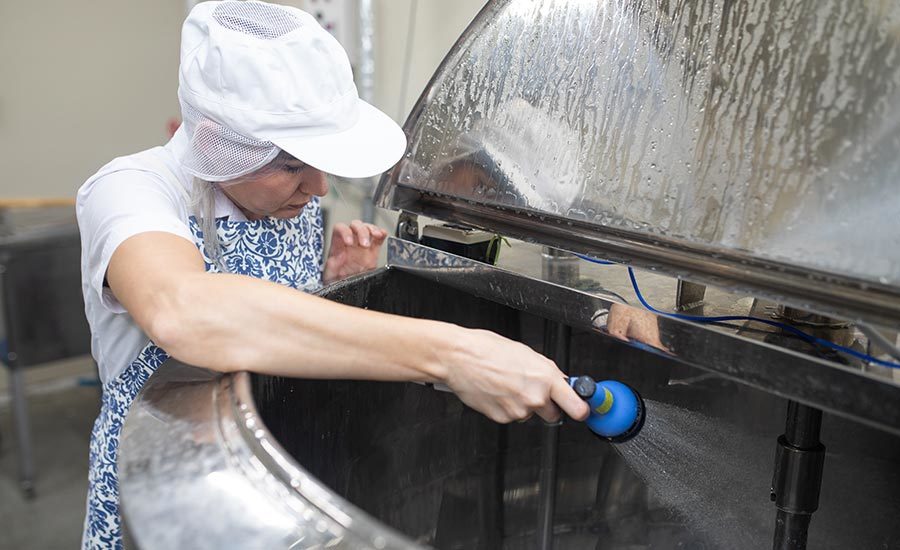
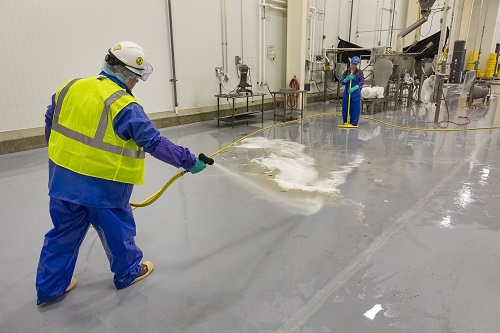
Image source: GettyImages-1135928392.jpg Image source: https://brct.co.za/services/food-manufacturing-cleaning-services/
5.2. Use of chemicals
Another important topic in managing sanitation and food safety is the use of chemicals, which can lead to catastrophic incidences and injuries if handled incorrectly.
Chemistry is for most people a difficult topic. For example, do you know the difference between sodium chloride and sodium chlorite? The difference in spelling is just a ‘d’ vs. a ‘t’, but the difference is monumental. Sodium chloride is common table salt, while sodium chlorite is a power oxidizer, which ignites into flames in a dry state.
To further the confusion, chemicals are usually sold under brand names like KC-568 or Cecure®. If staff members, who are handling such products, are not properly trained, these chemicals must be regarded as hazards that can lead to harmful exposure accidents or chemical contamination incidents.
One trick to reduce the risk of mixing up chemicals is to color-code the
containers for easier identification.

Never store chemicals above eye-level to avoid accidents.
The most frequently used sanitizers in the food industry are chlorine based sanitizers, iodophores, and hydrogen peroxide.
6. Waste handling and disposal
Food wastes must not be collected in the same space as the food that is being processed. Residues that are generated during processing can be collected in closed garbage containers in such a way that soiling and cross-contamination is prevented. At the end of a shift, or even more frequently, these containers are emptied into dumpsters outside the processing area, and washed.
Dumpsters must be free of pests and covered if possible. Hazardous wastes are to be collected in seperate and clearly marked containers, that prevent confusion with food processing ingredients.
Priority for every modern company should be to reduce the amount of waste sent to landfill and to recycle or valorize as much of the waste products as possible. The food processing industry has some particular issues and options, due to the large amounts of fresh organic wastes that often accumulate on a daily basis. These have a short 'shelf life' and need to be disposed of quickly. On the other hand are these types of wastes often good sources for making e.g. animal feeds, other by-products like vinegar or soap, or to be recycled as compost, biogas or fuel.
Picture gallery: Removal options for organic waste
Important in any case is the separation of different waste type as to enable any form of waste management. Ideally, organic wastes are immediately removed from the production area, e.g. through waste shutters in the wall and/or conveyor belts. Organic waste can then be loaded into dumpsters or directly shredded and
transported to its destination (e.g. holding chamber for the biogas
digester). Care needs to be taken that organic wastes for composting or
biogads production are not mixed with plastics or garbage from the trash
bins.
Items such as cardboard, clean plastic,
metal and paper are all commodities that can be sold to recyclers. In a first step they should be reduced in size/volume (compressed) and stored seperately in a dry place before collection. Paper and cardboard however, can also be used as carbon-rich material in compost making, if the organic waste is very moist.
In order to ensure separation of different waste types, trash bins in the production area, the changing rooms, washrooms and in the canteen need to be color coded and clearly labeled for their intended use and regularly inspected for compliance.
All staff members need to be regularly trained on correct waste handling.
Picture gallery: Misshandling of waste
7. Pest control
In food processing environments, pest control is a must as a pest infestation puts your product quality and safety at risk. However, pest management in a food processing environment is also difficult, as pest control treatments must not contaminate the food. Prevention by addressing the underlying causes of pest infestation can help reduce the use of harmful treatments. This can be planned in an Integrated Pest Management (IPM) plan, which is implemented in a continuous cycle of 6 critical steps:
Step 1: Regular inspection
Focus on areas where pests are most likely to appear – receiving docks, storage areas, employee break rooms, sites of recent ingredient spills, etc. – and identify any potential entry points, food and water sources, or harborage zones that might encourage pest problems.
Step 2: Preventive Action
Once vulnerable areas are identified, take steps to address them before they cause a real problem.
These can be closing potential entry points (e.g. fly screens, blocking holes, etc.) or regular sanitation measures (like waste removal, cleaning, etc.)
Step 3: Identification of pests
Identify possible pests and inform yourself about their behavious to plan effective counter measures.
Step 4: Analyse the underlying issues
In case you already have a pest problem identify the causes. What attracts these pests in your facility? Is there food debris or moisture
accumulating somewhere? Are they attracted to certain odors? Are there structural weaknesses in your building that allow pests to enter or build their homes in your facility? Could
incoming shipments be infested? The answers to such questions will linform your choice of counter measures.
Step 5: Select the right treatment
Where appropriate you can place bait and trap stations in strategic places in your facility to catch rodents or insects. This will also assist in monitoring pest levels and inform your decision making on more invasive prest treatments. Your pest management
plan should always aim at effectively eliminating pests at the least risk to your food
safety. This means chemical solutions should alsways be the last step. In some cases this might need to be carried out by professional service providers.
Step 6: Monitoring and documentation
Pest management is an ongoing process, and regular monitoring is mandatory to prevent infestation. Any pest or sanitation
issues should be reported at first sight and documented together with any action taken (inclusing pesticide usage report). Your documentation should also include a map that shows the layout of any traps, the frequency of their control/service, a
list of approved pesticides for each purpose, and the staff members trained and responsible for pest control.