Leafy vegetables or leafy greens are plants that are eaten for their leaves. Around 1000 different plants are known to have edible leaves. Common leafy greens in the Western world are kale and collard greens, spinach, swiss chard, different lettuces, different types of cabbages, celery, and a large number of leafy herbs. Traditionally also eaten were wild plants like dandelion, shepard's purse, stinging nettle, and water cress. Lesser known leafy greens include mustard leaves, rape , radish and beet leaves, sorrel, malaba spinach and new zealand spinach. In Mexico foraged leafy greens are referred to as quelite.
In India mustard greens, fenugreek leaf (methi), leaves of okra, bitter gourd, bottle gourd etc. are very widely used in daily cuisine.
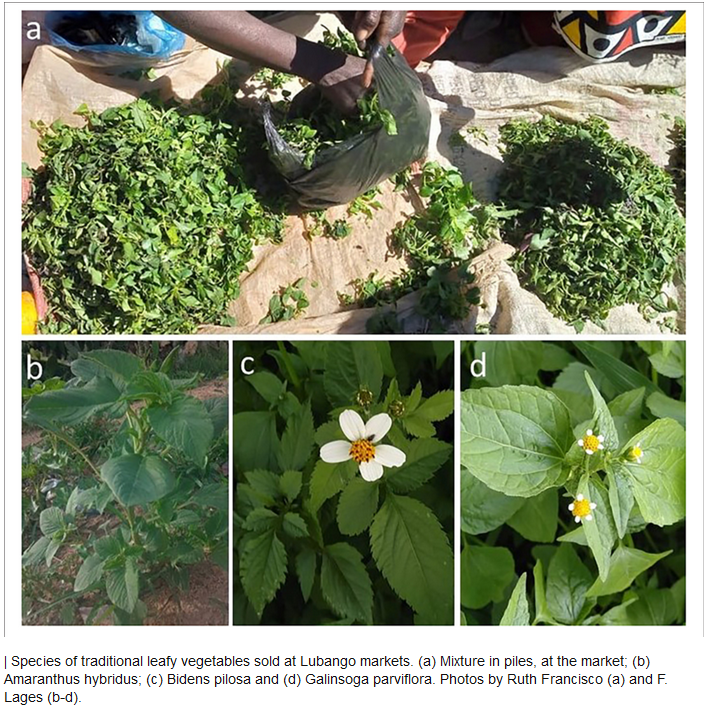
Africa also has a long list of traditionally used leafy greens, which are served with almost every meal. Many of these wild-collected greens are still common and even commercially available.
Cassava (Manihot esculenta) leaves are used as a spinach called kisamvu in the Swahili kitchen, assaka saka or pondu soup in Central Africa or made into a stew called saka saka in Western Africa.
In African countries, bean (Phaseolus vulgaris) and cowpea (Vigna unguiculata) leaves as well as pumpkin (cucurbita pepo) and sweet potato (ipomea batata) leaves are often used as spinach.
Examples of traditional African leafy vegetables:
a) purple amaranth (Amaranthus cruenthus),
b) jute mallow (Corchorus olitorius), c) roselle (Hibiscus subdariffa)
Jute mallow is known as delele in Zambia and Botswana, murere in Kenya, dererein Zimbabwe, and molokhiain North Africa.
d) African eggplant (Solanum macrocarpon), e) waterleaf or Ceylon spinach (Talinum triangulare)
and f) cocoyam (Xanthosoma sagittifolium)
Cocoyam (taro) leaves are used to prepare palaver sauce in Ghana, while in Francophone Africa, cocoyam leaf stew is referred to as sauce feuilles.
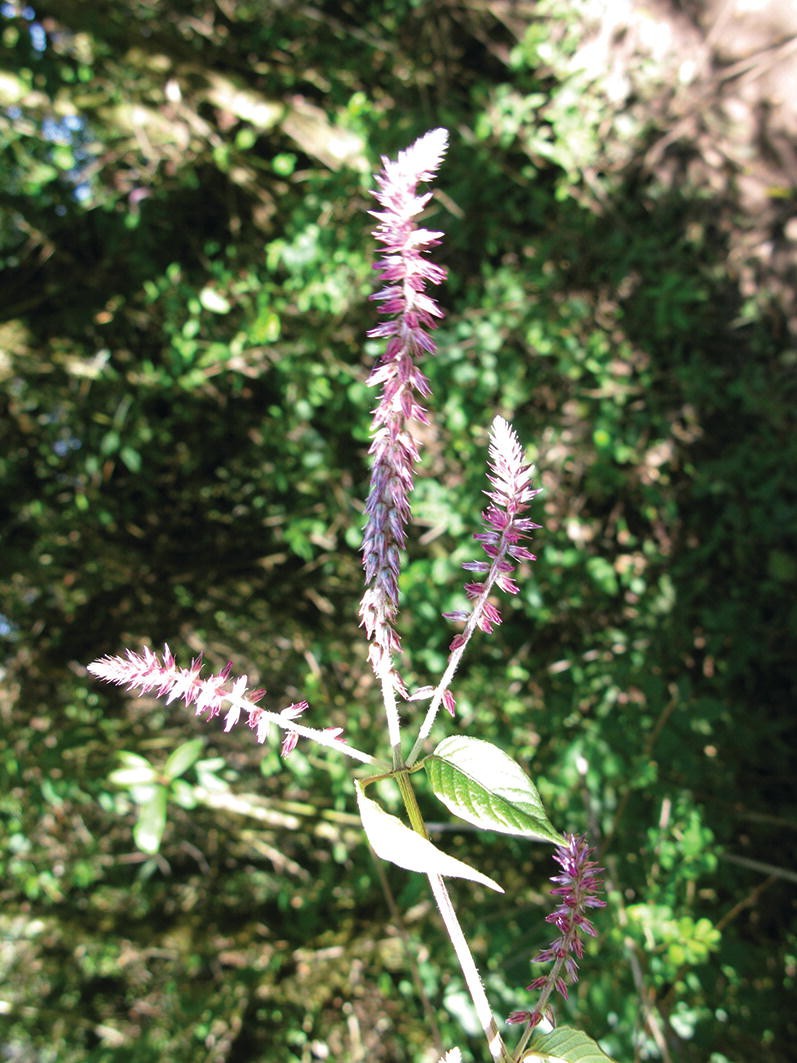
Amaranth leaves of many different spiecies, like: A. blitum, A. caudatus, A. cruentus, A. dubius, A. gangeticus, A. polygonoides, A. roxburghianus, A. spinosus, A. tricolor, or A. viridis, are known asmchichain Tanzania, mowain Zimbabwe, umfinoin South Africa, bonongwein Zambia and Malawi, efo tete in Nigeria, and alefuin Ghana.
Other edible green leaf plants closely related to Amaranth are:
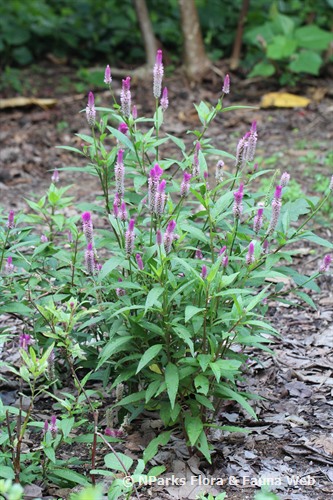
and the very similar Celosia argentea var. argentea or Lagos spinach is one of the main boiled greens in West Africa, where it is known as soko yòkòtò (Yoruba) or farar áláyyafó (Hausa).
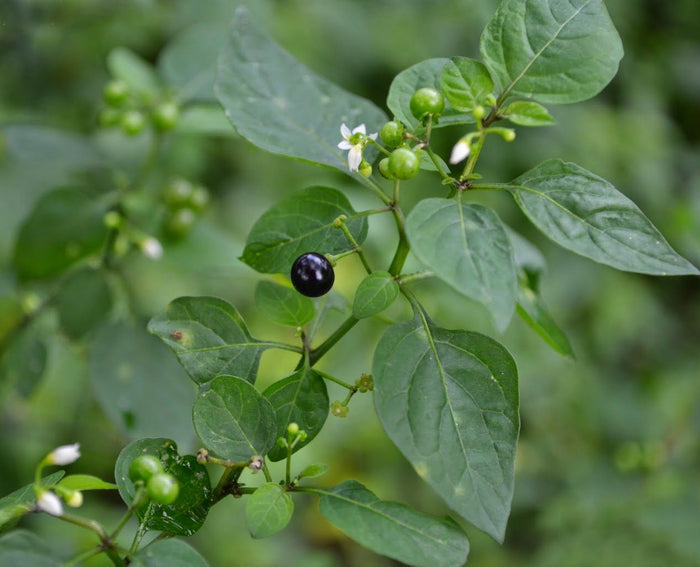
Species known as African nightshade include Solanum scabrum, S. villosum, S. nigrum, and S. americanum.[1] Local East Afrikan names of African nightshade include managu (Kikuyu), mnavu (Swahili), rinagu (Kisii), tsisutsa (Luhya), osuga (Luo), isoiyot (Kipsigis), kitulu (Kamba), ormomoi (Maa), ndunda (Taita), nsugga (Luganda), sochot (Keiyo), and esisogho (Lukhonzo). In Cameroon the Nso people call it Nyuuseji, and the Kom people call it Mbasi
Winged-Seed Sesame (Sesamum alatum) also Guzozo in Shona (Zimbabwe) andhansi lamti or hansi foyin Zarma (Western Niger)
African Spider flower (Cleome gynandra) leaves are known as nyevheor runi in Zimbabwe, mgagani in Tanzania, and musambein Angola.

:max_bytes(150000):strip_icc():format(webp)/GettyImages-590213132-c2d457c7ae23499ea7ad41807ed50774.jpg) Cassava (Manihot esculenta) leaves are used as a spinach called kisamvu in the Swahili kitchen, as
Cassava (Manihot esculenta) leaves are used as a spinach called kisamvu in the Swahili kitchen, as
 Species known as African nightshade include Solanum scabrum, S. villosum, S. nigrum, and S. americanum.[1] Local East Afrikan names of African nightshade include managu (Kikuyu), mnavu (Swahili), rinagu (Kisii), tsisutsa (Luhya), osuga (Luo), isoiyot (Kipsigis), kitulu (Kamba), ormomoi (Maa), ndunda (Taita), nsugga (Luganda), sochot (Keiyo), and esisogho (Lukhonzo). In Cameroon the Nso people call it Nyuuseji, and the Kom people call it Mbasi
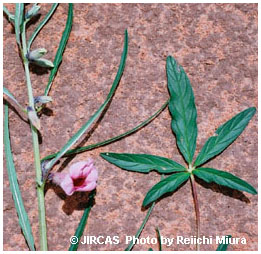 Winged-Seed Sesame