
Requirements for food labels

3. Nutritional information
Nutritional facts of prepackaged foods must be labelled according to regulatory standards. Falsely labeling nutritional information is illegal. To determine the nutrional information for your product, you may use a publicly available calculator, or you can send a product sample to a lab.
Some categories of products like salt, tea and vinegar don’t need a nutrition panel.
Nutritional information must at least display the quantity of certain categories of
ingredients, like salt, saturated fats, sugar. European
Union regulations require that you declare energy, protein, fat,
saturated fat, carbohydrates, sugars, and salt. Voluntary nutrients may
be shown if they are present in significant amounts.
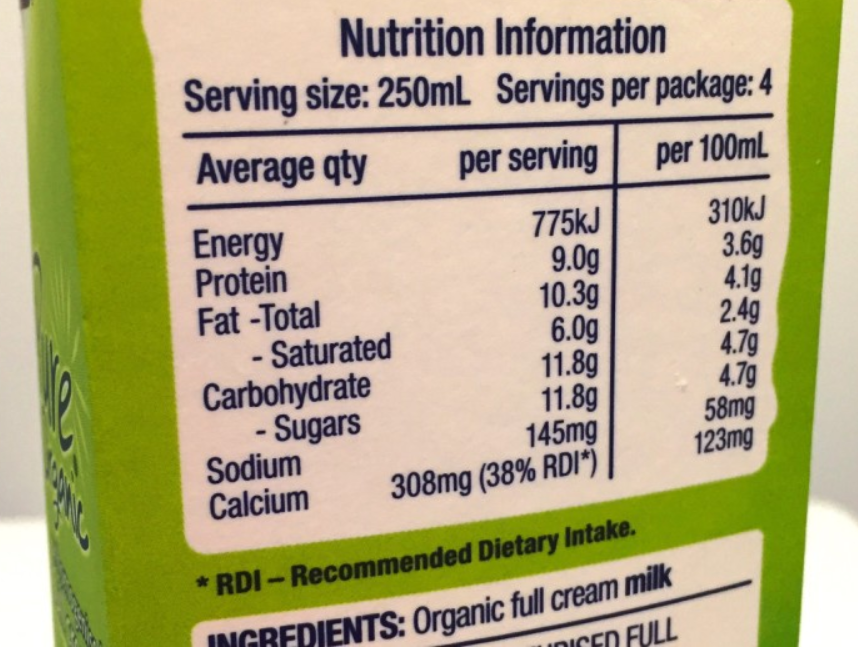
If your product claims to be gluten free the nutrition panel
must include the line 'gluten less than 3ppm'. If your product claims
to be rich in Vit.C e.g this needs to be quantified in the nutrition
panel.
Color-coded nutritional information tells consumers if the food is high, medium or low in fat, saturated fats, sugars and salt (red = high, yellow = medium, green = low). If your product is low in all of these, you may use this kind of display on your label to attract health-conscious customers).
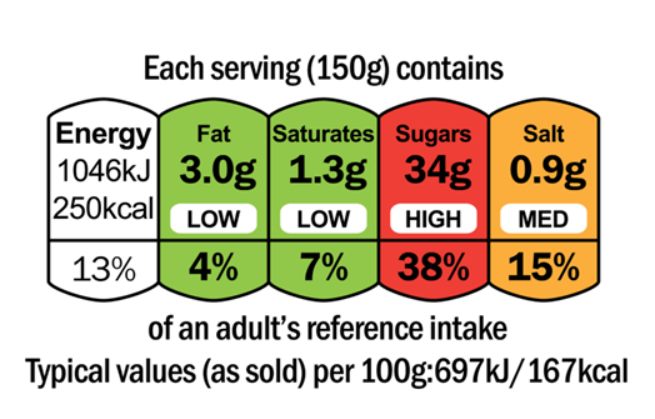
Regulations vary from
country to country and you should inform yourself before entering a
certain market. The way nutritional information has to be displayed and the wording used is often mandatory and can be very different. It is important to use the correct version to be compliant with legal requirements in certain regions. Nutritional information may also have to include the
serving size and percentage of daily value.
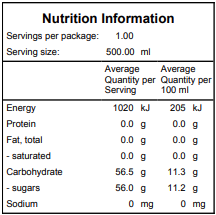
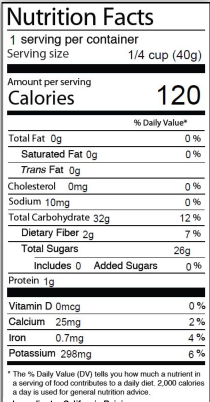
A: Australasian compliant Nutrition Information panel B: America compliant Nutrition Facts panel
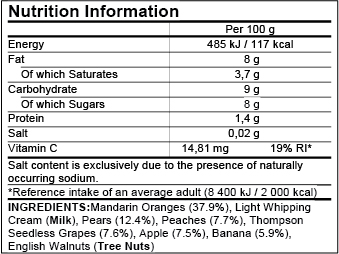 C: EU-compliant Nutrition Information