
Sanitation Standards

5. Tool and equipment hygiene and maintenance
Equipment can be categorized with regard to cleaning method as follows:
Mechanical Cleaning. Often referred to as clean-in-place (CIP). Requires no disassembly or partial disassembly.
Clean-out-of-Place (COP). Can be partially disassembled and cleaned in specialized COP pressure tanks.
Manual Cleaning. Requires total disassembly for cleaning and inspection. This is the most time-intensive type of cleaning where you use rags, brushes, mops, and other tools to clean machinery that isn’t water proof or needs to be dismantled.
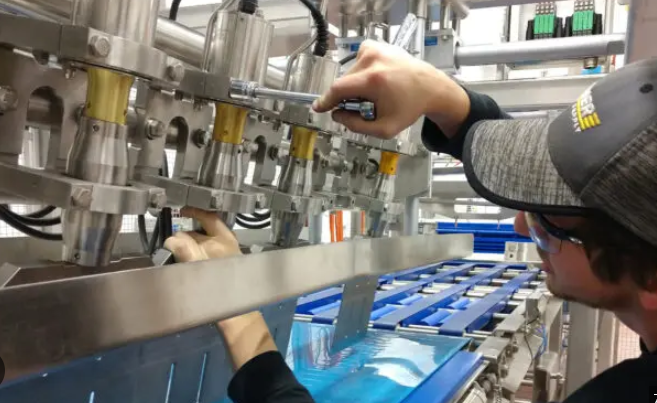
In food processing industry equipment maintenance plays an important role in a unique way:
1. Maintenance is important to avoid equipment breakdown and unplanned downtime.
2. It is important to ensure that the food, which comes in contact with the equipment, remains uncontaminated, is prepared to specification and safe to consume. Everything from random
debris to flakes of rust and paint, etc. need to be kept clear from
foodstuffs. Therefore it is necessary to keep food processing facilities spotlessly clean and to check and maintain equipment on a regular basis.
3. If the process is continuous the breakdown of one piece of equipment can cause a halt of the entire production line. Breakdowns in the production line put the product itself at risk, especially in case of temperature sensitive foods. The longer semi-processed foods are on halt during an equipment failure, the higher the risk of spoilage or not-to-specification production. This can cause expensive losses.
4. An additional difficulty specific for food processing equipment is the often wet environment and the use of fat or protein dissolving detergents. Equipment must be
designed and built to withstand these conditions, e.g. by using
only food-grade stainless steel, and electrics/electronics/monitors, which are protected from moisture.
5. Regular inspection, calibration and maintenance of equipment and replacing faulty items, must be part of the standard operation procedures (SOPs) and be documented accordingly also for compliance with food safety regulations.
6. Some machines, e.g. in packing etc. might be highly complex and there’s very often
a need for specialized training to diagnose and solve problems with each
individual piece of equipment. In that case condition monitoring and predictive maintenance can be useful to prevent breakdowns.
7. A partricular difficulty in maintaining food production equipment arises if it is used as part of a continuous process. Finding the right time to perform inspections or routine maintenance might be difficult when different tasks have their own schedules. Careful maintenance planning is crucial.
8. Equipment maintenance or repairs must be carried out in such a way that they don't pose a food safety risk due to contamination with chemicals, debris or aerosols, etc. Ideally, repairs should be carried out away from the
production line. In case that is not possible, the work
area or the machine itself should be covered in order to prevent debris
from coming into contact with food production surfaces. Maintenance personnel must adhere to strict hygiene rules and wear protective gear, wash their hands before entering a food processing area, avoid placing greasy or dirty hands on surfaces that make contact with foodstuffs, and clean equipment after completing repairs.
9. These guidelines put out by the University of Nebraska can help keep you informed on Good Manufacturing Practices.