Methods of food preservation
Completion requirements
View

8. Pickling
This is
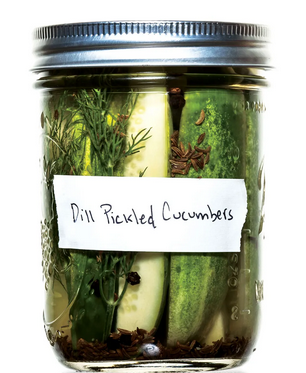
the process of preserving food by packing it in an acidic brine or vinegar. Usually white types of vinegar are used to preserves a pleasing color of the pickled vegetables. To inhibit bacteria growth, the pH should be at least as low as 3.5, which means the vinegar has to have a concentration of at least 4%. As acids are corrosive, stainless steal utensils have to be used. The vinegar is usually mixed with sugar and sometimes herbs & spices according to the recipe. Pickled foods have a different taste and texture than the raw ingredient and are often eaten as condiments.
Three different methods of pickling are generally used:
- Vegetables are cleaned and cut into shape, then placed in a cold brine of 200g salt per liter of water, for several hours. They are next blanched in saltwater and then transferred into jars (without the blanching liquid). The jars are then filled with the hot vinegar solution so that all vegetables are covered, but about 1cm headspace remains below the rim of the jar. The jars are closed immediately.
- Vegetables are cleaned and cut into shape and raw packed into jars. The vinegar solution with added salt and sugar is poured over the vegetables until they are completely covered, leaving 1cm headspace. The jars are closed and sterilized in a boiling water bath or autoclave.
- The vegetables are cleaned and cut into shape and boiled for a few minutes in the vinegar solution that contains also sugar, salt, herbs and spices (as per recipe). The Vegetables together with the boiling hot brine are then filled into jars, and immediately closed.