
Packaging methods and equipment

1. Weighing scales
Weighing is an essential part of the entire food production process, starting with weighing of received raw materials, then weighing ingredients to fulfill recipe specifications and quality requirements, all the way to the weighing and labelling of finished product during packing. Accurate, high-quality food scales help processors adhere to production requirements and reduce the risk of creating out-of-spec product., which can jeopardize the health of consumers and subject processors to fees for non-compliance with foodservice regulations. When selecting a weighing scale make sure it is simple-to-install and can easily integrate with computers, label printers and scanners where needed.
Types of scales used in the food processing industry:
Floor Scales
Floor scales are most often used on receiving docks to weigh incoming pallets or crates of raw materials to record delivered quantities. They are built into the floor so that heavy lifting can be avoided. Alternatively crane scales can be used at reception to weigh produce in hanging bags or sacks.
Bench Scales
Bench scales for food processing should be very precise and able to weigh in small units (e.g. gram). Another important factor is good readability, therefore the display should be at a convenient hight and well lit. The weighing table size and shape, as well as the upper weighing range limit needs to match your product.
You can check out various bench scale types here.
Counting Scales
Counting scales allow processors to efficiently weigh a high volume of identical parts. These weighing scales show the total weight as well as the number of pieces that correspond with this weight. This is useful in food production where the same ingredient may be used repeatedly in a batch and ensures the final product is of consistent quality.
Checkweighers
Are useful during sorting/grading procedures as they allow to select a weight range and reject products that do not fall within the set range. This can be useful at the reception stage (e.g. for sorting coconuts by weight), during processing if e.g. e certain filling range for drier crates must not be exceeded, or at the shipping stage, to ensure boxes etc. are filled to specifications.
Conveyor Scales
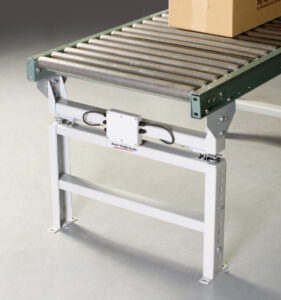 Source: https://www.averyweigh-tronix.com/en-ca/weighing-guides/guide-weighing-in-food-processing-environments/
Where speed and accuracy are needed, conveyor systems improve processing speed and reduce need for lifting. The scale operates while the conveyor is in motion. It can weigh individual boxes, cans or even large pieces of unpackaged product.
Linear weighers
Linear weighers are used to fill loose product like flour, tea, nuts etc. into bags or packages at a certain weight. This is useful for larger throughput production, where weighing in by hand is no longer feasable.
The hand-operated alternative are mechanical gross weigh bagging or open mouth scales, which weigh loose product into bags.
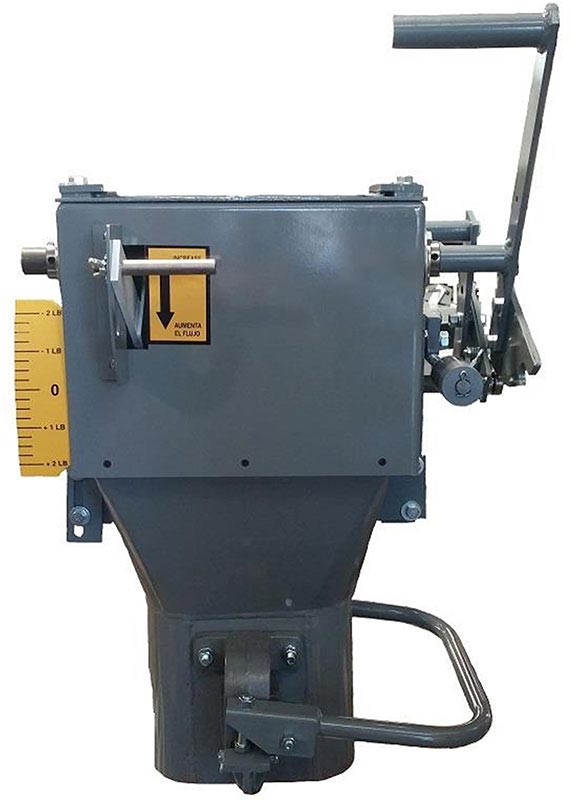
Image source: https://www.tinsleycompany.com/wp-content/uploads/2019/08/deer-corn-bagging-machine-wolverine-mechanical-gross-weigh-scale.jpg
To ensure accuracy of food processing scales, it is important to frequently clean them and to remove food or liquid buildup that may have accumulated. Scales also need to be calibrated regularly by authorized personell to avoid out-of-spec products and legal liabilities.