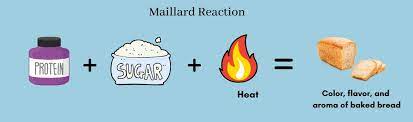
The Maillard Reaction is an umbrella term for a
number of reactions that can produce a complex range of products. It is e.g. responsible for the flavours in cooked
meat, fried onions, roasted coffee, and toasted bread.
It takes its name from French chemist
Louis-Camille Maillard, who originally described the reaction between
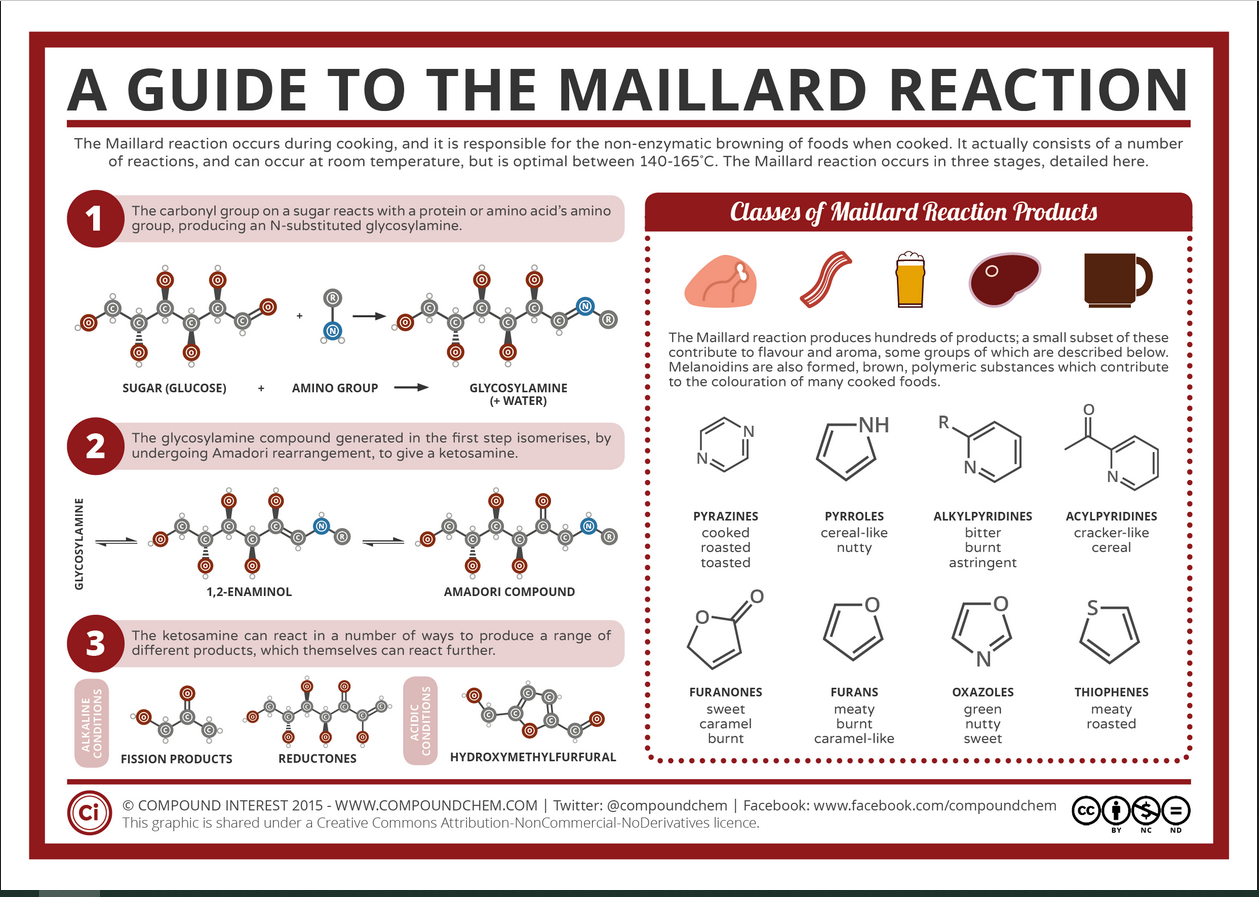
amino acids and sugars in 1912. The first step is the reaction between the sugar and
the amino acid that produces a glycosylamine compound, which in the
second step is rearranged to produce a ketosamine. During the final step this compound reacts in a number of ways to produce several
different compounds, of which melanoidins are one. These are long,
polymeric compounds, which act as brown pigments, giving the cooked food
its brown colouration. The Maillard reaction is referred to a
non-enzymatic browning reaction, as these melanoidins are produced
without the aid of enzymes; this differs from enzymatic browning, which turns e.g. fruits brown.