
Glossary
Not
every single piece of interesting or useful information can be
contained in the lectures of this course. The digital format of this
course however, makes it easy to provide and link extra information in a
glossary. We hope you enjoy reading through the glossary entries and
make good use of the treasures we have 'hidden' here.
Special | A | B | C | D | E | F | G | H | I | J | K | L | M | N | O | P | Q | R | S | T | U | V | W | X | Y | Z | ALL
Q
Qualitative methodTests used to rate/rank the sensory properties of food. Used by food producers to ensure the product appeals to the consumer. Used in the development of new products or improvement of existing product lines. Descriptive research that uses words, perceptions and feelings. | |
Quality assuranceA guarantee that manufacturing standards will be maintained so that the food product remains consistent. | |
Quality controlThe techniques and activities used to produce products and services economically and consistently to meet or exceed consumer requirements. | |
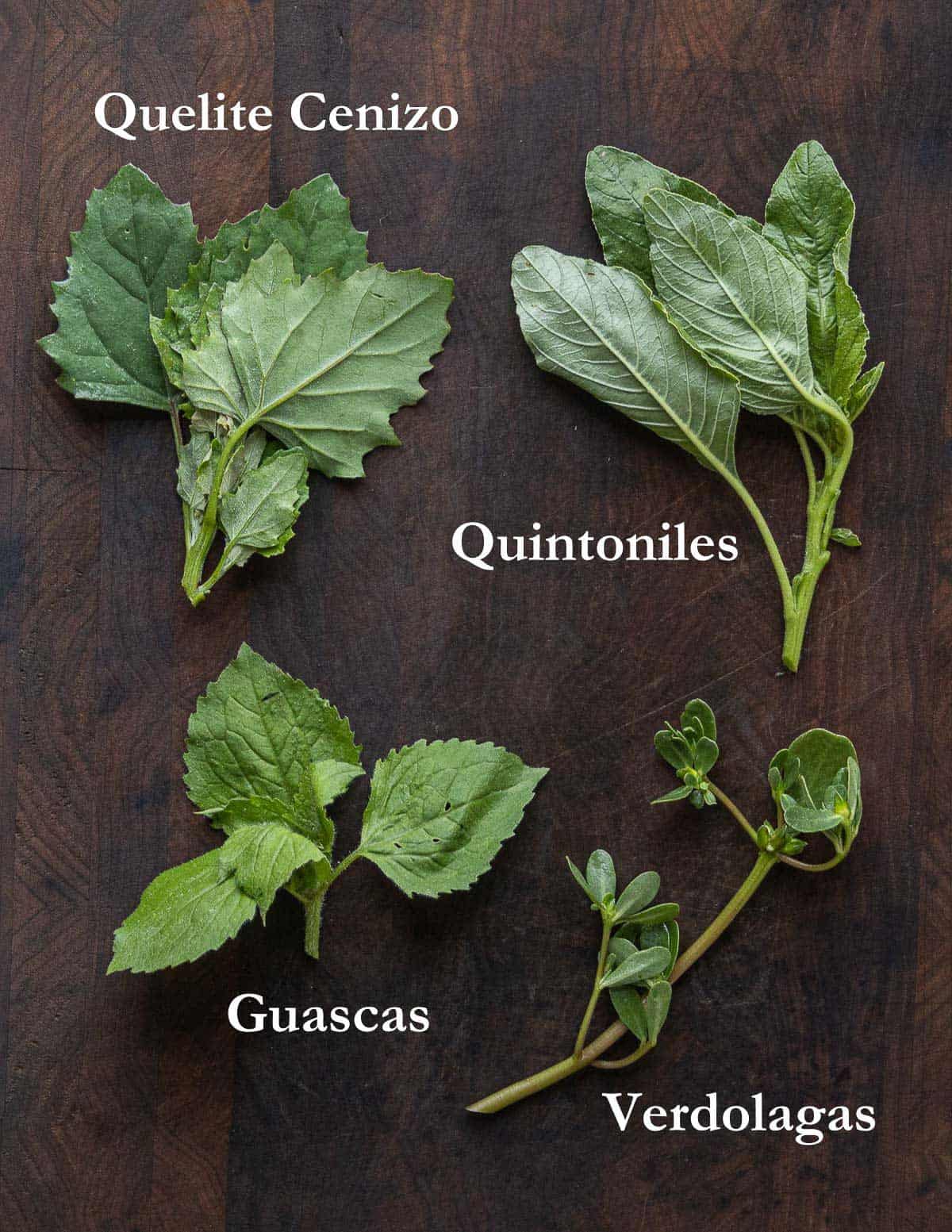
QueliteQuelite is a Mexican term that describes young, tender shoots of edible plants, usually foraged from the wild, used as leafy vegetables. About 350 different
species of quelite plants are traditionally used in Mexican cuisine. The word quelite stems from the Aztec nahuatl word quilitl, which can mean edible herb, vegetable or grass, however, squash blossoms and flowers are also a commonly used as quelites. Similar terms for mixed wild plants are used in Japan (sansai), Italy (piante spontanee), and Greece (horta).
Quelite Cenizo (Chenopodium berlandieri; quintoniles (Amaranthus retroflexus); verdolagas (Portulaca oleracea), and guascas (Galinsoga parviflora). Some more detailed information and a picture gallery of how to cook with quelites can be found her: https://foragerchef.com/quelites-mexicanos/ | |
Quick RatioThe quick ratio, also known as an acid test ratio, is a type of liquidity ratio that measures a business’s ability to handle short-term obligations. The quick ratio uses only highly liquid current assets in its numerator, such as cash, marketable securities, and accounts receivables. The assumption is that certain current assets, like inventory, are not necessarily easy to turn into cash.
Source: https://online.hbs.edu/Documents/managers-guide-to-finance-and-accounting.pdf | ||
