
Glossary
Not
every single piece of interesting or useful information can be
contained in the lectures of this course. The digital format of this
course however, makes it easy to provide and link extra information in a
glossary. We hope you enjoy reading through the glossary entries and
make good use of the treasures we have 'hidden' here.
Special | A | B | C | D | E | F | G | H | I | J | K | L | M | N | O | P | Q | R | S | T | U | V | W | X | Y | Z | ALL
M
MacronutrientsNutrients that the body requires in relatively large amounts to provide kilojoules and perform other functions. The three macronutrients are proteins, carbohydrates and lipids. | |
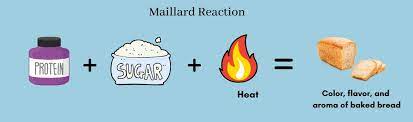
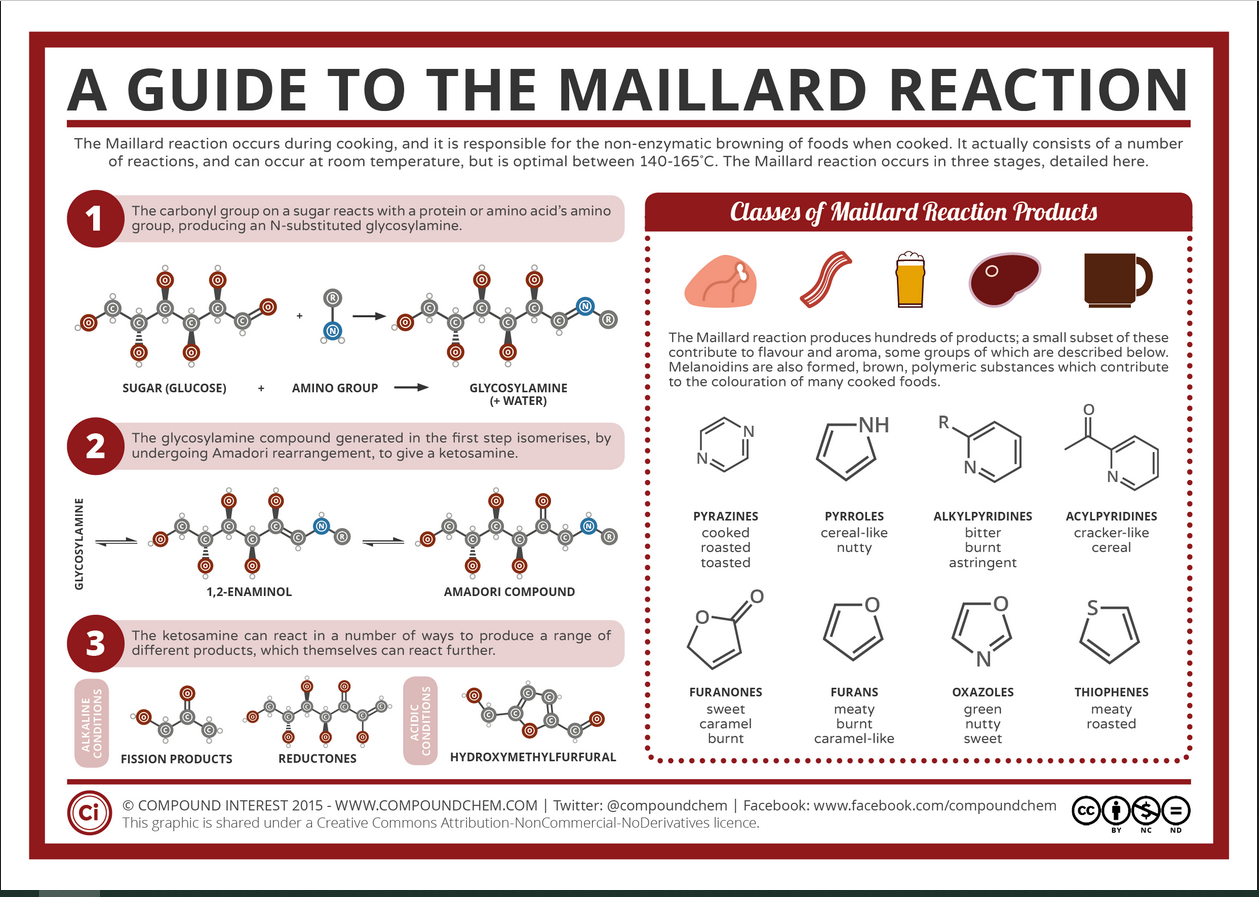
Maillard ReactionThe Maillard Reaction is an umbrella term for a
number of reactions that can produce a complex range of products. It is e.g. responsible for the flavours in cooked
meat, fried onions, roasted coffee, and toasted bread.
It takes its name from French chemist Louis-Camille Maillard, who originally described the reaction between amino acids and sugars in 1912. The first step is the reaction between the sugar and the amino acid that produces a glycosylamine compound, which in the second step is rearranged to produce a ketosamine. During the final step this compound reacts in a number of ways to produce several different compounds, of which melanoidins are one. These are long, polymeric compounds, which act as brown pigments, giving the cooked food its brown colouration. The Maillard reaction is referred to a non-enzymatic browning reaction, as these melanoidins are produced without the aid of enzymes; this differs from enzymatic browning, which turns e.g. fruits brown.
| |
MalnutritionA condition resulting from a diet where not enough or too many nutrients are consumed. This may contribute to further health conditions. | |
Manketti nut (Mongogo)The manketti tree is indegineous to southern Africa (Namibia, Botswana, Zimbabwe and Mozambique). Its ripe fruits, in particular the oily nut, have been a forage staple food for the indigenous people. The fruits are cooked to removew the maroon coloured flesh from the hard inner nuts, which is eaten on its own or as a relish with other dishes. The roasted nuts are very tasty. They are pounded and mixed with other ingredients to make a variety of traditional dishes. The fruits and nuts dry well and can be kept for long periods. The enrergy value of the nuts is 645 kcal/100g with a protein content of 26% and a fat content of 58%. Both the nut and the fruit are rich in minerals and thiamine.
| |

Manufacturer creditManufacturer- and supplier credit are terms that refer to financing options provided by suppliers or manufacturers to their customers. These financing options allow customers to purchase goods or services from suppliers and manufacturers without having to pay the full amount upfront. Customers are usually required to make regular payments over a set period of time in order to pay off the balance. Payment terms of 30 to 90 days are often industry norm. | ||
MarginThe difference between the selling price or revenue earned from a product or service and its costs. The higher the margin, the more profit that is made. | |
MarketingAny activity a business does to try and contact potential customers. | |
Marketing mixThe basis of a company’s marketing plan to encourage the consumer to purchase their product/service. • Product: an item offered for sale | |
MarketplaceA place where consumers can purchase products; a physical location or an online platform. | |